
United Airlines Q2 Earnings: A Test of Resilience in a Turbulent Sky
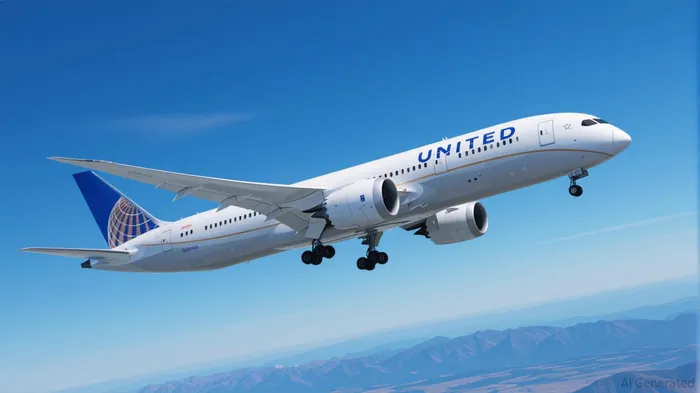
United Airlines (UAL) is poised to deliver its Q2 2025 earnings report under a cloud of macroeconomic uncertainty, rising labor costs, and operational headwinds. Yet, the carrier's focus on premium travel, loyalty-driven revenue streams, and disciplined cost management could position it to outperform peers like Delta Air LinesDAL-- (DAL) and Carnival CorporationCCL-- (CCL). With analysts forecasting a modest 2.5% year-over-year revenue growth, UAL's ability to navigate these challenges—and its valuation gapGAP-- relative to price targets—suggests this could be a pivotal moment for investors to consider a strategic buy.
Revenue Growth: UAL's Steady Hand in a Shifting Market
While UAL's projected 2.5% revenue growth trails Carnival's robust 9.5% expansion in the cruise sector, it outpaces Delta's stagnant performance. This contrast underscores UAL's focus on high-margin segments like premium cabins and loyalty programs, which are proving more resilient to economic pressures than bulk travel.
- Carnival's surge reflects pent-up demand for leisure travel, but its business model is less insulated from macro risks like inflation.
- Delta's flat growth highlights broader industry challenges, including domestic demand softness and capacity constraints.
- UAL's 2.5% growth, though modest, is bolstered by its +8% rise in loyalty program revenue and +5% premium cabin sales, areas where it leads peers.
The key takeaway: UALUAL-- is prioritizing profitability over volume, a strategy that aligns with its "United Next" cost-savings initiative, which aims to reduce CASM-ex (cost per available seat mile excluding fuel) growth to near-zero by 2026.
Cost Pressures: Navigating Labor Headwinds and Falling Fuel
UAL faces a dual dynamic: rising labor costs and declining fuel prices. While labor expenses increased by 10.5% YoY in Q1, falling crude prices (down 9% YTD) have cut fuel costs, shielding margins. The company's CASM-ex rose just 0.3% YoY in Q1, a testament to its cost discipline.
- Labor costs remain a challenge, but UAL's capacity reductions (4% domestic cuts starting Q3) and fleet modernization (retiring older planes) will help offset these pressures.
- Fuel savings are a tailwind: UAL's average fuel cost dropped to $2.26/gallon in Q2, below Delta's $2.35/gallon, giving it a competitive edge.
The net result: UAL's Q1 pretax margin hit 3%, a 360-basis-point improvement over 2024, proving its model can withstand headwinds.
Zacks' Data: A Bullish Signal for Earnings Surprises
Zacks' Earnings ESP model gives UAL a +3.43% surprise score, signaling a high likelihood of beating estimates. This confidence stems from:
1. Strong advance bookings: UAL's Q2 passenger revenue held steady despite Newark airport inefficiencies, suggesting demand remains robust.
2. Loyalty program momentum: The United MileagePlus program now contributes over $1.2 billion annually, up 7% YoY, as travelers prioritize flexibility and rewards.
3. Analyst revisions: Of 18 analysts covering UAL, 70% have raised price targets in the past 90 days, with the average now at $95.35—a 29% premium to current levels.
Why Buy UAL Ahead of Earnings?
- Valuation Gap: At $73.67, UAL trades below its average price target and has a 17% upside to the $86.50 consensus.
- Sector Sentiment: Airlines like UAL and DeltaDAL-- are benefiting from +6% growth in premium travel, while Carnival's leisure focus may falter if consumer spending cools.
- Debt Reduction: UAL's net debt fell 19% in 2024, improving its liquidity to $18.3 billion—a buffer to weather near-term turbulence.
Risk Factors: A recession could dent business travel demand, and labor disputes (e.g., pilot union talks) could reignite cost pressures.
Conclusion: A Strategic Buy at Current Levels
United Airlines' Q2 report is a microcosm of its broader strategy: prioritize margins over scale, lean on premium and loyalty segments, and weather macro headwinds through cost control. With Zacks' surprise metrics favorable and peer comparisons positive, UAL's stock presents a compelling entry point.
Investment Thesis:
- Buy: For a 12-month horizon, UAL's $95 price target implies a 29% gain.
- Hold: If earnings miss by more than 5%, or if fuel costs rebound sharply.
The skies may be turbulent, but UAL's focus on profitability—and its peers' struggles—make this stock a "buy" ahead of earnings.
Data as of July 14, 2025. Always conduct your own research and consult a financial advisor before making investment decisions.





Comentarios
Aún no hay comentarios