
Uniswap News Today: Uniswap Spurrs Deflationary Shift with $596M Token Burn
Uniswap's Historic Token Burn
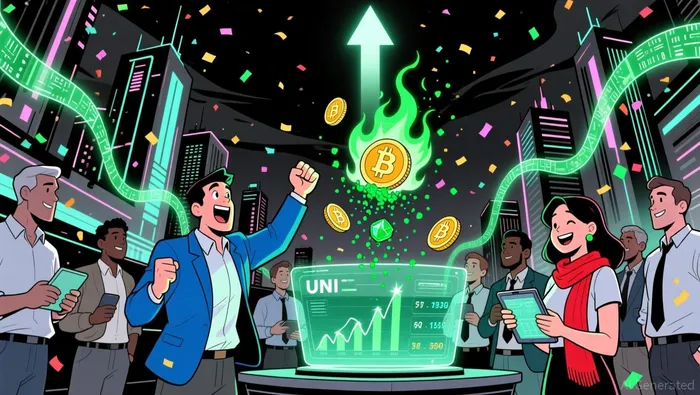
Uniswap has executed a major token burn, removing 100 million UNIUNI-- tokens valued at approximately $596 million from its protocol treasury. The burn transaction was completed around 4:30 am UTC on Dec. 28, marking the first large-scale implementation of a governance-approved proposal according to data. This action reduces the circulating supply of UNI, a move that signals a deflationary shift in the protocol's economic model.
The initiative, known as "UNIfication," passed with near-unanimous support, receiving 99.9% of the vote according to reports. More than 125 million UNI tokens were cast in favor, compared to just 742 tokens voting against, highlighting broad consensus among token holders. The proposal was backed by several notable figures in the crypto space, including Jesse Waldren, Kain Warwick, and Ian Lapham as research shows.
Uniswap Labs confirmed the execution on X, stating that the initiative has been implemented onchain and that interface fees have been set to zero according to their statement. As part of the update, fees are now activated on UniswapUNI-- v2 and selected v3 pools on the EthereumETH-- mainnet. Additionally, fees generated by Unichain will be directed toward UNI burns after covering Optimism and Layer-1 data costs.
A Deflationary Model
The burn creates a deflationary loop by redirecting a portion of trading fees to the protocol, which will be used to buy and burn UNI tokens according to analysis. This mechanism allows liquidity providers to earn a percentage of fees, with a portion allocated to the protocol for ongoing burns. On v2, liquidity providers will earn 0.25% per trade, with 0.05% allocated to the protocol as reported.
On v3, liquidity providers will route either one-fourth or one-sixth of their fees to the protocol, depending on the fee tier. Supporters argue that repeated burns could gradually reduce UNI's circulating supply, increasing scarcity over time according to market analysis. The initiative also restructures parts of Uniswap's organizational setup by transitioning employees of the Uniswap Foundation to Uniswap Labs as confirmed.
Market Reaction
The market responded positively to the execution of the burn. UNI rose more than 6% over the past day, reaching a multi-week high of $6.38 according to market data. The token's circulating supply now stands at roughly 730 million UNI, out of a total supply of 1 billion according to estimates. Analysts view this as a significant move in the evolution of the DeFi sector.
The broader implications for the DeFi ecosystem and regulatory landscape are also being closely watched. The burn sets a potential precedent for other large DeFi protocols, such as AaveAAVE--, Compound, and MakerDAO according to industry analysis. Market observers are now scrutinizing governance forums for similar proposals. Additionally, the burn may attract regulatory scrutiny due to its potential impact on token value and market dynamics.
Strategic and Economic Implications
The burn marks a shift away from the previous fee retention model toward a framework built around sustained token burns as detailed in reports. The initiative is framed as a consolidation of development and operational work to support the protocol's expansion. Uniswap Labs has also signaled that further revenue mechanisms could be proposed later through separate governance processes according to their announcement.
Potential future fee sources include protocol fees on layer-2 networks, Uniswap v4, UniswapX, PFDA, and aggregator hooks. These developments could further reinforce the deflationary model and provide a sustainable economic structure for the protocol according to projections.
Looking Ahead
Uniswap has emerged as a leading decentralized exchange in the crypto industry, operating across 40 blockchain networks as confirmed by data. The protocol has processed more than $60 billion in trading volume over the past month, underscoring its significance in the DeFi space. As the DeFi sector matures, calculated, large-scale economic decisions like this will likely play a critical role in defining sustainable value and governance for leading protocols.
Investors and analysts will continue to monitor the impact of the burn on UNI's price and the broader DeFi ecosystem. The move is widely interpreted as a confident, long-term commitment by the protocol's stewards according to market analysis. The deflationary model, combined with Uniswap's growing influence, could further shape the future of decentralized finance.






Comentarios
Aún no hay comentarios