
Uniswap News Today: Uniswap's Fee Switch Aims to Redefine DeFi Economics with Token Burns and Growth
Uniswap's proposed activation of a protocol-level fee switch has triggered a dramatic 48% surge in the value of its native UNIUNI-- token, marking one of the most significant shifts in the decentralized exchange's (DEX) history. The move, outlined in the "UNIfication" proposal submitted by UniswapUNI-- Labs and the Uniswap Foundation, seeks to redirect trading fees toward token burns and protocol growth, potentially reshaping DeFi economics. The proposal also includes a retroactive burn of 100 million UNI tokens-roughly 16% of the circulating supply- aimed at reducing token supply and boosting long-term value.
The fee switch mechanism, if approved, would allow Uniswap to retain a portion of trading fees currently distributed entirely to liquidity providers (LPs). For example, on Uniswap v2, LPs would earn 0.25% per trade, with 0.05% allocated to the protocol. On v3, governance would capture one-fourth or one-sixth of fees, depending on the fee tier. This shift introduces a self-sustaining model where protocol revenue funds token burns and ecosystem development, aligning incentives across the community.
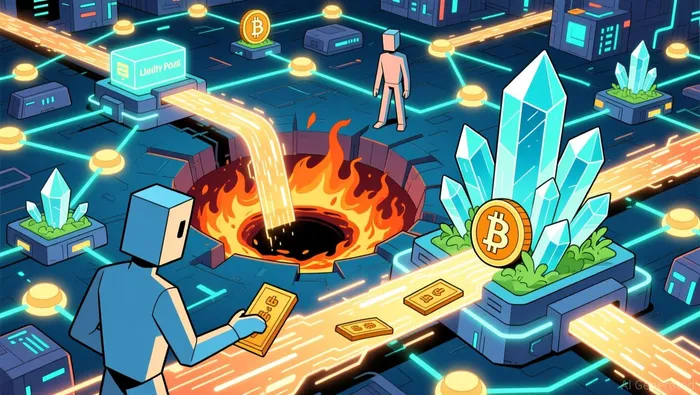 The proposal also merges the Uniswap Foundation into Uniswap Labs, streamlining governance and treasury management. From 2026, an annual budget of 20 million UNI tokens will be allocated quarterly to support development and ecosystem initiatives. Uniswap founder Hayden Adams cited a "hostile regulatory environment" as a reason for delaying the fee switch for years but argued the time is now right to advance the plan.
Market reaction has been swift. UNI surged to a two-month high of $9.43 following the proposal's announcement, with traders embracing the deflationary model. The token's 41.7% gain reflects renewed confidence in Uniswap's governance structure and revenue potential. Over the past month, Uniswap processed $150 billion in transactions, generating over $227 million in swap fees. Analysts suggest the fee switch could generate up to $2.75 billion in annualized income, depending on adoption across pools and blockchains.
The proposal includes additional innovations, such as a "Protocol Fee Discount Auction" to offset liquidity provider losses by internalizing maximal extractable value (MEV). This mechanism aims to redistribute MEV revenue- typically captured by validators and searchers- back into the ecosystem. Aggregator hooks in Uniswap v4 will further expand fee collection by integrating external liquidity sources.
While the plan has been widely praised, risks remain. Redirecting fees could reduce liquidity provider incentives, potentially impacting market depth and trading efficiency. Regulatory scrutiny also looms, as authorities might view profit-sharing with token holders as a securities issue. Despite these concerns, the market's response underscores investor optimism about Uniswap's evolution from a governance token to one with tangible economic value.
The Uniswap DAO will vote on the proposal, with approval expected to mark the most transformative step since the UNI token's 2020 launch. If passed, the changes could redefine DeFi's financial models, setting a precedent for sustainable, community-driven protocols.






Comentarios
Aún no hay comentarios