
Uniswap's Fee Switch Proposal: A Catalyst for Protocol-Owned Growth and Token Value Capture
Fee Switch and Token Burning: A Deflationary Engine
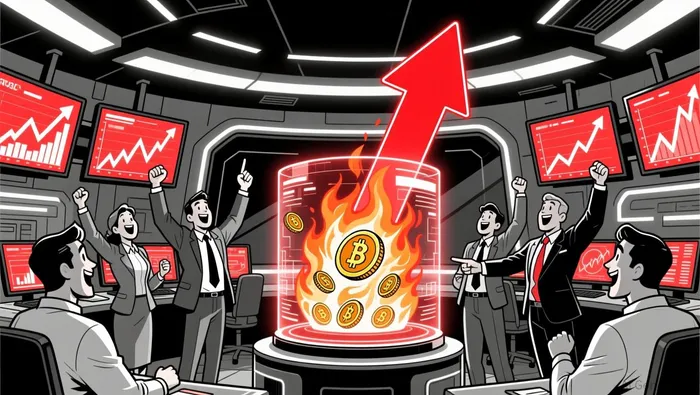
The Fee Switch Proposal redirects trading fees from Uniswap's EthereumETH-- layer 2 (Unichain) to a treasury-controlled mechanism, where a portion is used to burn UNI tokens. According to a report by Coinotag, this includes a one-time burn of 100 million UNI tokens-16% of the circulating supply-from the treasury, alongside annualized fees of $7.5 million generated by Unichain since its launch nine months ago, as Coinotag reported. This deflationary strategy directly reduces token supply, creating upward pressure on UNI's price.
The economic rationale is clear: by converting protocol-generated revenue into token scarcity, Uniswap aligns the interests of liquidity providers (LPs) and token holders. For instance, the Protocol Fee Discount Auctions system, which allocates a share of fees to LPs, is designed to internalize Miner Extractable Value (MEV) while boosting returns for participants, as LookonChain noted. This dual approach-burning tokens to enhance scarcity and reinvesting fees into liquidity-positions UNI as a hybrid asset with both utility and speculative appeal.
Governance Timeline: Speed vs. Decentralization
Uniswap's 22-day governance timeline for activating the fee switch has sparked debate. Unlike traditional DeFi models that prioritize rapid liquidity mining or aggressive token distribution, Uniswap's phased approach emphasizes cautious governance development. As outlined in the Uniswap blog, the governance treasury releases UNI tokens gradually: 40% in the first year, 30% in the second, and so on, ensuring long-term incentive alignment, as Uniswap blog detailed. This contrasts with platforms like SushiSwapSUSHI--, which have faced volatility due to rapid token dilution.
The 22-day timeline reflects a balance between urgency and deliberation. By allowing a grace period for community adaptation, Uniswap mitigates risks of rushed decisions while maintaining its trustless ethos. Data from TradingView indicates that the proposal's announcement alone drove a 38% surge in UNI's price, underscoring investor confidence in this governance model, as TradingView reported.
Comparative Analysis: Uniswap vs. Other DeFi Models
Uniswap's strategy diverges from conventional DeFi tokenomics in two key ways. First, it merges deflationary mechanics with reinvestment into ecosystem growth. While platforms like AaveAAVE-- and Compound rely on fee-sharing models that distribute revenue to stakeholders, Uniswap's token burn mechanism creates a more direct link between protocol performance and token value. Second, its governance structure prioritizes decentralization over speed, contrasting with centralized models like Celsius, which collapsed due to poor governance.
A comparative study by The Block highlights that Uniswap's approach has driven a 15% price rally as of November 2025, fueled by record trading volumes and expectations of future revenue-sharing, as Coinotag reported. Polymarket data further suggests a 73% probability of the fee switch being activated by summer 2026, reflecting strong market sentiment, as Coinotag reported.
Strategic Implications for Long-Term Value Accrual
The Fee Switch Proposal's success hinges on three factors: sustained fee generation, effective token burning, and governance resilience. Uniswap's dominance in DeFi-handling $4 trillion in trading volume since 2018-provides a robust foundation for fee capture. Analysts at Coinotag argue that the protocol's ability to internalize MEV and redirect it to token holders could set a precedent for other DeFi platforms.
However, challenges remain. Past opposition from stakeholders like a16z highlights the need for consensus in decentralized governance. Yet, Uniswap's resilience and market leadership suggest the fee switch could become a cornerstone of its economic model.
Conclusion
Uniswap's Fee Switch Proposal represents a transformative step in DeFi tokenomics, blending deflationary mechanics with governance-driven value capture. By prioritizing scarcity, liquidity, and decentralization, the protocol is positioning UNI as a unique asset class with long-term growth potential. For investors, the 22-day governance timeline and token burn mechanism signal a strategic commitment to aligning protocol success with token holder interests-a rare alignment in the volatile DeFi landscape.






Comentarios
Aún no hay comentarios