
UniQure's AMT-130: A Gene Therapy Breakthrough Poised to Reshape the Huntington's Disease Market
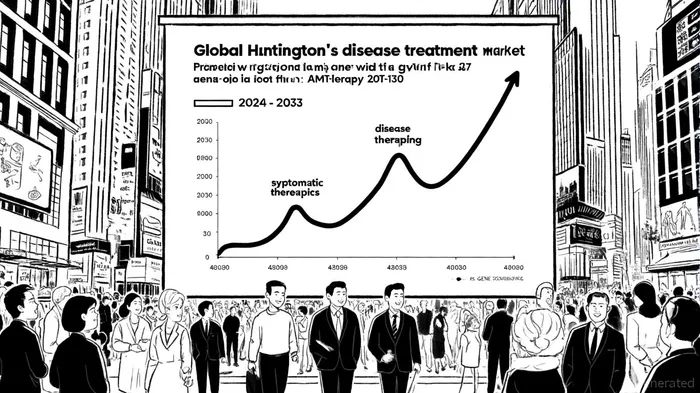
The neurodegenerative disease market is undergoing a seismic shift, driven by advancements in gene therapy for rare diseases. At the forefront of this revolution is UniQure's AMT-130, a one-time gene therapy targeting Huntington's disease (HD). With topline results from its pivotal Phase I/II trial showing a 75% slowing of disease progression at 36 months, AMT-130 has not only redefined therapeutic expectations for HD but also positioned itself as a disruptive force in a market projected to grow at a 23.8% CAGR through 2030 [1]. For investors, the question is no longer whether gene therapy can transform rare diseases—it's whether AMT-130 can outpace its competitors and secure a dominant share of a rapidly expanding market.
Mechanism and Clinical Progress: A Precision-Driven Approach
AMT-130 leverages a non-disease-causing adeno-associated virus (AAV) to deliver a microRNA (miRNA) to the caudate and putamen regions of the brain, where it non-selectively lowers both mutant (mHTT) and normal (HTT) huntingtin proteins [1]. This mechanism addresses the root cause of HD—pathogenic mHTT accumulation—rather than merely managing symptoms.
The Phase I/II trial, which enrolled 26 participants (16 in the AMT-130 group and 10 in the control group), demonstrated statistically significant outcomes in two key metrics: a 75% reduction in disease progression as measured by the composite Unified Huntington's Disease Rating Scale (cUHDRS) and a 60% reduction in Total Functional Capacity (TFC) [2]. Additionally, AMT-130 showed a manageable safety profile, with favorable trends in motor and cognitive function and a mean reduction in cerebrospinal neurofilament light protein (CSF NfL) levels—a biomarker of neurodegeneration [2]. These results, coupled with the FDA's Breakthrough Therapy designation in April 2025, underscore the therapy's potential to become a first-in-class treatment [3].
Market Dynamics: A $2 Billion Opportunity in the Making
The HD treatment market is a microcosm of the broader rare disease space, characterized by high unmet medical need and regulatory incentives for innovation. By 2033, the market is forecast to reach $2.03 billion, driven by the adoption of disease-modifying therapies like AMT-130 [4]. While symptomatic treatments (e.g., tetrabenazine for chorea) remain dominant, their limitations—short-term efficacy, lack of disease modification—have created a vacuum for therapies that address pathogenic mechanisms.
Gene therapy, in particular, is emerging as a category-defining solution. According to a 2025 report by Grand View Research, the disease-modifying segment is expected to grow at a 23.8% CAGR, outpacing the overall market [1]. AMT-130's one-time administration model, combined with its robust clinical data, positions it to capture a significant portion of this growth. By comparison, competitors like Alnylam's ALN-HTT02 (siRNA) and Roche's RG6042 (antisense oligonucleotide) are still in Phase I and III trials, respectively, and face challenges related to repeat dosing and delivery methods [5].
Competitive Landscape: UniQure's Strategic Advantages
UniQure's position in the HD pipeline is formidable. The company's Breakthrough Therapy designation accelerates regulatory timelines, while its optimized immunosuppression regimen (tested in a third cohort in February 2025) addresses a key concern in gene therapy—immune response [2]. Furthermore, the one-time dosing model reduces long-term healthcare costs, a critical factor for payers in high-premium markets like the U.S. and Europe.
However, challenges persist. PTC Therapeutics' PTC518, another AAV-based gene therapy, is in Phase II trials and targets mHTT reduction, creating direct competition [5]. Additionally, the high cost of gene therapy—estimated at $2–5 million per patient for similar products—could limit accessibility in regions with constrained healthcare budgets [6]. Yet, with the FDA's increasing openness to accelerated approvals for therapies with strong biomarker data (e.g., CSF NfL reduction), UniQure's ability to demonstrate durable clinical benefit may outweigh these hurdles.
Investment Considerations: Balancing Risk and Reward
For investors, AMT-130 represents a high-conviction opportunity in a market where innovation is rewarded. The therapy's 36-month trial data, submitted to the FDA in Q1 2026, will be pivotal. Success could catalyze a $1.5–2 billion peak sales scenario, assuming a 30–40% market share in the 100,000–150,000 HD patient population globally .
Yet, risks remain. Manufacturing scalability for AAV-based therapies is notoriously complex, and UniQure's reliance on a single production facility could pose bottlenecks. Additionally, the non-selective reduction of HTT (both mutant and normal) raises long-term safety questions, though early data suggest no overt toxicity [2]. Investors must also weigh the competitive threat from RNAi and antisense oligonucleotide platforms, which may offer alternative mechanisms with more favorable safety profiles.
Conclusion: A Gene Therapy Paradigm Shift
UniQure's AMT-130 is more than a drug—it's a testament to the transformative potential of gene therapy in neurodegenerative diseases. By addressing the root cause of HD with a durable, one-time treatment, the therapy aligns with the $2.03 billion market opportunity forecast for 2033 [4]. While challenges like manufacturing complexity and pricing pressures exist, the clinical and regulatory momentum behind AMT-130 suggests it is well-positioned to lead the next wave of innovation. For investors seeking exposure to the rare disease gene therapy boom, AMT-130 offers a compelling case: a high-risk, high-reward bet on a therapy that could redefine both patient outcomes and market dynamics.





Comentarios
Aún no hay comentarios