
Uniqlo's Tariff Warning Signals a New Era for Global Apparel Retailers
The apparel industry is at a crossroads. Uniqlo's recent announcement of U.S. price hikes to offset escalating tariffs highlights a systemic challenge for global retailers: navigating trade policies that are reshaping supply chains and profit margins. For investors, this is more than a sector-specific issue—it's a harbinger of how tariffs could redefine winners and losers in the global retail landscape. Here's what the data and strategies reveal about the risks, opportunities, and tariff-resistant business models worth watching.
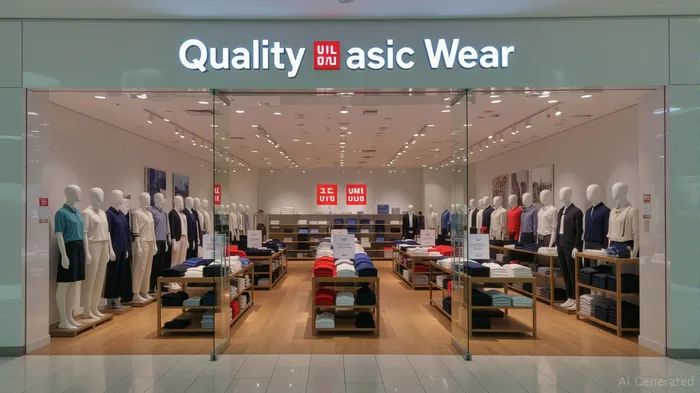
The Tariff Tightrope: Uniqlo's Case Study
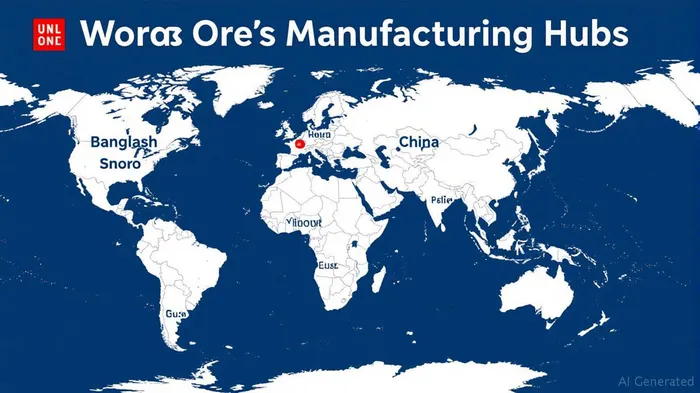
Uniqlo's parent, Fast Retailing, faces a 30% tariff on Sri Lankan-made goods entering the U.S. starting August 2025, alongside a 20–40% levy on Vietnamese imports—a stark challenge for a company where 70% of U.S. inventory originates from these regions. While Fast Retailing has maintained its 2025 profit forecast of ¥545 billion by pre-shipping inventory and diversifying production to countries like Bangladesh and Cambodia, the quarterly operating profit rose a mere 1.4% to ¥146.7 billion in Q3. This underscores the strain: even with cost management, tariffs are squeezing margins.
The company's refusal to reshore production—CEO Tadashi Yanai calls U.S. tariffs “irrational”—hints at a broader strategy. Uniqlo is doubling down on its globalized supply chain flexibility, a model that could become a competitive edge if other retailers falter.
Sector-Wide Implications: Beyond Uniqlo
Uniqlo's struggles are part of a larger pattern. AmazonAMZN--, for instance, has canceled orders from Asian suppliers to preempt tariff spikes, while U.S. retailers like WalmartWMT-- and Target face similar cost pressures. The ripple effects are clear: global apparel retailers with heavy reliance on tariff-affected regions (e.g., Vietnam, Sri Lanka) are at risk, while those with diversified supply chains or localized production may thrive.
Consider the numbers:
- Inflationary pressure: U.S. apparel prices rose 6.2% in 2024, per the Bureau of Labor Statistics, with tariffs accounting for ~30% of that increase.
- Consumer sentiment: Surveys show 40% of U.S. shoppers are delaying purchases due to cost concerns—a trend that could hit discretionary brands hard.
Investment Themes: Building Tariff-Resistant Models
Investors should seek companies with three key attributes:
- Supply Chain Agility:
- Uniqlo's approach: Shifting production to low-tariff countries (e.g., Bangladesh) and pre-positioning inventory.
Other examples: Inditex (Zara) uses AI-driven manufacturing to pivot production quickly, while NikeNKE-- sources 50% of U.S. footwear from Vietnam and Ethiopia—a balanced risk strategy.
Brand Equity as a Pricing Shield:
Strong brands like LululemonLULU-- or Ralph LaurenRL-- can pass costs to consumers. Uniqlo's focus on “quality basics” may also allow modest price hikes without alienating core customers.
Regional Market Diversification:
- Uniqlo's pivot to North America and Europe (despite China's dominance) mirrors broader trends. Investors should favor companies with revenue streams across multiple regions, reducing reliance on any single trade corridor.
Risks and Recommendations
While Uniqlo's shares have dipped 8% in early 2025, its long-term resilience hinges on execution. Key risks include:
- Supply chain bottlenecks: Diversifying sourcing could raise operational complexity.
- Consumer backlash: Price hikes may deter shoppers already sensitive to inflation.
Investment advice:
- Overweight: Brands with strong pricing power (e.g., LVMH, Tapestry) or supply chain flexibility (e.g., Inditex).
- Underweight: U.S.-centric retailers with Vietnam-heavy supply chains (e.g., PVH's Tommy Hilfiger division).
- Monitor: Fast Retailing (9983.T) for signs of margin stabilization post-tariff adjustments.
Conclusion
Tariffs are no longer a temporary hurdle but a structural feature of global trade. Investors must prioritize companies that can adapt through diversification, brand strength, and operational agility. Uniqlo's struggles today could become its blueprint for tomorrow—if it executes its strategy. For the sector, this is a wake-up call: survival will depend on who navigates trade chaos best.





Comentarios
Aún no hay comentarios