
Union Pacific's Strategic Merger with Norfolk Southern and Its Impact on Long-Term Value
Operational Synergies: Efficiency Gains and Cost Savings
The merger's most compelling argument lies in its potential to eliminate interchange inefficiencies. By merging Union Pacific's western network with Norfolk Southern's eastern routes, the combined company could streamline freight movement, cutting transit times by 24-48 hours for approximately one million annual shipments. This would not only reduce operational costs but also enhance service reliability, making rail a more attractive alternative to trucking in critical markets. Analysts estimate that these synergies could generate $2.75 billion in annualized savings, primarily through reduced fuel consumption, labor optimization, and automation.
Moreover, the merger aims to unlock growth in underserved "watershed markets," such as the Midwest, where rail has historically struggled to compete with highways. By improving intermodal capabilities and reducing congestion, the combined entity could capture a larger share of the $1.2 trillion U.S. freight market. For example, the petrochemical industry-a major rail customer-stands to benefit from faster and more reliable transportation of bulk chemicals, potentially boosting margins for shippers and railroads alike.
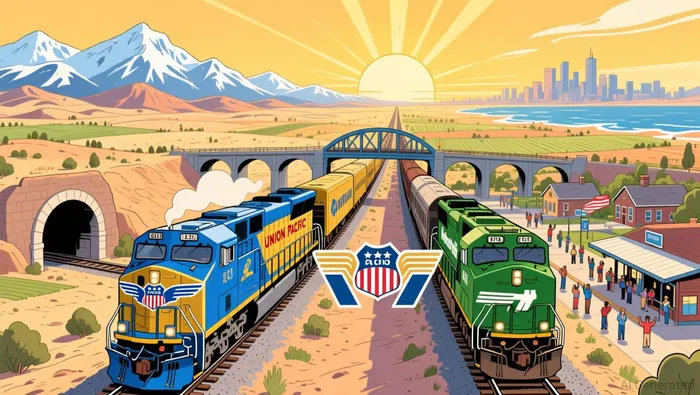
Market Positioning: A Duopoly in the Making?
While operational efficiencies are promising, the merger's broader market implications are more contentious. Critics argue that combining two of the largest railroads in the U.S. would concentrate 40% of rail traffic and over half of chemical product shipments into a single entity. This raises concerns about reduced competition, higher freight rates, and diminished bargaining power for shippers. Historical precedents, such as the 2023 Canadian Pacific–Kansas City Southern merger, suggest that consolidation often leads to job cuts, automation, and weakened labor conditions.
However, proponents counter that the merger is a necessary response to the trucking industry's dominance. By creating a coast-to-coast rail network, Union Pacific and Norfolk Southern could offer a more integrated, cost-effective solution for intermodal freight. Deutsche Bank and Barclays have highlighted the potential for improved financial performance, citing stronger operational leverage and expanded network capabilities. Yet, JPMorgan and Evercore ISI remain cautious, noting regulatory uncertainties and valuation risks tied to the merger's uncertain approval.
Regulatory and Competitive Challenges
The Surface Transportation Board (STB) faces a pivotal role in determining the merger's fate. Under its 2001 guidelines, the board must prove that the deal enhances competition-a higher bar than previous mergers. Competitors like Canadian Pacific Kansas City (CPKC) and BNSF have already voiced strong opposition, arguing that the merger would harm the U.S. economy by creating a de facto duopoly. Meanwhile, intermodal logistics providers and marketing companies have expressed support, citing potential service improvements.
Labor groups, however, remain wary. While the companies have pledged to preserve jobs for union employees, critics warn that automation and route rationalization could erode long-term job stability. The STB's ability to enforce meaningful safeguards will be critical in balancing the interests of shippers, workers, and consumers.
Investment Implications: Balancing Rewards and Risks
For investors, the merger's success hinges on regulatory approval and the realization of promised synergies. Analysts have assigned wide price targets for Norfolk Southern, ranging from $240 (merger failure) to $305 (merger success). If approved, the combined company could see improved margins and stronger cash flow, but the risk of regulatory pushback or operational integration challenges cannot be ignored.
The broader railroad sector is also at a crossroads. As consolidation accelerates, investors must weigh the benefits of scale against the risks of reduced competition. While the UP-NS merger could set a precedent for further industry consolidation, it also highlights the need for robust regulatory oversight to ensure fair competition and equitable outcomes for all stakeholders.
Conclusion
The Union Pacific-Norfolk Southern merger is a bold bet on the future of U.S. freight transportation. If executed successfully, it could deliver significant operational efficiencies and reshape the rail industry's competitive landscape. However, the path to approval is fraught with regulatory and political challenges, and the long-term value of the deal will depend on how well the combined entity navigates these hurdles. For investors, the key takeaway is clear: this merger is not just about cost savings-it's about redefining the rules of the game in a consolidating sector.







Comentarios
Aún no hay comentarios