
The Unintended Macroeconomic Impact of the 2025 U.S. Government Shutdown on Risk Assets and Inflation
Systemic Risk: Data Gaps and Policy Fog
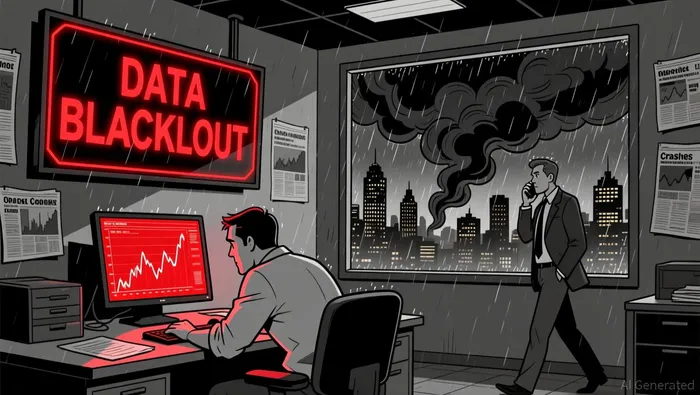
The shutdown created a "data blackout" by halting critical economic data collection, including October 2025 employment and inflation reports. This forced the Federal Reserve to rely on private-sector proxies like ADP payrolls and high-frequency spending metrics, increasing the risk of policy errors during a delicate easing cycle. The absence of official data also disrupted the Fed's ability to assess inflationary pressures, with Kevin Hassett noting that some surveys may never be completed, leaving permanent holes in economic records.
Systemic risk indicators, such as credit spreads and interbank lending rates, reflected heightened uncertainty. Investors demanded higher risk premiums for equities, with the VIX Volatility Index surging over 15% in two sessions and breaching the 20-point threshold-a level typically associated with market stress. Treasury auctions became a focal point for gauging market confidence, as yield curves began pricing in prolonged governance dysfunction.
Investor Sentiment: Fear, Safe-Haven Flows, and Asset Reallocation
Investor sentiment deteriorated sharply as the shutdown dragged on. The S&P 500 faced bearish pressure, with key components like Nvidia and Amazon declining amid uncertainty. The Fear & Greed Index plummeted to an "extreme fear" reading of 23, signaling a flight to safety. Gold prices reached historical highs as a hedge against political instability, while high-yield bonds like MidCap Financial Investment's baby bond (MFICL) retained appeal due to their low-risk profile according to Seeking Alpha.
The shutdown also exposed vulnerabilities in asset allocation strategies. With the Federal Reserve delaying its December 10 rate decision, due to data gaps, investors shifted toward short-duration assets and cash equivalents. This behavior contrasted with historical patterns, where shutdowns typically had minimal impact on equity valuations.
Long-Term Implications: Institutional Credibility and Policy Uncertainty
The 2025 shutdown's most enduring legacy may be its erosion of institutional credibility. Recurring governance risks-exemplified by a temporary funding resolution expiring on January 30, 2026-have embedded political uncertainty into asset pricing models. This could lead to persistent volatility in Treasury yields and a reevaluation of U.S. debt as a "risk-free" asset.
For inflation, the shutdown's data gaps complicate short-term assessments. While Kevin Hassett expressed optimism about a 3–4% growth rebound in Q1 2026, the lack of granular data on wage trends and consumer spending could distort inflation expectations. Markets may price in a "precautionary" inflation premium until confidence in data integrity is restored.
Conclusion
The 2025 U.S. government shutdown has revealed critical vulnerabilities in the intersection of governance, data integrity, and market psychology. While financial markets historically shrugged off such events, the 2025 episode highlights how prolonged dysfunction can amplify systemic risks and distort investor sentiment. As policymakers navigate the path to resolution, investors must remain vigilant to the lingering shadows of institutional fragility.







Comentarios
Aún no hay comentarios