
Unilever's Dividend Resilience and Strategic Reforms: A Post-Ice Cream Spin-Off Opportunity for Income Investors
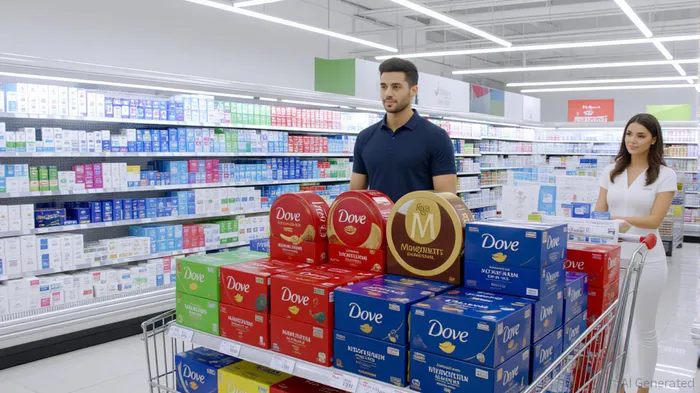
Unilever's strategic overhaul in 2025 has positioned it as a compelling case study in corporate reinvention. The spin-off of its ice cream division—home to Ben & Jerry's, Magnum, and Cornetto—into the standalone Magnum Ice Cream Company (TMICC) by mid-November 2025 is not just a structural shift but a calculated move to sharpen its focus on beauty, personal care, and premium segments. For income-focused investors, this transformation, coupled with a disciplined approach to dividends and capital allocation, raises a critical question: Can UnileverUL-- sustain its dividend resilience while unlocking long-term value in a post-ice cream era?
The Dividend Story: Stability Amid Strategic Shifts
Unilever's 2025 first-half results revealed a 0.5% increase in its quarterly interim dividend to €0.4528 per share, maintaining a yield of 3.4% in a market where consumer staples often trade at lower multiples. While this hike is modest compared to the 3% growth in 2024, it reflects the company's prioritization of financial discipline. The dividend payout ratio of approximately 28.5% (calculated as €0.4528 dividend per share divided by €1.59 underlying EPS) suggests ample room for growth, even as the ice cream business is divested.
The company's €1.5 billion share buyback program, completed by May 2025, further underscores its commitment to returning capital to shareholders. By reducing the share count, Unilever is poised to enhance earnings per share (EPS) growth, a critical factor for sustaining dividends amid macroeconomic headwinds. With the ice cream business contributing 13% of revenue and 10% of profits, its spin-off will free up operational and capital resources for higher-growth areas—without compromising the dividend's trajectory.
Segment Performance: Beauty and Personal Care as Growth Engines
Unilever's Beauty & Wellbeing segment (21% of turnover) delivered 3.7% underlying sales growth in H1 2025, driven by double-digit expansion in its Wellbeing division. Brands like Liquid I.V. and Nutrafol have capitalized on the “wellness boom,” while the Personal Care segment (22% of turnover) saw 4.8% sales growth, albeit with a 90-basis-point margin contraction. This dip, however, is temporary, as the company reallocates resources to premium and digital-first strategies.
The Growth Action Plan (GAP)—a €800 million cost-cutting initiative—has already streamlined operations, including the reduction of 7,500 office-based roles and the adoption of AI-driven process standardization. These measures, combined with disproportionate investments in the U.S. and India, position Unilever to outperform peers in high-margin personal care. For instance, the acquisition of Dr. Squatch and Wild has strengthened its foothold in the men's grooming and eco-friendly deodorant markets, areas with strong secular tailwinds.
Strategic Reforms: From Ice Cream to a Focused Consumer Giant
The ice cream spin-off is not just a divestiture—it's a strategic pivot. By isolating the cold-chain-dependent ice cream business, Unilever eliminates operational dis-synergies and redirects capital to its core strengths. The Magnum Ice Cream Company, now operating as a standalone entity since July 2025, is expected to leverage its premium brand portfolio and €75 billion global market opportunity. This mirrors the success of Froneri, the Nestlé-PAI joint venture, which recently secured a €15 billion valuation through a Goldman Sachs-led investment.
For Unilever, the spin-off reduces complexity and enhances focus. The company now anticipates underlying sales growth of 3–5% for 2025, with operating margins improving to at least 18.5% in the second half. These metrics, coupled with a share consolidation plan post-demerger, ensure comparability in key financial metrics like EPS and dividends per share.
Investment Thesis: Buy-and-Hold Potential
Unilever's post-spin-off strategy aligns with the needs of income-focused investors. A 3.4% yield in a low-interest-rate environment is attractive, but the company's ability to sustain this payout while reinvesting in high-growth segments is what sets it apart. The beauty/personal care sector, projected to grow at 4–5% annually, offers a durable foundation for dividend resilience.
Moreover, Unilever's agile capital allocation—evidenced by its share buybacks, strategic acquisitions, and productivity programs—ensures that it remains a disciplined operator. The planned share consolidation after the demerger will further enhance shareholder value by aligning pre- and post-spin-off metrics.
Risks and Mitigants
While the spin-off is a net positive, risks remain. Currency volatility and macroeconomic uncertainties could pressure margins, and the beauty sector is prone to fickle consumer trends. However, Unilever's diversified brand portfolio, cost-cutting initiatives, and focus on premium segments mitigate these risks. The company's ability to adapt—such as its pivot to digital commerce and e-commerce partnerships—provides a buffer against sector-specific shocks.
Conclusion: A Dividend Powerhouse with Strategic Clarity
Unilever's strategic reforms, from the ice cream spin-off to its focus on beauty and personal care, have created a leaner, more agile organization. A moderate dividend increase, a low payout ratio, and strong segment performance position it as a compelling buy-and-hold opportunity for income investors. As the company transitions into its next phase, its disciplined capital allocation and alignment with high-growth consumer trends suggest that the 3.4% yield is not just sustainable but potentially accretive. For those seeking a blend of income and long-term growth, Unilever's post-spin-off story is one worth watching.





Comentarios
Aún no hay comentarios