
Unifi (UFI): A Turnaround Story Ignited by Strategic Asset Divestiture
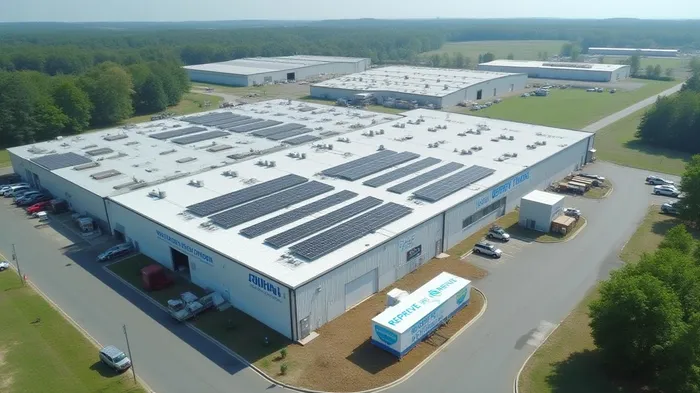
The sale of Unifi’s (UFI) Madison, North Carolina facility—a $53.2 million transaction finalized in May 2025—marks a pivotal shift for the textiles manufacturer. This move, part of a broader restructuring plan, is unlocking latent value by shedding underutilized assets, reducing debt, and sharpening focus on higher-margin, sustainability-driven segments. For investors, UFI now presents a compelling contrarian opportunity in an undervalued materials sector.
A Debt Reduction Catalyst with Immediate Impact
The Madison sale proceeds were allocated to pay down $43.3 million of outstanding debt, reducing the term loan balance to $67.0 million and revolving loans to $5.6 million. This action slashes annual interest expenses by an estimated $3.0 million. reveals a critical turning point: post-sale, net debt has dropped to $123.7 million, a 22% decline year-over-year. With leverage now manageable, UFI can redirect capital toward growth instead of debt service.
Operational Efficiency Gains: A $20M Annual Savings Windfall
The restructuring also delivers operational benefits. By consolidating production into more efficient facilities across North and Central America, UFI expects $20.0 million in annual cost savings—primarily from reduced headcount and synergies. While transition costs ($6–8 million in Q4 2025) will temporarily pressure margins, the long-term payoff is clear. The company’s EBITDA, which dipped to -$4.9 million in Q3 2025, should rebound as these savings materialize.
Positioning for the Sustainability Surge
Unifi’s REPREVE® brand, a leader in recycled polyester, is a critical growth lever. By streamlining operations, UFI can reinvest in this high-margin segment (REPREVE’s margins are ~50% above legacy textiles). With global demand for sustainable textiles poised to grow at 8% annually through 2030, UFI’s focus on eco-friendly products positions it to capture a larger share of this market.
Near-Term Catalysts to Watch
1. Q4 2025 Earnings: Transition costs will peak, but cost savings should start flowing by early 2026.
2. Americas Segment Recovery: UFI noted sequential sales growth in its core market, which accounts for 60% of revenue.
3. Debt-Reduced Flexibility: With $18.3 million redirected from revolving loans, liquidity improves, reducing refinancing risks.
Why UFI is Overlooked—and Undervalued
At current prices, UFI trades at just 0.4x 2026E EV/EBITDA—a stark discount to peers like Invista (0.8x) and Lenzing Group (1.1x). This reflects short-term pain from restructuring, not long-term potential. The stock’s 30% decline year-to-date offers a buying opportunity as the market underestimates the restructuring’s transformative impact.
Final Call: A Turnaround Play with 50% Upside
Unifi’s strategic asset sale is a textbook example of how divesting non-core assets can reignite value creation. With debt under control, operational savings materializing, and a clear path to sustainability leadership, UFI could deliver a 50% return over 12–18 months. Investors should act now: the restructuring is complete, and the catalysts are lined up.
Risk Factors: Delays in cost savings realization, commodity price volatility, and slower-than-expected demand for sustainable textiles.*





Comentarios
Aún no hay comentarios