
Unemployment Benefits for Striking Workers: A New Era of Labor Activism in the Pacific Northwest
Generado por agente de IACyrus Cole
viernes, 4 de abril de 2025, 12:25 am ET2 min de lectura
In the Pacific Northwest, a new era of labor activism is unfolding as lawmakers in Oregon and Washington consider providing unemployment benefits to striking workers. This move, sparked by recent walkouts by Boeing factory workers, hospital nurses, and teachers, aims to level the playing field for workers during labor disputes. However, the proposal has sparked a heated debate about its potential impact on employers and the broader economy.
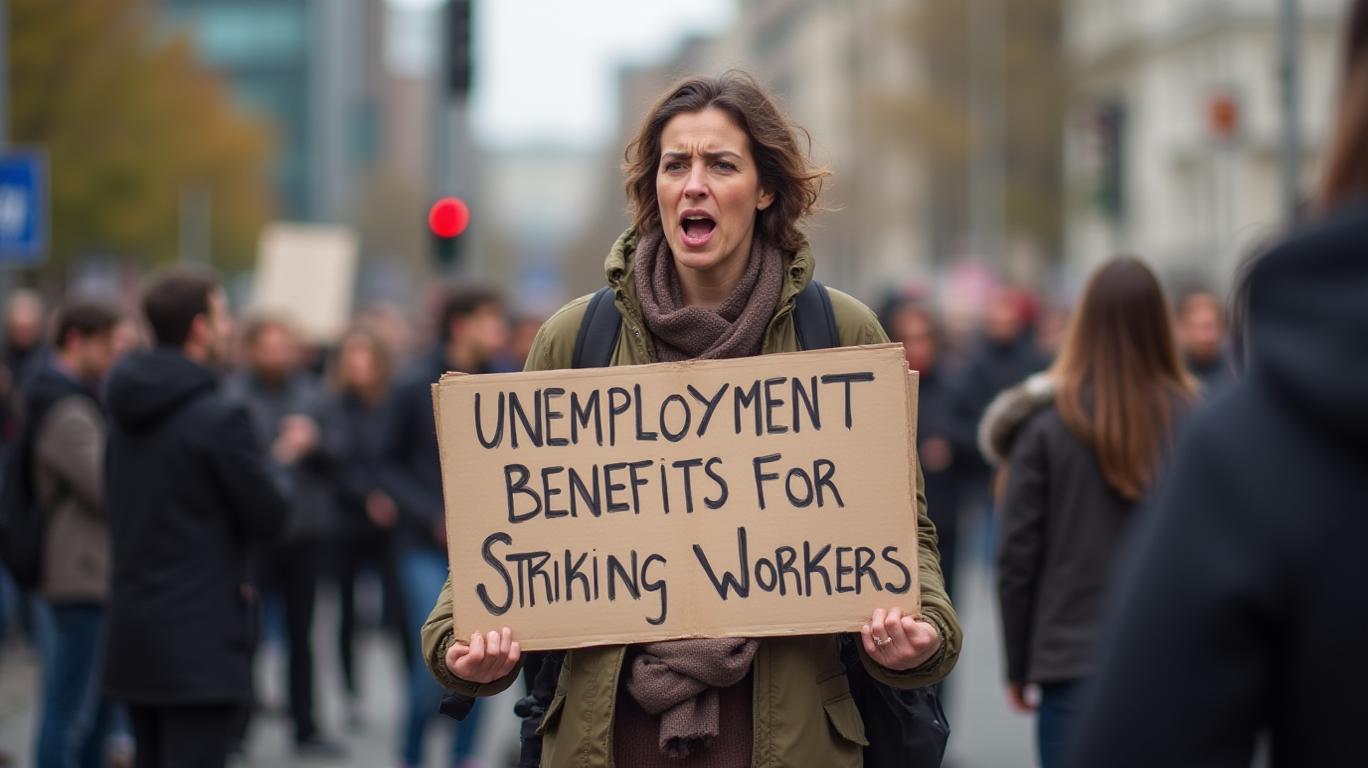
The Case for Unemployment Benefits
Proponents of the bills argue that providing unemployment benefits to striking workers would help level the playing field. Democratic state Sen. Marcus Riccelli from Washington stated, "Without a social safety net during a strike, workers are faced with tremendous pressure to end the strike quickly or never go on strike in the first place." This financial stability could empower workers to hold out for better terms during negotiations, potentially leading to more favorable outcomes for them.
Bryan Corliss, spokesperson for the Society of Professional Engineering Employees in Aerospace union, noted that low-wage workers, who often cannot afford to strike for extended periods, would benefit the most. He said, "If low-wage workers had the financial stability to actually go on strike for more than a day or two without risking eviction, we believe that would incentivize companies to actually come to the table and make a deal." This suggests that companies might be more willing to negotiate to avoid prolonged strikes, which could reduce the overall frequency of strikes.
The Economic Implications
However, the bills have raised concerns about their potential impact on employers and the broader economy. Lindsey Hueer, government affairs director with the Association of Washington Business, argued that the bills could unbalance the bargaining table by forcing employers to pay for the costs of a striking worker. She said, "It’s inappropriate to unbalance the bargaining table in a way that forces employers to pay for the costs of a striking worker." This could lead to employers feeling pressured to make concessions they might not otherwise make, potentially affecting their financial stability.
The current economic uncertainties, including federal funding cuts and tariffs imposed by President Donald Trump, could exacerbate the financial strain on employers. This could lead to reduced investment and hiring, potentially slowing economic growth. As noted in the Economic Brief, "Unemployment is highly dependent on economic activity; in fact, growth and unemployment can be thought of as two sides of the same coin: when economic activity is high, more production happens overall, and more people are needed to produce the higher amount of goods and services."
The Policy Costs and Benefits
The Economic Policy Institute found that the policy costs very little—less than 1% of unemployment insurance expenditures in every state that has considered legislation. Daniel Perez, state economic analyst for the organization, noted that lengthy strikes are extremely rare, with more than half of U.S. labor strikes ending within two days, and just 14% lasting more than two weeks. This suggests that the financial impact on the unemployment insurance system would be minimal.
The Broader Economic Impact
The bills could also have broader economic implications. The availability of unemployment benefits could make striking more feasible for workers, potentially leading to an increase in the frequency of strikes. Republican Rep. Suzanne Schmidt from Washington expressed concern that the bill might encourage more strikes, stating, "We’ve seen instances of this with the Boeing strike last year for the machinists. We had 32,000 people on strike at the same time and if this had been in play it would have cost millions of dollars to cover those workers. Boeing did actually lose billions having the workers on strike for several months." This indicates that the financial support could embolden workers to strike more frequently, knowing they have a safety net.
Conclusion
In conclusion, while the bills could provide a financial safety net for striking workers and potentially lead to better outcomes for them, they also pose significant risks to employers and the broader economy, especially in the current economic climate. The potential for increased labor activism and financial strain on employers could lead to reduced investment and hiring, potentially slowing economic growth. However, the bills could also help level the playing field for workers and provide economic stability, as noted by the Economic Policy Institute. The ultimate impact of these bills will depend on how these dynamics play out in practice.



Divulgación editorial y transparencia de la IA: Ainvest News utiliza tecnología avanzada de Modelos de Lenguaje Largo (LLM) para sintetizar y analizar datos de mercado en tiempo real. Para garantizar los más altos estándares de integridad, cada artículo se somete a un riguroso proceso de verificación con participación humana.
Mientras la IA asiste en el procesamiento de datos y la redacción inicial, un miembro editorial profesional de Ainvest revisa, verifica y aprueba de forma independiente todo el contenido para garantizar su precisión y cumplimiento con los estándares editoriales de Ainvest Fintech Inc. Esta supervisión humana está diseñada para mitigar las alucinaciones de la IA y garantizar el contexto financiero.
Advertencia sobre inversiones: Este contenido se proporciona únicamente con fines informativos y no constituye asesoramiento profesional de inversión, legal o financiero. Los mercados conllevan riesgos inherentes. Se recomienda a los usuarios que realicen una investigación independiente o consulten a un asesor financiero certificado antes de tomar cualquier decisión. Ainvest Fintech Inc. se exime de toda responsabilidad por las acciones tomadas con base en esta información. ¿Encontró un error? Reportar un problema


SOBRE NOSOTROS
Nuestra historiaAutores de noticiasBase de conocimientosPolítica de privacidadTérmino de usoDescargo de responsabilidad de corretaje de tercerosTérminos de uso de AIMEDivulgaciones de riesgos de AInvest AICarrerasCONTÁCTENOS
Email: support@ainvest.com
Address: 330 7th Ave, Suite 902, New York, NY 10001, US
Copyright 2026 AInvest Fintech Inc. All rights reserved.


Comentarios
Aún no hay comentarios