
The Undervalued Yuan: A Strategic Currency Play for 2026
The Chinese yuan has long been a thorn in the side of global trade, but as we enter 2026, it's time to reassess its role in the global economy. After years of deliberate undervaluation, the yuan is now sitting at a crossroads. With the U.S. dollar weakening and China's economic rebalancing efforts gaining traction, the yuan could become one of the most compelling currency plays of the year-if policymakers and markets align. Let's break down why this is a critical moment for the yuan and what investors should watch for.
The Case for an Undervalued Yuan
According to Bloomberg, , based on models from the International Monetary Fund (IMF) and other analyses. This undervaluation has been a deliberate strategy to boost China's export competitiveness, as reported by Investing.com. Goldman Sachs has labeled , .
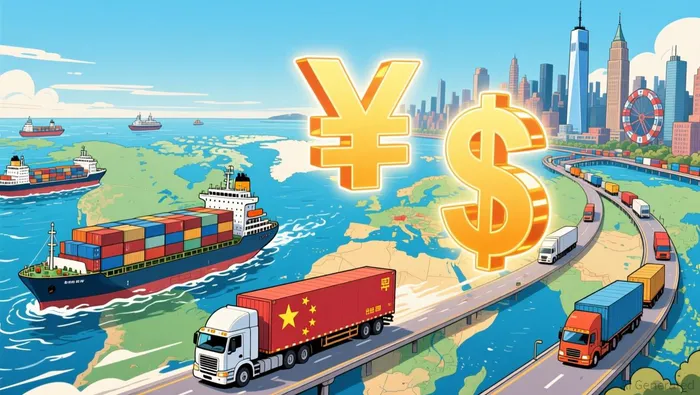
The math is simple: a weaker yuan makes Chinese goods cheaper abroad, which explains why the country's exports have remained resilient despite global headwinds. However, this strategy comes at a cost. Low inflation and weak domestic demand have kept the yuan's purchasing power parity (PPP) artificially low, creating deflationary pressures that stifle internal consumption. As the IMF has noted, China's reliance on exports is unsustainable in the long term, and a stronger yuan could help shift the economy toward a more consumption-led model.
Structural Challenges and Global Competitiveness
China's economic fundamentals are mixed. , structural challenges persist. The property sector slump, which has dragged on for years, continues to weigh on consumer confidence and local government finances. Meanwhile, industrial output and fixed asset investment have slowed, with October 2025 data showing .
 Yet, there are signs of resilience. The services sector, particularly in technology and finance, has shown robust growth, with the Index of Services Production rising . This shift toward services and knowledge-based industries could be a silver lining for China's long-term competitiveness. However, without a stronger yuan to curb import prices and boost domestic purchasing power, the transition to a consumption-driven economy will remain incomplete as top economists have warned.
The Strategic Play for 2026
The key to unlocking the yuan's potential lies in its gradual appreciation. Chinese policymakers have been cautious, prioritizing currency stability over rapid reform. The People's Bank of China (PBOC) has intervened aggressively in foreign exchange markets, setting a weaker-than-expected daily fixing in December 2025 to maintain control. But with U.S.-China relations improving and the dollar losing ground, the PBOC may feel less pressure to defend the yuan's current level.
A moderate appreciation could serve multiple purposes. It would reduce China's trade surplus, easing global trade tensions, while also making imports cheaper- boosting domestic consumption and lowering inflation. However, this transition must be managed carefully. As top Chinese economists have warned, a sudden revaluation without complementary reforms could destabilize the economy.
Risks and the Road Ahead
Investors should not ignore the risks. The property sector's collapse has left a hole in China's economic model, and consumer demand remains tepid. Additionally, geopolitical tensions-though easing in late 2025-could resurge, pressuring the yuan.
That said, the yuan's undervaluation is a structural issue that cannot be ignored. With the U.S. Federal Reserve signaling a dovish turn and the dollar's dominance waning, the yuan is poised to benefit from a more favorable global environment. For investors with a long-term horizon, a strategic bet on the yuan's gradual appreciation could pay dividends in 2026-provided China's policymakers continue to prioritize stability and rebalancing.
Conclusion
The yuan's undervaluation is both a strength and a vulnerability. While it has fueled China's export machine, it has also entrenched structural imbalances that threaten long-term growth. As we look ahead to 2026, the yuan's trajectory will hinge on China's ability to transition to a consumption-led economy and the global appetite for a more balanced trade system. For now, the yuan remains a high-conviction play-one that demands careful monitoring but offers significant upside for those who understand its strategic value.







Comentarios
Aún no hay comentarios