
Undervalued Small Businesses in Essential Service Sectors: Long-Term Resilience and Profitability Through Problem-Solving Utility
In an era marked by economic uncertainty and shifting consumer priorities, small businesses operating in essential service sectors have emerged as resilient investment opportunities. These ventures, often overlooked by mainstream markets, solve critical problems while aligning with long-term societal and technological trends. By analyzing sectors such as home healthcare, pressure washing, and IT support, we uncover how undervalued small businesses can deliver both profitability and societal value.
Home Healthcare: A Booming Sector Driven by Demographics
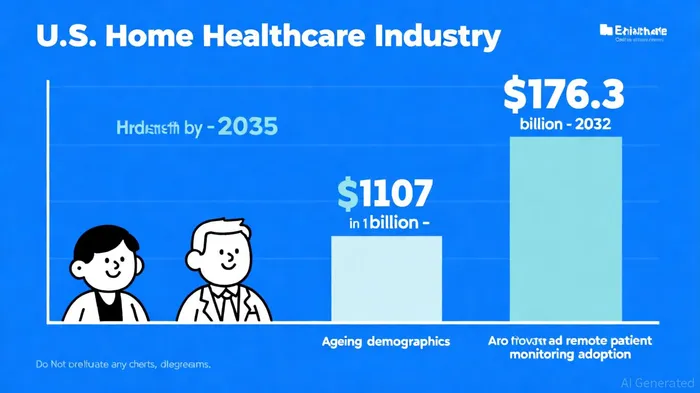
The aging population is reshaping the demand for home healthcare services. By 2025, the U.S. home care industry is projected to generate $107 billion in revenue, with a 7.4% annual growth rate expected to push it to $176.3 billion by 2032[2]. This surge is fueled by 90% of seniors preferring to age in place, a trend that reduces costs compared to institutional care (averaging $54,912 annually[2]).
Investments in staff training further amplify profitability. Agencies offering 12 hours of ongoing training report an average annual revenue increase of $350,000[1], while turnover rates have dropped to 75% over five years. Globally, the home healthcare market is valued at $435.23 billion in 2025, with North America leading at 40.7% market share[4]. Innovations like remote patient monitoring (RPM) devices, which account for 50.6% of the market[4], underscore the sector's technological adaptability.
Pressure Washing: Profitability Through Niche Demand and Tech Adoption
Pressure washing businesses, often dismissed as low-margin ventures, demonstrate surprising resilience. The global pressure washer market reached $3.28 billion in 2024 and is projected to grow to $3.42 billion in 2025[5]. With profit margins of 25–35% and median annual incomes of $75,000 for business owners[4], this sector thrives on recurring residential and commercial demand.
High-performing pressure washing companies leverage technology to streamline operations: 78% use field service management software[5], while 70% adopt online scheduling platforms[4]. Eco-friendly cleaning solutions, requested by 45% of clients[4], are reducing operational costs by 12% over a decade due to energy-efficient equipment and biodegradable detergents[4]. These adaptations position pressure washing as a scalable, low-overhead business model.
IT Support: Solving Critical Problems in Essential Sectors
The IT support and consulting industry, valued at $759.6 billion by 2025[1], is driven by digital transformation and cybersecurity needs. While large firms like Accenture dominate, small IT providers fill critical gaps in sectors like healthcare and nonprofits. For example, DP Solutions partnered with an ENT medical practice to resolve IT disruptions, improving patient access and reducing provider stress[3]. Similarly, a nonprofit gained operational independence by transitioning its IT support away from a larger hospital organization[3].
These case studies highlight IT support's problem-solving utility. As businesses increasingly rely on digital infrastructure, niche IT providers offering cybersecurity and cloud integration will see sustained demand. The industry's 3.2% CAGR from 2015–2025[1] reflects its role in enabling essential services to adapt to technological challenges.
Conclusion: Investing in Resilience and Utility
Undervalued small businesses in essential sectors thrive by addressing persistent problems—aging populations, environmental concerns, and digital vulnerabilities. Home healthcare agencies, pressure washing services, and IT support providers exemplify how niche solutions can scale profitably while fulfilling societal needs. For investors, these ventures offer a compelling blend of resilience, adaptability, and long-term growth potential.







Comentarios
Aún no hay comentarios