
Undervalued Energy and Industrial Stocks in a Shifting Global Market
The global energy and industrial sectors are undergoing a seismic shift in 2025, driven by geopolitical realignments, technological disruption, and policy-driven decarbonization. For investors, this volatility has created opportunities in undervalued stocks that are poised to capitalize on long-term structural trends. While the S&P 500's Energy and Industrials sectors are rated Marketperform by Charles Schwab, according to Value Sense, closer scrutiny reveals pockets of strategic value in overlooked names with robust fundamentals and alignment with the new energy and industrial paradigms.
Energy Sector: Dividend Aristocrats and Renewable Pioneers
The energy sector's resilience in 2025 is underpinned by elevated crude-oil prices (projected at $70–$90 per barrel, according to Energy Markets In Focus Q3 2025) and a dual transition: from fossil fuels to renewables and from centralized to decentralized energy systems. Among undervalued energy stocks, Shell (SHEL) and TotalEnergies (TTE) stand out. ShellSHEL--, a dividend aristocrat, trades at a 10.5% free cash flow margin and a 35.9% discount to intrinsic value, per Value Sense, while TotalEnergies' conservative debt profile and renewable energy investments position it to benefit from the $3.3 trillion global clean energy boom, as noted by Value Sense.
Infrastructure plays like Enterprise Products Partners (EPD) offer another angle. With a 43.4% discount to intrinsic value and critical midstream assets, EPDEPD-- is well-placed to profit from the surge in U.S. crude production (13.5 million barrels per day, according to the IEA's Global Energy Review 2025) and the AI-driven demand for electricity. Meanwhile, EOG Resources (EOG) exemplifies operational efficiency, boasting a 20.8% free cash flow margin and a quality rating of 6.4, metrics highlighted by Value Sense, making it a compelling long-term play in the oil-and-gas renaissance.
Industrial Sector: AI-Driven Growth and Policy-Resilient Plays
The industrial sector's 2025 outlook is more nuanced. While U.S. tariffs and interest rates have dampened activity, AI adoption and fiscal stimulus in key economies are creating new growth vectors. Coterra Energy (CTRA), for instance, has demonstrated disciplined capital management in the Permian Basin, with a strong dividend yield and a focus on cost optimization, according to a Morgan Lewis report; its ability to navigate high input costs and talent shortages is underscored by Industry Key Themes 2025.
Global industrial production is also being reshaped by AI-related investments, particularly in the U.S. and Japan, a trend noted by Value Sense. Projects like Meta's Hyperion data center in Louisiana, cited in the IEA Global Energy Review 2025, are driving demand for energy infrastructure, indirectly benefiting industrial equipment and services firms. However, investors must weigh these opportunities against the 19.5% U.S. tariff rate, which has stifled industrial real estate absorption to 27 million square feet in H1 2025, according to Oxford Economics.
Macro and Policy Dynamics: Navigating Uncertainty
The 2025 energy landscape is defined by policy duality. While the U.S. federal government has accelerated fossil fuel development and slowed renewable permitting, as discussed in the Morgan Lewis report, state-level initiatives in California and New York are pushing stricter emissions standards, noted in the same Morgan Lewis analysis. This regulatory fragmentation creates both risks and opportunities. For example, the Inflation Reduction Act's tax credits remain a tailwind for renewables, but their scope is under political threat, a point raised in the Morgan Lewis report.
Meanwhile, global renewable capacity growth has been revised downward by 50% due to U.S. and Chinese policy shifts, per the Morgan Lewis analysis, though India and the EU are bucking the trend with aggressive auction volumes and permitting reforms. For investors, the key is to balance exposure to policy-sensitive renewables with infrastructure and industrial plays that are less reliant on regulatory tailwinds.
Strategic Investment Thesis
The undervalued energy and industrial stocks highlighted here share three traits:
1. Strong Free Cash Flow Generation: Companies like Shell and EOG Resources offer durable cash flow margins, providing a buffer against macroeconomic volatility, as noted by Value Sense.
2. Alignment with Long-Term Trends: From AI-driven electrification to decarbonization mandates, these stocks are positioned to benefit from multi-decade structural shifts, according to the IEA's Global Energy Review 2025.
3. Discount to Intrinsic Value: Metrics like EPD's 43.4% discount, cited by Value Sense, and CTRA's disciplined capital structure, highlighted in the Morgan Lewis report, suggest compelling entry points for long-term investors.
As the global economy navigates the tension between energy security and sustainability, these overlooked names represent a compelling blend of defensive resilience and offensive growth potential.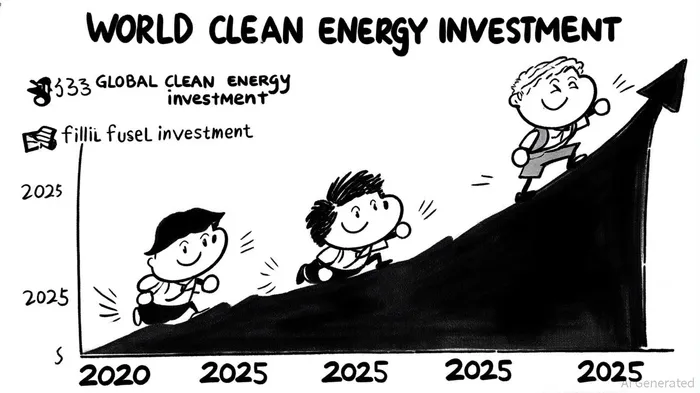





Comentarios
Aún no hay comentarios