
Understanding MicroSD Express: A Guide to the New Standard
PorAinvest
domingo, 8 de junio de 2025, 2:47 am ET2 min de lectura
MMSD--
MicroSD Express vs. Traditional MicroSD Cards
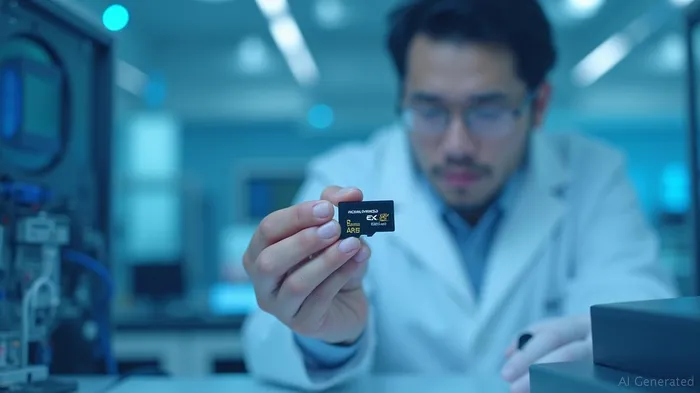
MicroSD Express cards are distinguished by their EX or E symbol, indicating a minimum sustained write speed of 150MB/s, with some models capable of reaching up to 600MB/s. This represents a substantial improvement over traditional MicroSD cards, which typically offer speeds ranging from 10MB/s to 30MB/s [1]. The enhanced speed of MicroSD Express cards is crucial for the Nintendo Switch 2, which requires faster data transfer rates to handle its larger and more graphically intensive games.
Compatibility and Requirements
The Nintendo Switch 2 supports MicroSD Express cards, which are necessary for saving game data and transferring files. While standard MicroSD cards can be used for loading images and videos, they are not suitable for handling game data due to their slower transfer speeds. The Nintendo Switch 2's built-in 256GB of storage may not be sufficient for all users, making the use of MicroSD Express cards essential for those with larger game libraries [2].
Pricing and Availability
The cost of MicroSD Express cards is significantly higher than traditional MicroSD cards, reflecting their superior performance. For instance, a 128GB MicroSD Express card can range from $50 to $70, while a 256GB card can cost between $56 and $72. In contrast, a 128GB standard MicroSD card can be found for as little as $10 [1]. The availability of these cards is also limited, with only a few manufacturers currently offering them, and larger capacities are particularly scarce.
Performance and Practicality
The faster data transfer rates of MicroSD Express cards can significantly reduce the time required to move games between the Nintendo Switch 2 and its internal storage. For example, a 20.3GB game can be transferred from the Switch 2 to a MicroSD Express card in just over four minutes, compared to over two minutes on a standard MicroSD card [1]. This speed improvement is particularly beneficial for users with large game libraries.
Conclusion
MicroSD Express cards represent a significant advancement in storage technology, offering faster data transfer speeds that are essential for the Nintendo Switch 2. While these cards are currently more expensive and less readily available than traditional MicroSD cards, their performance benefits make them a worthwhile investment for Switch 2 owners. As the technology becomes more widespread and production costs decrease, it is expected that the availability and affordability of MicroSD Express cards will improve.
References
[1] https://www.wired.com/story/what-is-microsd-express/
[2] https://www.businessinsider.com/guides/tech/best-nintendo-switch-2-microsd-express-cards
MicroSD Express cards are a new standard that enables faster write speeds, up to 600MB/s, compared to traditional MicroSD cards. Introduced in 2023, these cards are primarily used in high-end digital cameras and niche applications, but are now available for the Nintendo Switch 2. The new standard is marked by an EX or E symbol on the card, and is compatible with devices that support the V30 standard.
The introduction of the MicroSD Express standard in 2023 has brought about significant advancements in data transfer speeds, particularly in the realm of high-end digital cameras and niche applications. Now, these cards are making their way into the consumer market, notably for the Nintendo Switch 2, offering users a faster and more efficient way to manage their game data.MicroSD Express vs. Traditional MicroSD Cards
MicroSD Express cards are distinguished by their EX or E symbol, indicating a minimum sustained write speed of 150MB/s, with some models capable of reaching up to 600MB/s. This represents a substantial improvement over traditional MicroSD cards, which typically offer speeds ranging from 10MB/s to 30MB/s [1]. The enhanced speed of MicroSD Express cards is crucial for the Nintendo Switch 2, which requires faster data transfer rates to handle its larger and more graphically intensive games.
Compatibility and Requirements
The Nintendo Switch 2 supports MicroSD Express cards, which are necessary for saving game data and transferring files. While standard MicroSD cards can be used for loading images and videos, they are not suitable for handling game data due to their slower transfer speeds. The Nintendo Switch 2's built-in 256GB of storage may not be sufficient for all users, making the use of MicroSD Express cards essential for those with larger game libraries [2].
Pricing and Availability
The cost of MicroSD Express cards is significantly higher than traditional MicroSD cards, reflecting their superior performance. For instance, a 128GB MicroSD Express card can range from $50 to $70, while a 256GB card can cost between $56 and $72. In contrast, a 128GB standard MicroSD card can be found for as little as $10 [1]. The availability of these cards is also limited, with only a few manufacturers currently offering them, and larger capacities are particularly scarce.
Performance and Practicality
The faster data transfer rates of MicroSD Express cards can significantly reduce the time required to move games between the Nintendo Switch 2 and its internal storage. For example, a 20.3GB game can be transferred from the Switch 2 to a MicroSD Express card in just over four minutes, compared to over two minutes on a standard MicroSD card [1]. This speed improvement is particularly beneficial for users with large game libraries.
Conclusion
MicroSD Express cards represent a significant advancement in storage technology, offering faster data transfer speeds that are essential for the Nintendo Switch 2. While these cards are currently more expensive and less readily available than traditional MicroSD cards, their performance benefits make them a worthwhile investment for Switch 2 owners. As the technology becomes more widespread and production costs decrease, it is expected that the availability and affordability of MicroSD Express cards will improve.
References
[1] https://www.wired.com/story/what-is-microsd-express/
[2] https://www.businessinsider.com/guides/tech/best-nintendo-switch-2-microsd-express-cards


Divulgación editorial y transparencia de la IA: Ainvest News utiliza tecnología avanzada de Modelos de Lenguaje Largo (LLM) para sintetizar y analizar datos de mercado en tiempo real. Para garantizar los más altos estándares de integridad, cada artículo se somete a un riguroso proceso de verificación con participación humana.
Mientras la IA asiste en el procesamiento de datos y la redacción inicial, un miembro editorial profesional de Ainvest revisa, verifica y aprueba de forma independiente todo el contenido para garantizar su precisión y cumplimiento con los estándares editoriales de Ainvest Fintech Inc. Esta supervisión humana está diseñada para mitigar las alucinaciones de la IA y garantizar el contexto financiero.
Advertencia sobre inversiones: Este contenido se proporciona únicamente con fines informativos y no constituye asesoramiento profesional de inversión, legal o financiero. Los mercados conllevan riesgos inherentes. Se recomienda a los usuarios que realicen una investigación independiente o consulten a un asesor financiero certificado antes de tomar cualquier decisión. Ainvest Fintech Inc. se exime de toda responsabilidad por las acciones tomadas con base en esta información. ¿Encontró un error? Reportar un problema


SOBRE NOSOTROS
Nuestra historiaAutores de noticiasBase de conocimientosPolítica de privacidadTérmino de usoDescargo de responsabilidad de corretaje de tercerosTérminos de uso de AIMEDivulgaciones de riesgos de AInvest AICarrerasCONTÁCTENOS
Email: support@ainvest.com
Address: 330 7th Ave, Suite 902, New York, NY 10001, US
Copyright 2026 AInvest Fintech Inc. All rights reserved.


Comentarios
Aún no hay comentarios