
Understanding the Drivers Behind the Recent Crypto Market Pullback: Identifying Strategic Entry Points Amid Volatility
The crypto market's Q3 2025 pullback and subsequent rally were shaped by a confluence of macroeconomic, institutional, and regulatory forces. For investors navigating this volatility, understanding these drivers is critical to identifying strategic entry points. Here's how to decode the market's recent moves and position for the next phase of growth.
Institutional Adoption: The Bedrock of Bullish Momentum
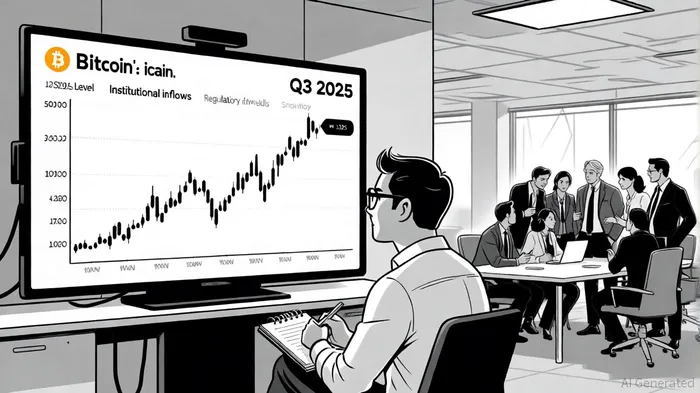
Bitcoin's dominance in Q3 2025 was fueled by unprecedented institutional inflows, particularly through BitcoinBTC-- ETFs. BlackRock's iShares Bitcoin Trust (IBIT) and Grayscale's GBTCGBTC-- saw $15 billion and $16 billion in net flows, respectively, since January 2024, despite structural challenges for the latter, according to Equiti's Q3 outlook. These inflows, coupled with corporate treasuries allocating crypto assets, created a floor for Bitcoin's price action. For example, Bitcoin's price peaked near $108,000 in October 2025, supported by institutional demand and a growing narrative of crypto as a "safe haven" for diversified portfolios, according to Aurpay's analysis.
Regulatory Clarity: A Tailwind for Confidence
The U.S. passed two landmark pieces of legislation in 2025: the Financial Innovation and Technology Act and the GENIUS Act. These laws provided a clear legal framework for stablecoins and digital assets, effectively ending the regulatory limbo that had plagued the industry. The repeal of SAB 121, which previously restricted retirement funds from investing in crypto, unlocked $12.5 trillion in potential capital, according to CoinEdition's recap. This regulatory clarity not only stabilized the market but also attracted risk-averse investors who had previously shunned crypto due to uncertainty, as noted in the Equiti report.
Macroeconomic Tailwinds: The Fed's Dovish Pivot
The U.S. Federal Reserve's decision to cut interest rates in September 2025 was a game-changer. By reducing borrowing costs, the Fed encouraged risk-taking and capital reallocation into high-growth assets like crypto. Bitcoin's price surge in October 2025 coincided with this dovish pivot, as investors sought higher returns in a low-interest-rate environment, as Aurpay observed. This macroeconomic shift underscores the importance of monitoring central bank policies when timing entry points.
Ethereum's Resurgence: A Signal for Altcoin Cycles
While Bitcoin dominated headlines, EthereumETH-- (ETH) emerged as a key driver of market breadth. ETH's price surged to a new all-time high, fueled by DeFi innovation and stablecoin expansion. A critical technical indicator was ETH's breakout above its 20-day EMA in late 2024, historically signaling the end of bear markets, as detailed in CeloLaser's guide. This breakout, combined with growing institutional allocations to mid-cap altcoins, suggests the market is primed for an altcoin season-if Bitcoin's dominance drops below 60%, as noted by Equiti.
Strategic Entry Points: Tools and Tactics for Volatility
Navigating Q3 2025's volatility required a blend of technical analysis and risk management. Here's how savvy investors positioned themselves:
- Dollar-Cost Averaging (DCA): Long-term investors used DCA to mitigate short-term swings, allocating fixed amounts weekly to accumulate Bitcoin and Ethereum at varying price points, a tactic highlighted by Aurpay.
Technical Indicators: Ethereum's 20-day EMA breakout and Bitcoin's support levels near $95,000 became key entry triggers, according to the Coinbase–Glassnode report.
Diversified Allocations: Institutional investors adopted a 50/20/10/20 split across large-cap, mid-cap, high-risk altcoins, and stablecoins to balance growth and safety, per Aurpay's observations.
- Risk Mitigation: Over 95% of institutional holdings were stored in hardware wallets, with tiered stop-loss orders to protect against sudden downturns, as Aurpay reported.
The Road Ahead: Balancing Optimism and Caution
While the Q3 2025 rally was driven by strong fundamentals, investors must remain vigilant. Profit-taking at psychological price levels (e.g., Bitcoin's $130,000–$135,000 target) could create short-term volatility, a risk highlighted in the Equiti report. However, the maturation of the crypto market-evidenced by sophisticated risk frameworks and regulatory progress-suggests that strategic entry points will continue to emerge.
Conclusion
The Q3 2025 pullback was not a bearish signal but a recalibration driven by institutional adoption, regulatory clarity, and macroeconomic shifts. For investors, this volatility created opportunities to enter the market at favorable levels-provided they leveraged technical tools, diversified allocations, and disciplined risk management. As the altcoin market prepares for a potential $3–$5 trillion expansion, the key takeaway is clear: crypto's future is bright, but success requires a blend of patience, strategy, and adaptability.





Comentarios
Aún no hay comentarios