
Underperforming Logistics and Transportation Stocks: What Drives the Downturn?
The logistics and transportation sector has faced a perfect storm of macroeconomic and sector-specific challenges from 2023 to 2025, leading to a wave of underperformance among key stocks. From a freight recession and inflationary pressures to regulatory complexities and labor shortages, the industry's struggles reflect a confluence of forces that have eroded margins and investor confidence. This analysis unpacks the drivers behind the downturn, using concrete examples and financial data to highlight the scale of the crisis.
Macroeconomic Headwinds: A Perfect Storm
The 2023-2025 freight recession marked a sharp contraction in demand, driven by reduced consumer spending and disrupted global supply chains. According to PwC's deals outlook, the U.S. administration's sweeping tariff overhaul in early 2025 exacerbated uncertainty, prompting companies to adopt a "wait-and-see" approach to deals and investments. Meanwhile, inflation and exchange rate volatility have disproportionately impacted emerging markets, where logistics firms face higher fuel and labor costs, as noted in a ScienceDirect study. For instance, Universal Logistics HoldingsULH-- (NASDAQ: ULH) reported a 14.8% year-over-year revenue drop in Q2 2025, with its trucking segment shrinking by 29.9% due to inflation-driven wage hikes and fuel expenses, according to Universal Logistics' Q2 2025 report.
Normalized freight rates, a legacy of post-pandemic demand surges, have further squeezed profitability. Companies like United Parcel ServiceUPS-- (NYSE: UPS) and Union PacificUNP-- (NYSE: UNP) have seen modest revenue growth despite strong quarterly earnings, signaling a shift from high-margin freight to cost-driven competition, based on MarketBeat's top 50 transportation list.
Sector-Specific Challenges: From Labor Shortages to Urban Congestion
Beyond macroeconomic factors, the sector grapples with structural issues. Labor shortages remain a critical pain point: 46.3% of logistics firms report difficulty filling mid-level and low-wage roles, forcing them to raise wages and automate, according to SCMR's 33rd annual study. Regulatory pressures compound these issues, with 64% of companies citing compliance costs rising by 1-10% annually, as the same SCMR study documents. For example, Swissport and Geodis have faced operational shutdowns and contract losses due to tariffs and labor disputes, affecting thousands of workers, as described in a Tradlinx blog post.
Urban congestion adds another layer of complexity. In major metropolitan areas, delivery delays average 16 minutes due to traffic, prompting firms to invest in micro-warehouses and smart routing, a trend highlighted by the SCMR study. However, such innovations require capital expenditures that many smaller operators cannot afford, widening the gap between industry leaders and laggards.
Case Studies: The Human Toll on Stock Performance
Universal Logistics Holdings (ULH): ULH's Q2 2025 results underscore the sector's fragility. Operating income fell to $19.9 million, a 59.8% decline from $47.1 million in 2024, with an operating margin of 5.1%-half the previous year's 10.2%. The intermodal segment, once a growth driver, underperformed as tariffs disrupted cross-border trade (see Universal Logistics' Q2 2025 report).
GEODIS: The French logistics giant saw revenues fall 15% in 2023 and another 3.3% in 2024, yet managed to grow EBITDA margins to 10.69% through cost optimization, according to the GEODIS 2024 report. This resilience, however, masks underlying vulnerabilities: declining retail volumes in North America and manufacturing slumps in Europe highlight the sector's exposure to macroeconomic shifts (GEODIS' 2024 report).
Globavend Holdings (NASDAQ: GVH): A starker example of collapse, Globavend's stock plummeted 97.03% in a year, reflecting a loss of investor trust amid unmet growth expectations and operational inefficiencies, as reported in a MarketsGoneWild article.
Strategic Responses and the Path Forward
Firms are adopting three key strategies to navigate the downturn:
1. Operational Efficiency: Automation and AI-driven route optimization are gaining traction, though adoption remains uneven.
2. Diversification: Companies like GEODIS are pivoting to tailored logistics solutions, balancing exposure across air, sea, and land transport, as outlined in GEODIS' 2024 report.
3. Sustainability: With 57% of logistics firms targeting net-zero emissions by 2050, green technologies like electric fleets are becoming both a regulatory imperative and a competitive edge, according to Nomadic's 2024–25 report.
However, these efforts require time and capital. For now, the sector remains in a holding pattern, with deal activity subdued and profitability under pressure.
Conclusion
The underperformance of logistics and transportation stocks is not a temporary blip but a symptom of deep-seated macroeconomic and structural challenges. From tariffs and inflation to labor shortages and urban logistics bottlenecks, the industry's pain points are interconnected and persistent. While strategic pivots offer hope, investors must remain cautious: the path to recovery will demand resilience, innovation, and a favorable shift in global economic conditions.```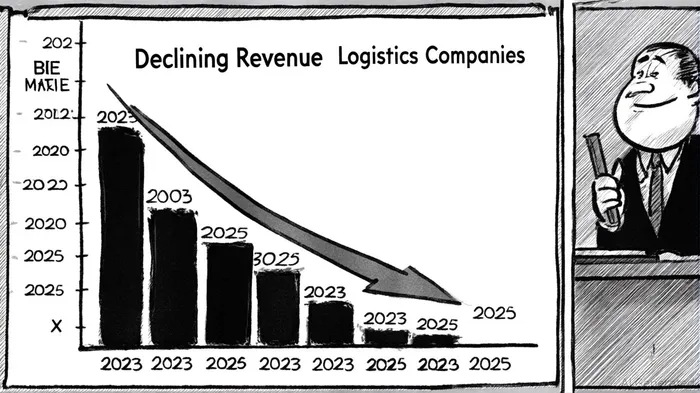





Comentarios
Aún no hay comentarios