
The Underestimated Growth Potential of Coffee Chains in Post-Pandemic Markets
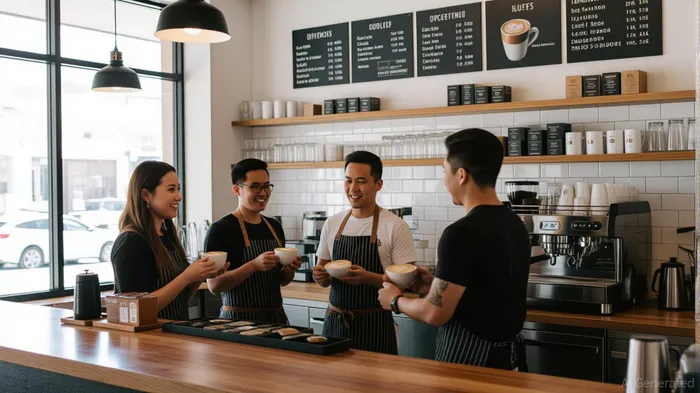
The post-pandemic coffee industry is undergoing a quiet revolution. While market saturation might suggest diminishing returns, a closer look reveals a landscape ripe with underestimated growth potential. Consumer behavior shifts—toward premiumization, convenience, and experiential value—combined with innovative brand differentiation strategies, are reshaping the sector. For investors, this represents a compelling opportunity to capitalize on a market that is not just surviving but strategically evolving.
Consumer Behavior: From Commodity to Craft
Post-pandemic, coffee is no longer a mere commodity. According to a report by Bevindustry, U.S. retail coffee sales are projected to reach $20.8 billion in 2023, driven by a 9.5% year-over-year increase[1]. This growth is fueled by a shift toward premium offerings. Between 2018 and 2022, premium coffee segments gained 3.1 percentage points of market share[1], as consumers trade up for quality and novelty.
The at-home coffee revolution is another key trend. Sixteen percent of consumers now craft specialty drinks at home[1], a shift accelerated by the rise of single-serve and ready-to-drink (RTD) formats. These segments, though small, are growing disproportionately—particularly among Gen Z, who prioritize convenience and functional benefits like immunity support[5]. Cold brew and espresso-based drinks are also surging, reflecting a demand for indulgence and customization.
Brand Differentiation: Beyond the Cup
In a saturated market, differentiation is no longer about the product alone. It's about storytelling, sustainability, and digital engagement. StarbucksSBUX--, for instance, has leveraged cultural storytelling to reinforce its brand. The launch of the Starbucks® Sunsera Blend™ in 2025—a light-roast coffee designed for versatility—was paired with in-store promotions and free refills, driving trial rates[2]. Similarly, its Single-Origin Ethiopia offering highlights the brand's commitment to ethical sourcing and cultural authenticity[5].
Sustainability is another differentiator. Brands emphasizing eco-friendly packaging or ethical sourcing resonate with consumers who prioritize values[4]. Digital strategies, including social media campaigns and hashtags, amplify these messages. A 2025 AMA report notes that targeted digital engagement fosters emotional connections, turning customers into brand advocates[5].
The Role of Innovation in Sustaining Growth
Innovation isn't just about new products—it's about redefining the coffee experience. Limited-time offerings and seasonal menus keep the product lineup fresh, encouraging repeat visits[2]. Experiential marketing, such as collaborations with artists or influencer-driven events, creates buzz and positions coffee chains as lifestyle brands[3].
The global market further underscores this potential. With the coffee category valued at $400 billion[3], emerging markets present untapped opportunities. Consumers in regions like Southeast Asia and Africa are increasingly adopting premium coffee habits, mirroring trends in the U.S. and Europe.
Investment Implications
For investors, the key lies in identifying chains that balance innovation with operational efficiency. Starbucks' C.A.F.E. Practices, which prioritize ethical sourcing, demonstrate how sustainability can drive long-term value[4]. Meanwhile, the rise of RTD and single-serve formats suggests that convenience-focused players could outperform traditional models.
Conclusion
The coffee industry's post-pandemic trajectory is not one of decline but of reinvention. By aligning with consumer demands for quality, convenience, and purpose, coffee chains are proving their resilience. For investors, the lesson is clear: the market's saturation is a myth if you know where to look. The real growth lies in brands that can turn a cup of coffee into a narrative—and a lifestyle.





Comentarios
Aún no hay comentarios