
Ultragenyx's Inducement Grants: A Strategic Move in Biotech Talent Retention and Investor Confidence
In September 2025, Ultragenyx Pharmaceutical Inc.RARE-- (NASDAQ: RARE) announced an inducement grant of 48,561 restricted stock units (RSUs) to 17 newly hired non-executive officers under its Employment Inducement Plan, in compliance with Nasdaq Listing Rule 5635(c)(4) [1]. This move, part of a broader trend in the biotech sector, underscores the company's strategic focus on talent retention and long-term value creation. By aligning employee interests with shareholder outcomes, UltragenyxRARE-- aims to navigate the high-stakes landscape of rare disease therapeutics while addressing investor concerns about operational efficiency and profitability.
RSUs as a Talent Magnet in a Competitive Sector
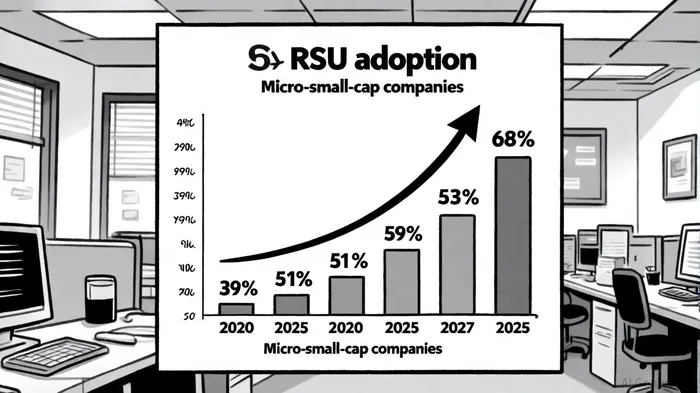
The biotech industry has seen a surge in RSU-based compensation, particularly for non-executive roles, as companies grapple with prolonged R&D timelines and market volatility. Since 2020, RSU adoption among micro- and small-cap biotechs has risen from 39% to 51% and 53% to 68%, respectively [2]. This shift reflects the preference for RSUs over stock options, which lose value in down markets. For Ultragenyx, the September 2025 grant—alongside earlier awards of 44,805 RSUs in May and 36,831 RSUs in April—demonstrates a consistent strategy to attract specialized talent critical for advancing its pipeline of therapies for rare diseases [3].
The four-year vesting schedule (25% annual vesting contingent on continued employment) ensures that new hires remain incentivized to contribute to long-term milestones, such as the FDA's review of UX111, an AAV gene therapy for Sanfilippo syndrome [4]. This structure also mitigates short-term turnover risks, a key concern in an industry where clinical trial continuity is paramount.
Investor Sentiment: Balancing Optimism and Caution
While inducement grants signal confidence in Ultragenyx's growth trajectory, investors remain wary of the company's financials. In Q1 2025, Ultragenyx reported a net loss of $151 million despite a 28% year-over-year revenue increase to $139 million [5]. The company has also raised $350 million via public offerings in 2024, raising concerns about share dilution [6]. However, the strategic use of RSUs—less dilutive than stock options—aligns with industry best practices for managing share reserves while maintaining employee motivation [2].
Notably, historical backtesting from 2022 to 2025 reveals that RARE has averaged a –5.8% decline on the day following earnings releases, with win rates below 40% across most holding periods, indicating limited upside momentum post-earnings[7]. The broader biotech sector's shift toward “megarounds” (funding rounds exceeding $100 million) suggests that investors are prioritizing companies with de-risked pipelines and robust clinical validation [7]. Ultragenyx's recent grants, coupled with its reaffirmed 2025 revenue guidance ($640–$670 million), position it as a candidate for such investor confidence, provided it meets key milestones like the PDUFA date for UX111 (August 18, 2025) [4].
Executive Compensation and Strategic Alignment
Though the recent grants focus on non-executive roles, Ultragenyx's broader compensation strategy emphasizes performance-driven incentives. CEO Emil Kakkis has highlighted the importance of “high-performing teams” in driving revenue growth, while the company's 2025 proxy statement notes a focus on expense management and operational efficiency [5]. While specific performance metrics for executives are not disclosed, industry trends indicate that over 75% of S&P 500 healthcare firms incorporate ESG metrics into executive pay [8]. It is plausible that Ultragenyx aligns with these practices, though further transparency would strengthen investor trust.
Risks and Opportunities
The primary risk lies in the biotech sector's inherent volatility. A failed clinical trial or regulatory delay could erode investor confidence, particularly given Ultragenyx's current net losses. However, the company's emphasis on RSUs and expense control—combined with its strong cash balance ($563 million as of March 31, 2025)—provides a buffer for navigating setbacks [5]. Additionally, the rise of AI-driven drug discovery and platform-based therapies (e.g., CRISPR, mRNA) offers long-term growth avenues [7].
Conclusion
Ultragenyx's inducement grants reflect a calculated approach to talent retention and long-term value creation, aligning with broader biotech industry trends. While investor sentiment remains cautiously optimistic, the company's ability to meet clinical and financial milestones will be critical in determining whether these strategic moves translate into sustained shareholder value. For now, the grants signal a commitment to innovation and operational resilience—a necessary stance in the high-stakes world of rare disease therapeutics.





Comentarios
Aún no hay comentarios