
Ultra-Small-Cap Tech Stocks as Hedges in Crypto Corrections: The Fed's Role
The cryptocurrency market's cyclical nature has long been defined by speculative capital flows, with corrections acting as both purging mechanisms and catalysts for innovation. In recent years, a growing subset of investors has turned to ultra-small-cap tech stocks as alternative hedges during crypto downturns, a strategy increasingly influenced by Federal Reserve policy shifts. This analysis explores the interplay between speculative flows, Fed-driven investor sentiment, and the role of ultra-small-cap tech stocks in mitigating crypto market volatility.
Historical Correlation: Crypto and Small-Cap Tech Stocks
Bitcoin and the Russell 2000 tech sector have exhibited a strikingly strong correlation during periods of market volatility. JPMorgan analysts note that both asset classes experienced synchronized surges in 2020 and 2024, followed by sharp declines in 2022 amid rising interest rates and macroeconomic uncertainty. This relationship is rooted in shared drivers: venture capital funding, retail investor activity, and technological innovation. For instance, during the 2020 market rebound, Bitcoin's 300% rally coincided with a 40% surge in the Russell 2000 tech index, while the 2022 correction saw both assets drop by over 60%, according to Cryptopolitan.
The correlation extends beyond BitcoinBTC-- to altcoins, with Bravos Research observing that smaller cryptocurrencies like SolanaSOL-- and CardanoADA-- also align with small-cap tech stock movements, as detailed in a BeInCrypto report. This suggests a broader risk-on/risk-off dynamic, where speculative capital flows between crypto and tech equities based on macroeconomic conditions.
Fed Policy: A Dual-Edged Sword
Federal Reserve policy has emerged as a critical variable in this dynamic. When the Fed raised rates in 2022 to combat inflation, both crypto and small-cap tech stocks faced liquidity crunches, contributing to the "crypto winter" and a broader market contraction, as explored in a DeFi-Planet analysis. Conversely, the Fed's 2024-2025 rate cuts-aimed at stimulating economic activity-spurred a resurgence in risk assets. Lower borrowing costs reduced the opportunity cost of holding non-yielding assets like Bitcoin, while small-cap tech stocks benefited from improved cash flow and increased venture capital inflows, according to a BeInCrypto analysis.
The September 2025 rate cut, for example, coincided with a 15% rebound in Bitcoin and a 12% rally in the Russell 2000 tech index, underscoring the Fed's role in shaping investor behavior, as reported in a CoinDesk piece. However, the Fed's cautious messaging-emphasizing vigilance against inflation-has introduced uncertainty, with a Morgan Stanley forecast estimating a 50-50 chance of further cuts in 2025.
Investor Sentiment and Speculative Flows
Speculative capital flows are heavily influenced by investor sentiment, which is, in turn, shaped by social influence and psychological biases. During crypto corrections, capital often reverses direction, with investors shifting to perceived safer havens. Ultra-small-cap tech stocks, despite their volatility, have increasingly been viewed as complementary hedges. For example, during the 2022 crypto crash, venture-backed tech firms in the Russell 2000 saw inflows as investors sought exposure to innovation-driven growth, according to an Investing.com report.
Retail investors, in particular, have amplified this link. Platforms like Robinhood and Binance report overlapping user bases for crypto and small-cap tech stocks, with leverage and margin trading further synchronizing movements. This behavioral overlap suggests that speculative flows are not merely correlated but structurally intertwined.
Case Studies: 2020, 2022, and 2024
- 2020: The Fed's emergency rate cuts and quantitative easing fueled a 300% Bitcoin rally and a 40% surge in the Russell 2000 tech index, driven by pandemic-era liquidity and AI/5G optimism, as highlighted in an Onwish analysis.
- 2022: Rising rates and inflation triggered a 60% drop in both assets, exposing their shared vulnerability to macroeconomic shocks, per a Bankrate analysis.
- 2024: Post-halving optimism and the Fed's easing cycle reignited a 150% Bitcoin rally and a 25% rebound in small-cap tech stocks, illustrating the cyclical nature of speculative flows, as discussed in an Inc. article.
Limitations as Hedges
While the correlation is compelling, empirical studies caution against viewing ultra-small-cap tech stocks as reliable long-term hedges. A ScienceDirect study using Extreme Value Theory shows that cryptocurrencies fail to reduce stock market volatility effectively, with Bitcoin's hedging utility diminishing over time. Similarly, small-cap tech stocks face liquidity risks and niche market dependencies, making them susceptible to sudden corrections, as argued in a Bridgeway perspective.
Conclusion
Ultra-small-cap tech stocks and crypto markets are inextricably linked through speculative capital flows and Fed policy dynamics. While they offer short-term hedging potential during corrections, their volatility and structural risks necessitate caution. Investors must balance the allure of high-growth opportunities with macroeconomic vigilance, particularly as the Fed's policy trajectory remains uncertain.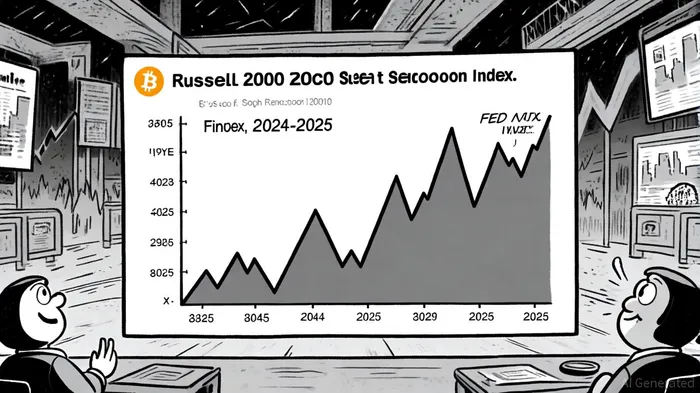





Comentarios
Aún no hay comentarios