
The Ultimate Edge in Crisis: T-Mobile and Samsung Are Building a Lifeline for First Responders—and Investors Should Take Note
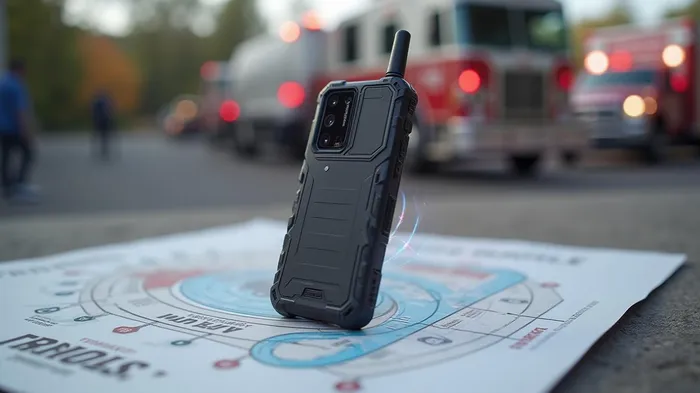
The clock is ticking on a major shift in how we ensure life-and-death communication. On May 15, 2025, T-MobileTMUS-- and Samsung will launch the Samsung Galaxy XCover7 Pro with T-Priority certification, a rugged smartphone designed to deliver unshakable connectivity to first responders, emergency crews, and critical infrastructure operators. This isn’t just a gadget—it’s a strategic infrastructure play with massive implications for public safety, enterprise resilience, and investor returns.
Why This Partnership Is a Game-Changer
The XCover7 Pro isn’t your typical smartphone. Built to MIL-STD-810H military-grade specs, it can survive subzero temperatures, sandstorms, and 6-foot drops while running for an entire shift on a single charge. But its true superpower is T-Mobile’s T-Priority network—a dedicated 5G “slice” that guarantees first-in-line access during emergencies. When a hurricane hits, a wildfire spreads, or a city’s 911 lines go haywire, this phone doesn’t just connect—it dominates the connection.
Here’s why this matters for investors:
- Network slicing isn’t theoretical. T-Priority dynamically allocates bandwidth to prioritize first responders’ calls, video streams, and data transfers—even if the network is overwhelmed.
- Samsung’s enterprise-grade security (via Samsung Knox) ensures no breach can cripple emergency operations.
- Recurring revenue streams are baked in: businesses and governments will pay premiums for contracts guaranteeing fail-safe connectivity.
The $100 Billion Opportunity in Mission-Critical 5G
The market for “always-on” communication tools isn’t niche—it’s expanding explosively. Governments worldwide are pouring trillions into infrastructure resilience, while industries like utilities, transportation, and healthcare are racing to adopt IoT-driven systems that require 24/7 reliability.
T-Mobile and Samsung are first movers here. By pairing T-Mobile’s nationwide 5G backbone with Samsung’s ruggedized hardware, they’ve created a one-stop solution for:
- Fire departments needing real-time wildfire maps.
- Oil refineries monitoring sensors in storm zones.
- Hospitals transmitting critical patient data during grid failures.
Why This Isn’t a Fad—It’s a New Infrastructure Standard
Critics will ask: Can a single phone really justify buying the stock? Absolutely. The XCover7 Pro is just the tip of the iceberg.
- Network slicing is scalable. T-Mobile can replicate T-Priority for other industries, like utilities or manufacturing, where downtime costs billions.
- Enterprise contracts are gold. The promotional terms (e.g., free devices with new lines) lock customers into multiyear plans, creating predictable revenue growth.
- IoT integration is next. Imagine police body cams, smart traffic lights, and disaster drones all running on T-Priority’s prioritized 5G—all under the same umbrella of reliability.
The Risk/Reward Equation? A No-Brainer
This isn’t a gamble—it’s a strategic bet on inevitabilities:
1. Governments will pay for resilience. The U.S. alone has allocated $650 billion for critical infrastructure over the next decade.
2. Enterprises will demand fail-safe tech. A single power grid outage costs utilities $1 billion annually; T-Priority prevents that.
3. 5G is the enabler. Network slicing isn’t a feature—it’s the future of connectivity, and T-Mobile is already leading the charge.
Bottom Line: Buy Now or Watch the Rally Without You
T-Mobile and Samsung are solving a problem the world must pay to fix. With the XCover7 Pro, they’ve turned a phone into mission-critical infrastructure—and that’s a goldmine.
Investors who act now get in at a discount before the floodgates open. The rollout on May 15 isn’t just a product launch—it’s the start of a new revenue engine. Don’t miss the boat. Act now, and position yourself for the next wave of 5G-driven growth.
Disclosure: This analysis is for informational purposes only. Always consult a financial advisor before making investment decisions.





Comentarios
Aún no hay comentarios