
Ulta Beauty's Q3 Earnings: A Glimpse into Sustained Beauty Sector Resilience and Strategic Growth
The U.S. beauty retail sector remains a battleground for innovation and market dominance, with Ulta BeautyULTA-- (NASDAQ: ULTA) emerging as a standout performer in Q3 2025. The company's third-quarter results, , underscore its ability to navigate a fragmented market while executing a data-driven, customer-centric strategy. These figures, coupled with Ulta's aggressive expansion plans and digital innovation, position it as a formidable player in a sector increasingly defined by omnichannel agility and brand differentiation.
Market Share and Growth: A Foundation for Resilience
Ulta's Q3 performance highlights its dominance in the U.S. beauty retail landscape. With 1,500 stores across the country and a robust e-commerce platform, the company has solidified its position as the largest specialty beauty retailer in the U.S..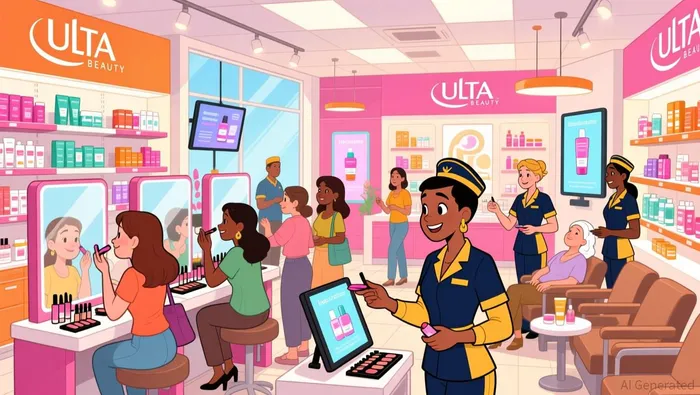 , driven by its curated product mix and in-store services like salons and skincare consultations.
Internationally, UltaULTA-- is adopting a to expansion, with new ventures in Mexico and the Middle East, as well as the acquisition of Space NK in the UK. These moves signal a strategic pivot to global diversification, a critical factor in mitigating domestic market saturation risks. By contrast, competitors like Sephora, of 3,000+ stores, have scaled back U.S. advertising investments, opting instead for -driven strategies.
Competitive Positioning: Aggressive Innovation vs. Prestige Branding
Ulta's Q3 success is rooted in its ability to balance mass-market accessibility with prestige offerings. , . This aggressive marketing strategy has amplified Ulta's visibility in high-growth categories like skincare, . Meanwhile, Sephora's reliance on organic traction and prestige storytelling has kept it competitive in high-average-order-value (AOV) segments but has left it lagging in categories like haircare and fragrance, .
further differentiates the two. Ulta's program, , . Its -BOPIS, curbside, and -enhance convenience, while personalized promotions leverage to deepen engagement. program, though strong in prestige positioning, lacks the same transactional breadth, reflecting a between the two retailers.
Long-Term Strategic Initiatives: Building a Sustainable Edge
Ulta's Q3 momentum is underpinned by a clear long-term vision. The company announced plans to launch a third-party marketplace on the in 2025, aiming to expand product offerings and cater to . This initiative aligns with its broader goal of becoming a for beauty and wellness, a category it is actively expanding through new product introductions and in-store .
Store expansion remains a cornerstone of Ulta's strategy, with a target of over 1,800 locations long-term. Complementing this is a focus on , including and enhanced in-store experiences, to foster deeper . Financially, Ulta has raised its full-year 2025 , reflecting confidence in its ability to achieve 4% to 6% net sales growth and low double-digit diluted EPS growth through disciplined and cost optimizations.
Conclusion: A Model for Sector Resilience
Ulta Beauty's Q3 results and illustrate a company poised for sustained growth in a fragmented beauty market. By combining aggressive advertising, loyalty-driven customer retention, and innovative digital and physical expansion, Ulta has created a hybrid model that bridges mass and prestige segments. While Sephora's brand equity remains a competitive asset, Ulta's agility and provide a compelling edge. For investors, the company's focus on long-term innovation and market resilience offers a clear rationale for optimism in an industry where adaptability is paramount.





Comentarios
Aún no hay comentarios