
Ukrainian Drones Strike Russian Refinery, Raising Market Volatility Concerns
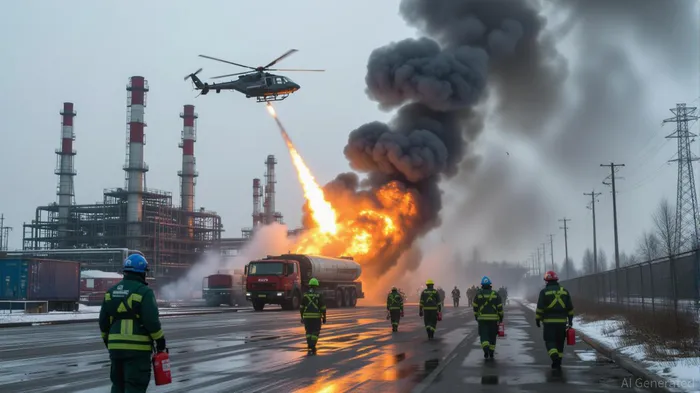
Ukrainian drone operations have targeted key infrastructure in Russia, with a confirmed incident at the Kirishi oil refinery in September 2025. The attack led to a significant fire at the facility, causing operational disruptions and raising concerns over the broader implications for global energy markets.
The Kirishi refinery, a major processing hub for crude oil, has been significantly affected by the drone strike. Initial assessments suggest that the fire has impaired production capacity, though the full extent of the damage is still being evaluated. The attack marks a continuation of recent Ukrainian efforts to target strategic Russian energy assets, which have been increasingly focused on disrupting oil exports and refining operations.
This incident is part of a broader escalation in the use of aerial assets to influence energy supply chains. Ukrainian forces have reportedly intensified drone campaigns against Russian infrastructure in the past months, with a clear strategic focus on oil refineries and transportation nodes. These efforts are aimed not only at degrading Russia’s energy capabilities but also at creating uncertainty in international markets.
The potential economic ramifications are significant. As one of Russia’s key domestic refineries, Kirishi plays an important role in the production of petroleum products for both domestic consumption and export. The facility’s reduced capacity may lead to tighter regional supply conditions, which could be compounded by broader disruptions in Russia’s oil logistics network. This scenario increases the likelihood of upward pressure on global crude prices, particularly in markets already sensitive to geopolitical risks.
Energy analysts have observed a trend of heightened volatility in oil markets linked to the evolving conflict dynamics. Disruptions in Russian refining capabilities, even on a temporary scale, may be amplified by global market sentiment and speculative positioning. While the direct link between this specific attack and broader market movements remains to be seen, the incident underscores the growing influence of non-traditional conflict tactics on energy prices.
The timing of the attack is particularly noteworthy given the ongoing fluctuations in global oil prices. Recent market data has shown a pattern of price spikes following incidents involving Russian infrastructure, suggesting that investors are increasingly factoring in the risk of supply disruptions into their trading strategies. This reinforces the perception that energy markets are becoming more responsive to geopolitical developments, even those occurring outside traditional battlegrounds.
While the long-term effects of the Kirishi incident remain uncertain, the immediate impact on regional refining output and the potential for cascading effects on global markets cannot be overlooked. The use of drones in this context represents a strategic shift in how conflicts are projected into the energy domain, with far-reaching consequences for market stability and pricing mechanisms.







Comentarios
Aún no hay comentarios