
Ukraine's Shrinking Harvest: A Catalyst for Agri-Commodity Gains Amid Global Supply Risks
The war in Ukraine has upended global agriculture, and 2025 brings fresh challenges. With grain production projected to fall by 10% and oilseeds by 5%, the world's breadbasket faces unprecedented strain. Weather anomalies and military disruptions threaten to tighten supplies of wheat, corn, and sunflower oil—critical commodities for net-importing nations. For investors, this volatility creates opportunities in agri-commodities and equities positioned to profit from supply constraints.
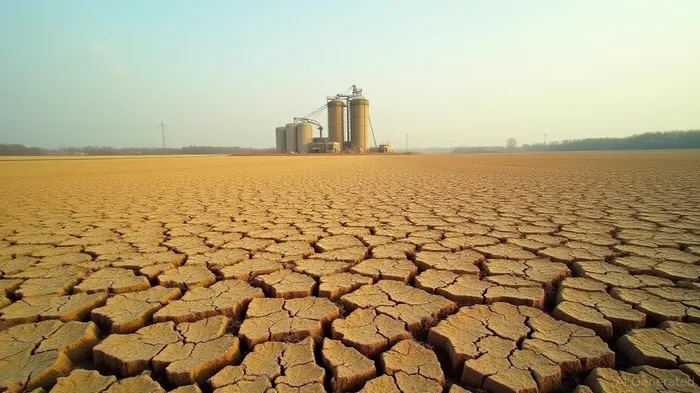
Weather & War: Twin Threats to Ukraine's Output
Ukraine's 2025 harvest is already off to a rocky start. An abnormally warm winter disrupted crop cycles, while spring rains delayed planting in key regions. The Ministry of Agriculture now forecasts a grain harvest of 51 million metric tons—down from 56.7 million in 2024—with wheat production expected to drop to 20-22 million tons. Sunflower seeds, Ukraine's top oilseed export, face a 5% decline to 11.5 million tons.
The conflict compounds these risks. Russia's continued attacks on Black Sea infrastructure—such as the September 2024 strike on a grain vessel—disrupt logistics, while territorial losses threaten control over 22% of Ukraine's farmland. Analysts warn this could permanently reduce wheat output by 4 million tons annually.
Global Supply Tightening: Winners in Commodities
Ukraine supplies 12% of the world's wheat and 45% of its sunflower oil. A 10% grain shortfall could send prices soaring, particularly for wheat and corn. The USDA projects global wheat stocks to hit a 15-year low in 2025/26, while corn faces a supply-demand imbalance due to China's rising imports (+25% to 10 million tons).
Sunflower oil—a staple in North Africa and the Middle East—faces even steeper risks. With Ukraine producing 60% of global exports, any disruption could push prices above $1,500/ton (up from $1,200 in early 2025). Investors should consider exposure to:
- Commodity ETFs: Teucrium Wheat Fund (WEAT) and Teucrium Corn Fund (CORN) track futures prices.
- Sunflower Oil Producers: Companies like Ukraine's Kernel Group (though indirect exposure via European traders like Bunge (BG) or ADM (ADM)).
Equity Plays: Fertilizers and Logistics
Lower yields may force farmers to invest in inputs. Fertilizer stocks like Mosaic (MOS) and CF Industries (CF) could benefit from higher demand. Meanwhile, grain traders—such as Archer-Daniels-Midland (ADM) and Bunge (BG)—are well-positioned to capitalize on logistics bottlenecks and price volatility.
For broader exposure, the Market Vectors Agribusiness ETF (MOO) holds agri-traders, seed companies, and fertilizer firms.
The Geopolitical Wildcard: Ceasefire Implications
A ceasefire could stabilize exports temporarily but risks locking in Russian control over key farmland. Investors must monitor diplomatic developments. Even a partial resolution might delay reconstruction funding; only $873 million of the needed $55.5 billion has been secured.
Investment Thesis: Act Now—Volatility Will Persist
The confluence of weather and conflict creates a “perfect storm” for grain markets. With global inventories near critical lows and Ukraine's production uncertain, prices are primed to rise. Investors should:
1. Buy commodity ETFs: WEAT, CORN, and MOO offer direct exposure to supply-driven price spikes.
2. Hedge with fertilizers: MOS and CF benefit from higher input demand.
3. Monitor geopolitical risks: A Black Sea supply shock could trigger panic buying.
The urgency is clear: Ukraine's 2025 harvest is a litmus test for global food security. With risks escalating, investors who act now may secure outsized gains as markets grapple with scarcity.
Disclosure: Past performance does not guarantee future results. Commodity investments carry risks, including market volatility and geopolitical uncertainty. Consult a financial advisor before making decisions.







Comentarios
Aún no hay comentarios