
Ukraine's Mineral Deal: A Strategic Gamble with $500 Billion on the Line?
As the clock ticks toward April 26, Ukraine and the United States stand at a crossroads, racing to finalize a landmarkLARK-- deal that could reshape global supply chains for critical minerals. The agreement, which would grant Washington privileged access to Ukraine’s reserves of rare earth elements, lithium, titanium, and uranium, is framed as a quid pro quo for $50 billion in U.S. military aid since 2022. But behind the headlines lies a complex web of geopolitical risk, financial ambition, and unresolved tensions—factors that could make this deal either a transformative investment opportunity or a cautionary tale of overreach.
The Minerals at Stake
The heart of the deal lies in Ukraine’s vast but underexploited mineral wealth. Rare earth elements (REEs), used in everything from smartphones to electric vehicles, are central to the U.S. push to reduce reliance on Chinese dominance in the sector. Graphite and lithium are critical for battery production, while titanium finds use in aerospace and defense. Uranium, meanwhile, could fuel U.S. energy independence efforts.
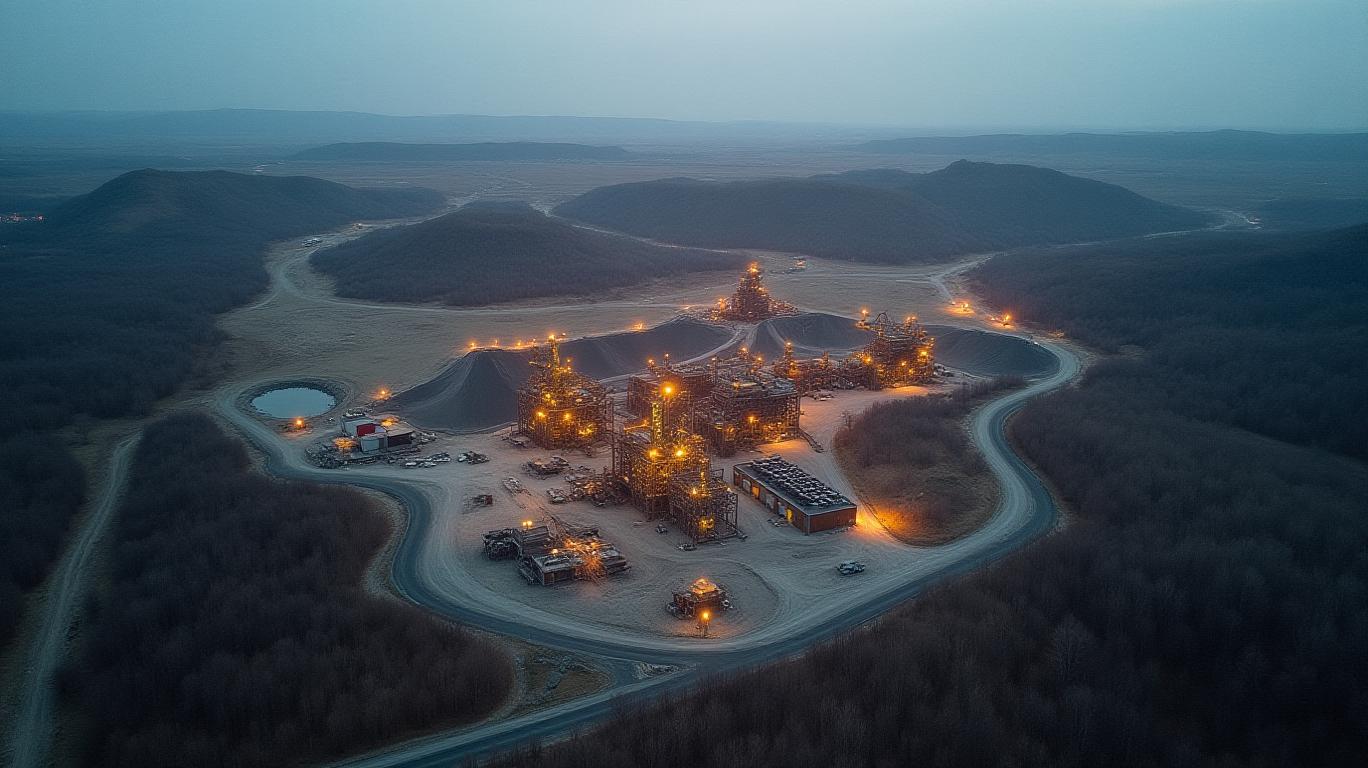
Ukraine’s reserves, however, are not without complications. Many deposits are in regions currently occupied by Russia or contested territories, raising questions about accessibility. Moreover, the deal would require navigating Ukraine’s fragmented mining sector, where state and private ownership overlap.
The Deal’s Terms—and Controversies
The draft agreement, signed on April 17, establishes a joint U.S.-Ukraine investment fund to channel mineral revenues into postwar reconstruction. But two major sticking points remain:
- Security guarantees: Kyiv insists that U.S. military support must accompany the deal, a demand Washington has flatly rejected. With Russia still occupying 20% of Ukrainian territory, this omission could derail the talks.
- Financial transparency: Critics question how the fund will be managed and audited, particularly after past scandals involving misallocated aid.
The U.S. stance is clear: no security guarantees, but a $500 billion windfall for American firms, as President Trump claims. Skeptics counter that this figure—likely derived from multiplying Ukraine’s estimated mineral reserves by commodity prices—is a political fiction. A more sober analysis of REE reserves alone (valued at roughly $150 billion) suggests the true upside may be far smaller.
Market Implications: A Double-Edged Sword
For investors, the deal’s success hinges on execution—and survival.
If finalized, the agreement could boost U.S. firms like Molycorp (MCP) and Avalon Advanced Materials (AVL), which are already racing to secure REE supplies. It might also pressure Chinese competitors, whose market dominance could be challenged. However, delays or a collapse of talks could trigger a sell-off in mining stocks, particularly if investors lose faith in the deal’s viability.
Ukraine itself faces risks. By tying its economic recovery to U.S. corporate interests, Kyiv risks ceding control over its mineral wealth. Meanwhile, the absence of security guarantees leaves the door open to further Russian aggression, a wildcard that could destabilize the entire arrangement.
Risks Lurking in the Margins
The deal’s fragility became stark in February, when a Trump-Zelenskiy clash temporarily halted U.S. intelligence sharing. While talks have resumed, trust remains thin. The White House’s refusal to disclose final terms—and Kyiv’s desperation for reconstruction funds—adds urgency but little clarity.
Geopolitical analysts note parallels to the 2014 South China Sea disputes, where resource competition fueled instability. For investors, the lesson is clear: even a “done deal” could unravel if Russia escalates its war or the U.S. backtracks on funding.
Conclusion: A High-Reward, High-Risk Proposition
The Ukraine mineral deal is a classic case of asymmetric risk. For the U.S., access to critical minerals could insulate its supply chains at a pivotal moment for clean energy and tech industries. For Ukraine, it offers a lifeline to rebuild—but only if the terms are enforceable and the security void is addressed.
Investors should approach with a skeptic’s eye. While the $500 billion headline grabs attention, the real value lies in the deal’s ability to deliver on its core promise: a stable, transparent framework for resource extraction. If signed, the agreement may boost shares of U.S. mining firms in the short term, but long-term success will depend on geopolitical stability and honest accounting.
In the end, this is not just a deal about minerals—it’s a test of whether diplomacy can outpace the war that birthed it. For now, the world watches to see if $500 billion is a number worth betting on, or a mirage in the smoke of conflict.







Comentarios
Aún no hay comentarios