
Ukraine's Economic Struggle: The Vanishing U.S. Backing
Generado por agente de IATheodore Quinn
sábado, 22 de febrero de 2025, 2:18 am ET2 min de lectura
ALLY--
As the war against Russia enters its third year, Ukraine finds itself in a precarious position, with the U.S. backing seemingly on the wane. The Ukrainian economy, battered and bruised by the ongoing conflict, is now facing the prospect of reduced financial and material support from its key ally. This article explores the potential implications of a decrease in U.S. backing for Ukraine's economy and examines alternative sources of financial and material support.
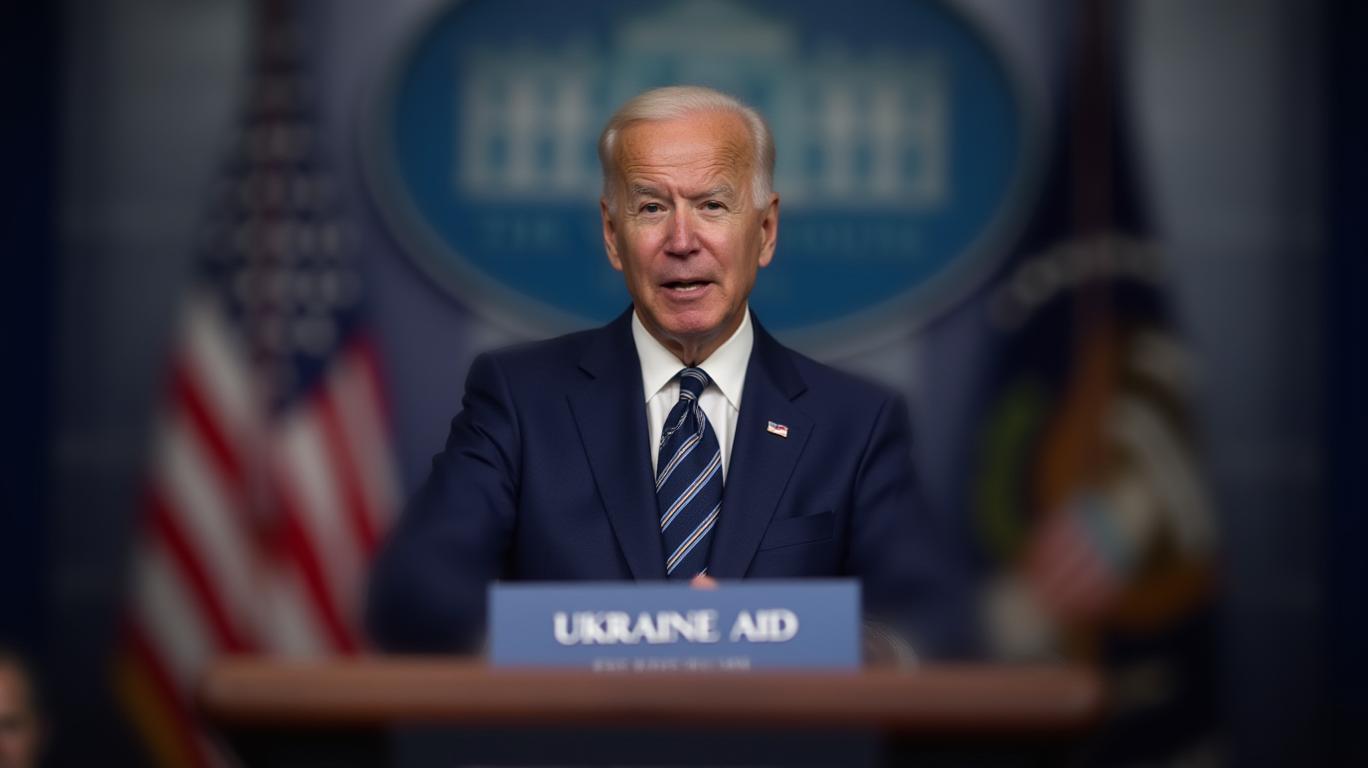
The U.S. has been a significant contributor to Ukraine's financial and material support, providing over $113 billion in security assistance and economic aid since 2014. However, the pace of U.S. aid has slowed in recent months, raising concerns about the sustainability of Ukraine's recovery and reconstruction efforts. A decrease in U.S. backing could lead to a shortfall in funding, potentially slowing down the country's recovery and undermining its ability to resist Russian aggression.
To mitigate the impact of a decrease in U.S. backing, Ukraine could explore alternative sources of financial and material support. The European Union (EU) has been a significant contributor to Ukraine's recovery, providing over €17 billion in macro-financial assistance and humanitarian aid since 2014. With Ukraine's potential EU accession, the EU could play an even more significant role in supporting Ukraine's economy. The EU's Ukraine Facility, for example, aims to provide €18 billion in grants and low-interest loans to support Ukraine's recovery and reform efforts.
International financial institutions (IFIs) such as the World Bank and the International Monetary Fund (IMF) could also provide additional financial support to Ukraine. The World Bank, for instance, has already committed $4.5 billion in grants and low-interest loans to support Ukraine's recovery. The IMF has provided a $1.3 billion Stand-By Arrangement to Ukraine to help stabilize its economy and support its recovery efforts.
Attracting private investment from both domestic and international sources could also help bolster Ukraine's economy. This could involve improving the business environment, strengthening property rights, and enhancing the rule of law. Additionally, Ukraine could explore public-private partnerships (PPPs) to leverage private sector resources and expertise in supporting the country's recovery.
Confiscation of Russian assets frozen in the West could provide another source of funding for Ukraine's recovery. According to the Ukrainian government, the total value of frozen Russian assets could reach up to $300 billion. If successfully confiscated and repatriated, these assets could provide a significant source of funding for Ukraine's reconstruction and recovery.
The Ukrainian diaspora, estimated to be around 6 million people worldwide, could also play a role in supporting Ukraine's economy. The diaspora could provide financial contributions, invest in Ukrainian businesses, and share their expertise and skills to support the country's recovery.
In conclusion, a decrease in U.S. backing could have a significant impact on the Ukrainian economy. To mitigate this impact, Ukraine could explore alternative sources of financial and material support, such as increased EU support, IFI assistance, private investment, confiscation of Russian assets, and engagement with the Ukrainian diaspora. By diversifying its sources of support, Ukraine can help ensure the long-term success of its recovery and reconstruction efforts.
FISI--
WEST--
As the war against Russia enters its third year, Ukraine finds itself in a precarious position, with the U.S. backing seemingly on the wane. The Ukrainian economy, battered and bruised by the ongoing conflict, is now facing the prospect of reduced financial and material support from its key ally. This article explores the potential implications of a decrease in U.S. backing for Ukraine's economy and examines alternative sources of financial and material support.
The U.S. has been a significant contributor to Ukraine's financial and material support, providing over $113 billion in security assistance and economic aid since 2014. However, the pace of U.S. aid has slowed in recent months, raising concerns about the sustainability of Ukraine's recovery and reconstruction efforts. A decrease in U.S. backing could lead to a shortfall in funding, potentially slowing down the country's recovery and undermining its ability to resist Russian aggression.
To mitigate the impact of a decrease in U.S. backing, Ukraine could explore alternative sources of financial and material support. The European Union (EU) has been a significant contributor to Ukraine's recovery, providing over €17 billion in macro-financial assistance and humanitarian aid since 2014. With Ukraine's potential EU accession, the EU could play an even more significant role in supporting Ukraine's economy. The EU's Ukraine Facility, for example, aims to provide €18 billion in grants and low-interest loans to support Ukraine's recovery and reform efforts.
International financial institutions (IFIs) such as the World Bank and the International Monetary Fund (IMF) could also provide additional financial support to Ukraine. The World Bank, for instance, has already committed $4.5 billion in grants and low-interest loans to support Ukraine's recovery. The IMF has provided a $1.3 billion Stand-By Arrangement to Ukraine to help stabilize its economy and support its recovery efforts.
Attracting private investment from both domestic and international sources could also help bolster Ukraine's economy. This could involve improving the business environment, strengthening property rights, and enhancing the rule of law. Additionally, Ukraine could explore public-private partnerships (PPPs) to leverage private sector resources and expertise in supporting the country's recovery.
Confiscation of Russian assets frozen in the West could provide another source of funding for Ukraine's recovery. According to the Ukrainian government, the total value of frozen Russian assets could reach up to $300 billion. If successfully confiscated and repatriated, these assets could provide a significant source of funding for Ukraine's reconstruction and recovery.
The Ukrainian diaspora, estimated to be around 6 million people worldwide, could also play a role in supporting Ukraine's economy. The diaspora could provide financial contributions, invest in Ukrainian businesses, and share their expertise and skills to support the country's recovery.
In conclusion, a decrease in U.S. backing could have a significant impact on the Ukrainian economy. To mitigate this impact, Ukraine could explore alternative sources of financial and material support, such as increased EU support, IFI assistance, private investment, confiscation of Russian assets, and engagement with the Ukrainian diaspora. By diversifying its sources of support, Ukraine can help ensure the long-term success of its recovery and reconstruction efforts.

Divulgación editorial y transparencia de la IA: Ainvest News utiliza tecnología avanzada de Modelos de Lenguaje Largo (LLM) para sintetizar y analizar datos de mercado en tiempo real. Para garantizar los más altos estándares de integridad, cada artículo se somete a un riguroso proceso de verificación con participación humana.
Mientras la IA asiste en el procesamiento de datos y la redacción inicial, un miembro editorial profesional de Ainvest revisa, verifica y aprueba de forma independiente todo el contenido para garantizar su precisión y cumplimiento con los estándares editoriales de Ainvest Fintech Inc. Esta supervisión humana está diseñada para mitigar las alucinaciones de la IA y garantizar el contexto financiero.
Advertencia sobre inversiones: Este contenido se proporciona únicamente con fines informativos y no constituye asesoramiento profesional de inversión, legal o financiero. Los mercados conllevan riesgos inherentes. Se recomienda a los usuarios que realicen una investigación independiente o consulten a un asesor financiero certificado antes de tomar cualquier decisión. Ainvest Fintech Inc. se exime de toda responsabilidad por las acciones tomadas con base en esta información. ¿Encontró un error? Reportar un problema




Comentarios
Aún no hay comentarios