
Ukraine's Bitcoin Gambit: How Sovereign Digital Reserves Are Redefining Geopolitical Investing in 2025
In the ever-shifting landscape of global finance, Ukraine has emerged as a bold pioneer, leveraging BitcoinBTC-- notNOT-- just as a speculative asset but as a strategic tool to reshape its economic sovereignty. With over 46,351 BTC-valued at approximately $5 billion-stored in its reserves, Kyiv is positioning itself at the forefront of a geopolitical revolution, according to a Codeum report. This move, backed by a draft bill allowing the National Bank of Ukraine (NBU) to manage Bitcoin alongside gold and fiat, signals a seismic shift in how nations approach capital preservation and risk mitigation, per a Cointelegraph report. For investors, this isn't just a story about Ukraine-it's a glimpse into the future of global capital, where digital assets are becoming the new frontier for hedging against instability.
The Ukrainian Playbook: Bitcoin as a Geopolitical Shield
Ukraine's adoption of Bitcoin as a reserve asset is less about chasing returns and more about survival. Since Russia's invasion in 2022, the country has relied on crypto donations to fund its war efforts, accumulating a war chest that now totals 46,351 BTC, according to a Cryptovate report. By formalizing these holdings into a sovereign reserve, Ukraine is not only diversifying its assets but also insulating itself from the volatility of traditional currencies and the political risks of centralized banking systems, a DeFi-Planet analysis argues.
The strategy mirrors that of the U.S., which in March 2025 launched its Strategic Bitcoin Reserve using forfeited crypto from criminal seizures, as described in the U.S. Strategic Bitcoin Reserve entry. Both nations are betting on Bitcoin's deflationary nature and decentralized structure to hedge against inflation, sanctions, and geopolitical shocks. For Ukraine, this is a lifeline in a conflict where economic resilience is as critical as military strength.
Global Trends: From Digital Fort Knox to Sovereign Debt Instruments
Ukraine's move is part of a broader global trend. China, the U.S., and the U.K. are all exploring Bitcoin as a reserve asset, while smaller economies like Bhutan and El Salvador are mining or adopting it to diversify their economic strategies, according to a MarketInsiders overview. Even Russia, under sanctions, is experimenting with Bitcoin-linked structured bonds to circumvent Western financial systems, as reported by The Market Periodical.
This shift is creating new financial instruments that investors can't ignore. The U.S. Strategic Bitcoin Reserve, for instance, is expected to reduce circulating Bitcoin supply, potentially driving long-term price appreciation, per a Gemini analysis. Meanwhile, platforms like SovFi and DEFT are pioneering Bitcoin-linked sovereign debt, offering investors principal protection and upside potential through innovative ETPs, as a MarketChameleon article explains. These tools are redefining how capital is allocated, blending traditional finance with the disruptive power of blockchain.
Hedging Strategies for the New Era
For investors, the rise of sovereign Bitcoin reserves opens a treasure trove of opportunities-and risks. Here's how to navigate this terrain:
Bitcoin ETFs: The Gateway to Institutional Exposure
With $127 billion in assets under management, Bitcoin ETFs like iShares Bitcoin Trust (IBIT) and Fidelity's FBTC have become the gold standard for institutional investors, MCQ Markets notes in a MCQ Markets blog. These funds offer a regulated, liquid way to gain exposure to Bitcoin without the complexities of custody. For geopolitical hedging, pair ETFs with stable assets like gold or real estate to balance volatility, according to a CNBC analysis.Futures and Options: Dynamic Hedging in a Volatile Market
Bitcoin futures and options are essential tools for managing downside risk. During geopolitical crises, put options can protect portfolios from sharp declines, while futures allow for short-term speculation on price movements, as Analytics Insight explains. Advanced traders are even using layered strategies-combining options and futures-to lock in gains while maintaining flexibility, per a Rogue Post guide.Sovereign-Linked Products: Capitalizing on State-Backed Innovation
Instruments like Russia's ruble-denominated Bitcoin bonds or the U.S. Strategic Bitcoin Reserve offer unique access to state-backed crypto exposure, noted in a CryptoBasic report. These products, though niche, provide a bridge between traditional sovereign debt and digital assets, appealing to investors seeking both yield and geopolitical diversification.Diversification Across Jurisdictions
As countries like Ukraine and Bhutan adopt Bitcoin, investors should consider geographic diversification. For example, pairing exposure to Ukraine's reserves with Bhutan's energy-efficient mining operations could create a portfolio that benefits from both geopolitical resilience and sustainable growth, as highlighted in a CryptoRobotics piece.
Risks and Realities: Not All That Glitters Is Gold
Bitcoin's volatility remains a double-edged sword. While it can hedge against inflation, its price swings-exacerbated by regulatory uncertainty and market sentiment-pose risks, especially in a wartime economy like Ukraine's, as a ScienceDirect study finds. Investors must also grapple with the legal and logistical challenges of sovereign adoption, such as Ukraine's need for regulatory reforms to implement its reserve framework, a situation noted in Cointelegraph.
Moreover, the success of these strategies hinges on Bitcoin's continued adoption by governments. If the trend stalls-or worse, reverses-investors could face significant losses. Diversification and disciplined risk management are non-negotiable.
Conclusion: The New Geopolitical Playbook
Ukraine's Bitcoin reserves are more than a national experiment-they're a harbinger of a new era in global finance. As nations increasingly treat digital assets as strategic reserves, investors must adapt. The tools are there: ETFs, futures, sovereign-linked products, and cross-jurisdictional diversification. The question isn't whether to invest in this trend, but how to do so intelligently.
In a world where geopolitical risks are the new normal, Bitcoin isn't just a hedge-it's a weapon of financial resilience. And for those willing to wield it wisely, the rewards could be transformative.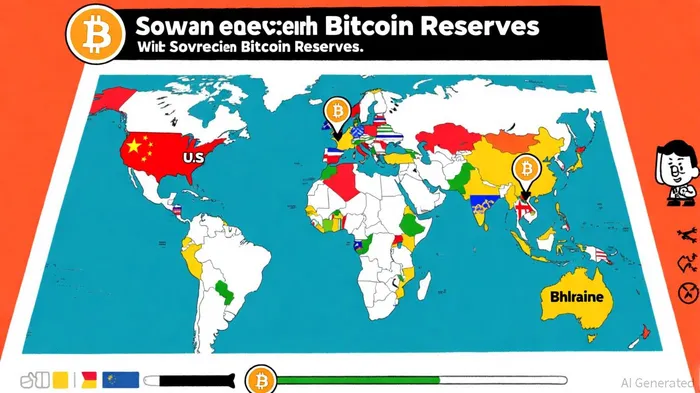






Comentarios
Aún no hay comentarios