
UK Welfare Reform and Fiscal Sustainability: Navigating the Crossroads of Policy and Markets
The UK's welfare reforms, unveiled in 2023 and recalibrated in 2025, represent a high-stakes experiment in balancing fiscal sustainability with social equity. At the heart of this debate lies a fundamental question: Can a government reduce its reliance on welfare spending without triggering economic fragility or social unrest? The answer, as Prime Minister Keir Starmer's administration has discovered, is far from straightforward.
Fiscal Policy Shifts: A Delicate Tightrope
The original 2023 reforms aimed to curb the £20 billion surge in disability benefit spending since the pandemic, projecting a £70 billion annual burden by 2025 if left unchecked, according to a Moving to the UK analysis. By reducing the health element of Universal Credit from £97 to £50 per week for new claims and introducing a "right to try guarantee" to incentivize employment, the government sought to redirect resources toward job training and productivity, a point also highlighted by the Moving to the UK analysis. However, political and administrative challenges forced a partial reversal in 2025. The cancellation of £5 billion in welfare cuts, coupled with protections for 200,000 individuals with severe disabilities, has strained Finance Minister Rachel Reeves' budgetary flexibility, according to a Reuters report.
According to the OBR report, these recalibrations have exacerbated the UK's fiscal vulnerabilities. With public debt-to-GDP ratios among the highest in advanced economies and borrowing costs rising, the government now faces a "razor-thin" fiscal buffer, reducing its capacity to respond to economic shocks. Analysts warn that the OBR may downgrade growth projections, compounding pressure on Reeves to raise taxes or delay spending on infrastructure and public services, Reuters analysts have cautioned.
Equity Market Implications: Winners and Losers in a Shifting Landscape
The equity market's response to these reforms has been mixed, reflecting both optimism and caution. Sectors tied to consumer spending-particularly retail and hospitality-face headwinds. A report by The Financial Analyst notes that a potential real-terms cut to 3.6 million Personal Independence Payment (PIP) recipients could reduce disposable income, dampening demand for non-essential goods. This aligns with broader concerns about the UK's consumption-driven economy, where retail sales account for roughly 60% of GDP, as noted in Saxo's insights.
Conversely, sectors linked to workforce participation and technological adaptation are gaining traction. The "right to try guarantee," which pairs benefit recipients with employment advisers, is expected to boost demand for professional services and tech-driven job-matching platforms, a trend highlighted by The Financial Analyst. Disability services, too, may see increased demand as reforms prioritize long-term support for individuals with chronic conditions, The Financial Analyst also observes.
Investor sentiment, however, remains cautious. The Deloitte UK ECM update for Spring 2025 highlights a shift toward "quality companies with strong cash flow" as equity investors hedge against an uncertain fiscal environment, a point discussed in the Saxo piece. This trend underscores a broader reallocation of capital away from domestically exposed industries and toward resilient sectors like healthcare and technology.
The Path Forward: Fiscal Credibility vs. Social Stability
The UK's welfare reforms exemplify the tension between fiscal discipline and social welfare. While the government's preference for gradualism has mitigated short-term hardship, it has also eroded the fiscal headroom needed for long-term stability. As Rob Wood of Pantheon Macroeconomics notes, the partial reversals risk creating "huge disparities" between existing and future claimants, undermining the reforms' credibility, a concern Reuters reported.
For equities, the key lies in navigating this duality. Companies that align with the government's productivity goals-such as those offering vocational training or digital upskilling tools-stand to benefit. Conversely, those reliant on discretionary consumer spending may face prolonged pressure.
Conclusion
The UK's welfare reforms are a microcosm of a broader global challenge: how to reconcile fiscal sustainability with social responsibility in an era of rising inequality and economic uncertainty. For investors, the lesson is clear: adaptability and sectoral diversification will be critical. As the government grapples with its fiscal constraints, the equity market's response will hinge on its ability to anticipate-and profit from-the next phase of this evolving story.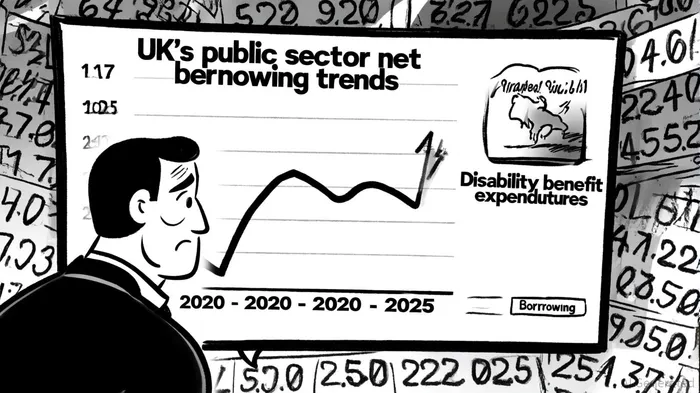







Comentarios
Aún no hay comentarios