
The UK's Stablecoin Regulatory Framework: A Blueprint for Global Financial Innovation
A Dual-Tiered Approach to Stability and Growth
The BoE's proposed stablecoin regulations, announced in November 2025, introduce temporary holding limits and reserve requirements designed to mitigate risks while fostering innovation. Individuals will be capped at £20,000 in systemic stablecoin holdings, while businesses face a £10 million limit, preventing large-scale deposit outflows from traditional banks, according to a Cryptotimes report. These measures are not permanent but serve as a transitional tool to allow regulators time to assess risks and refine the framework.
Systemic stablecoin issuers must hold 60% of their reserves in short-term UK government debt and 40% in non-interest-bearing accounts at the BoE, ensuring liquidity even during financial stress, according to a Coinpaprika report. New entrants start with 95% of reserves in UK gilts, gradually reducing this as they scale-a design that prioritizes stability without stifling innovation. The BoE also plans liquidity facilities for stablecoin issuers, mirroring safety nets available to commercial banks, according to the Cryptotimes report.
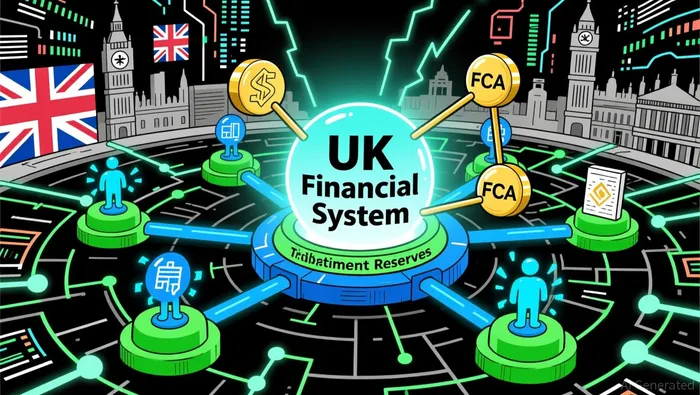
This dual-tiered approach-where systemic stablecoins fall under BoE oversight and non-systemic ones remain under FCA supervision-creates a modular regulatory environment. It allows smaller stablecoins like USDTUSDT-- and USDCUSDC-- to operate with lighter touch regulation while ensuring systemically important projects meet stringent standards, according to the Coinpaprika report. The consultation period, open until February 2026, will inform a joint transition paper by mid-2026, with final rules expected by year-end, according to the Coinpaprika report.
Strategic Investment Opportunities in Regulated Fintech
The UK's regulatory clarity is attracting capital to fintech and crypto infrastructure. The global fintech lending market, projected to reach $1.277 trillion by 2025, is driven by AI, blockchain, and mobile-first platforms, according to a Industry Today report. Meanwhile, Crypto-as-a-Service (CaaS) is revolutionizing how institutions adopt digital assets. By offering APIs and white-label solutions, CaaS enables banks, fintechs, and payment processors to deploy crypto functionalities without in-house blockchain expertise, according to a Markets report.
UK-based firms adapting to BoE regulations are well-positioned to benefit. For example, companies specializing in custody solutions, cross-border payments, or tokenized asset platforms will thrive under the new reserve requirements and liquidity mandates. The BoE's emphasis on 1:1 asset backing and transparency aligns with institutional investor demands for security and accountability, creating a fertile ground for regulated infrastructure providers.
Long-Term Potential of the UK Stablecoin Ecosystem
The BoE's framework is designed to integrate stablecoins into the UK's multi-currency payments system while maintaining confidence in the pound, according to the Cryptotimes report. By 2026, the UK's stablecoin market could see significant growth, driven by institutional adoption and cross-border use cases. Major financial players like JPMorgan and BlackRock are already integrating stablecoins into their operations, signaling a shift toward mainstream acceptance, according to a Chronicle Journal report.
The UK's regulatory timeline-finalizing rules by late 2026-provides market participants with a clear roadmap to prepare for compliance. This predictability is critical for long-term investment, as it reduces uncertainty and encourages innovation within a structured environment. The BoE's parallel work on a digital pound further underscores the UK's commitment to leading the digital finance revolution, according to a Global Legal Insights report.
Risks and Considerations
While the UK's approach is forward-thinking, investors must remain cautious. Over-regulation could stifle DeFi innovation, and compliance costs may burden smaller players. However, the modular framework and phased implementation mitigate these risks, allowing the market to evolve organically.
Conclusion: A Golden Opportunity for Visionary Investors
The UK's stablecoin regulatory framework is a masterclass in balancing innovation with stability. For investors, this means opportunities in regulated fintech, crypto infrastructure, and institutional-grade stablecoin platforms. As the BoE and FCA finalize their rules, the UK is poised to become a global epicenter for digital finance-a market where early adopters can reap substantial rewards.






Comentarios
Aún no hay comentarios