
UK Real Estate Market Vulnerability Amid Tax Policy Uncertainty: A Risk Assessment and Sector Rotation Analysis
The UK real estate market is at a crossroads, with tax policy uncertainty emerging as a critical vulnerability for investors. Chancellor Rachel Reeves' proposed reforms-targeting capital gains tax (CGT), stamp duty land tax (SDLT), and council tax-aim to address a £20–40 billion fiscal gap while modernizing an outdated property taxation system, according to a Neil McCoy Ward analysis. However, these changes risk destabilizing market confidence, particularly for high-value property owners, first-time buyers, and institutional investors. This analysis evaluates the investment risks posed by tax policy ambiguity and explores sector rotation strategies to mitigate exposure.
Tax Policy Reforms: Fiscal Necessity or Market Disruption?
The removal of the CGT exemption for primary residences above £1.5 million could generate up to £200,000 in tax bills for 120,000 higher-rate taxpayers, according to the Neil McCoy Ward analysis. While this reform targets wealth inequality, it may discourage downsizing-a key liquidity mechanism for retirees-and drive up asking prices as sellers factor in tax costs. Similarly, the proposed replacement of SDLT with a proportional property levy on homes over £500,000 (0.54% on the portion above £500,000 and 0.278% for values over £1 million) shifts the tax burden to sellers rather than buyers. While this simplifies transactions for first-time buyers, critics warn it could reduce market turnover and inflate prices.
Historical precedents underscore the volatility of tax-driven market shifts. For instance, the 1980s U.S. tax reforms, which accelerated depreciation for real estate, initially boosted investment but later reversed course, chilling the sector, as noted in a Malander Advisory analysis. In the UK, non-dom tax reforms have already prompted ultra-high-net-worth individuals (UHNWIs) to favor rental arrangements over long-term purchases, reducing demand for luxury properties in prime areas like London, according to a CarlislePL insight. These patterns suggest that tax policy changes can rapidly recalibrate investor behavior, often with unintended consequences.
Investment Risks: Liquidity, Complexity, and Regulatory Uncertainty
The UK real estate market's recalibration is compounded by rising regulatory complexity. For example, the reduction of the CGT annual allowance from £12,300 to £3,000 has discouraged short-term property flipping, forcing investors to adopt longer holding strategies, as discussed in the Malander Advisory analysis. Meanwhile, the introduction of stricter Energy Performance Certificate (EPC) requirements for rentals-mandating a minimum rating of C from 2025-has increased capital expenditures for landlords. These changes, coupled with the anticipated passage of the Renters Reform Bill, are expected to heighten operational costs and reduce flexibility in exiting underperforming assets.
A 2025 Real Estate 360 survey by RSM UK highlights the sector's growing anxiety: 35% of respondents cited additional tax restrictions as a top concern, while 31% identified CGT and stamp taxes as critical areas for reform to stimulate investment. The National Institute of Economic and Social Research further forecasts a £41.2 billion borrowing excess by 2029/30, intensifying pressure for new revenue streams. This fiscal urgency may lead to further policy shifts, creating a climate of uncertainty that elevates risk assessments for real estate portfolios.
Sector Rotation Strategies: Navigating the New Normal
To mitigate risks, investors are pivoting toward sectors with stronger resilience to tax and regulatory pressures. Build-to-rent (BTR) developments in regional hubs like Manchester and Birmingham are gaining traction, driven by long-term rental yields and favorable demographics, as noted in the CarlislePL insight. Institutional investors are also favoring logistics and industrial assets, which have outperformed traditional office or retail spaces amid e-commerce growth, according to a Clyde & Co outlook.
Alternative investment vehicles, such as Real Estate Investment Trusts (REITs) and the newly introduced Reserved Investor Fund (RIF), are emerging as tools for tax planning. REITs offer liquidity and diversification, while RIFs provide gains and stamp tax exemptions, enabling strategic portfolio rebalancing, per the Malander Advisory analysis. Additionally, ESG-aligned properties-certified for energy efficiency-are attracting capital as substandard assets face valuation declines.
Historical sector rotation patterns provide further insight. Post-2000 tax reforms, including non-dom changes, prompted a shift from speculative residential investments to structured, long-term strategies, as highlighted in the CarlislePL insight. Similarly, the 2025 reforms may accelerate demand for tech-driven real estate solutions, such as AI-powered valuations and blockchain-based transactions, to streamline operations and reduce compliance costs, according to the Malander Advisory analysis.
Conclusion: Balancing Fiscal Objectives and Market Stability
The UK's property tax reforms reflect a delicate balancing act between fiscal necessity and market stability. While the government aims to modernize taxation and reduce regional disparities, as discussed in a UK Tax Calculators report, the unintended consequences-such as reduced liquidity, higher operational costs, and investor uncertainty-pose significant risks. For investors, the path forward lies in adaptive sector rotation strategies, leveraging alternative investment vehicles and ESG-aligned assets to navigate the evolving landscape.
As the Autumn Budget 2025 approaches, clarity on implementation timelines and policy specifics will be critical. Until then, the UK real estate market remains vulnerable to the ripple effects of tax policy uncertainty, demanding a proactive and agile approach to risk management.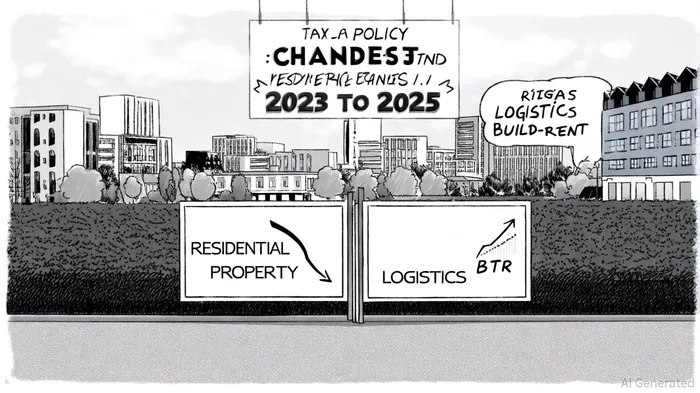







Comentarios
Aún no hay comentarios