
UK Pub Sector Franchise Growth: Strategic Expansion and Community-Driven Value Creation in the Post-Pandemic Recovery
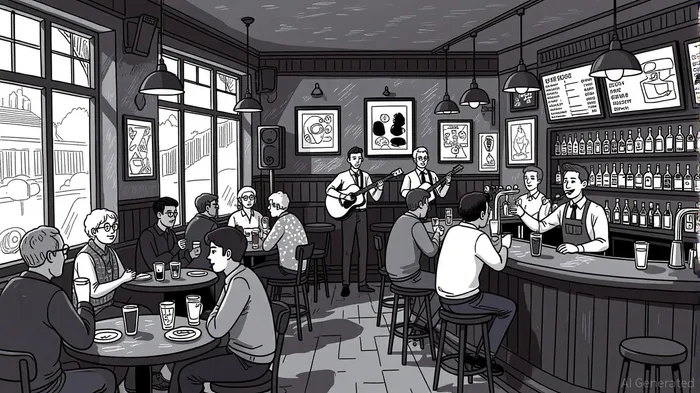
The UK pub sector’s post-pandemic recovery has been marked by a dual focus on strategic expansion through franchising and community-driven value creation. As the industry navigates shifting consumer preferences, economic pressures, and labor challenges, franchise models have emerged as a critical vehicle for resilience and growth. This analysis explores how these strategies are reshaping the sector and their implications for hospitality sector investment.
Strategic Expansion: Franchising as a Catalyst for Growth
Franchising has become a cornerstone of the UK pub sector’s post-pandemic strategy. Operators like Lucky B’s, a Glasgow-based hot chicken chain, exemplify this trend. By prioritizing franchising, Lucky B’s aims to scale its operations to 10 UK stores by 2025, with ambitions of reaching 100 locations nationwide. This model leverages experienced franchisees to manage expansion, reducing capital risk while accelerating market penetration [1].
The broader hospitality industry is also embracing franchising to adapt to evolving consumer expectations. For instance, Craft Union (part of the Stonegate Group) empowers its nearly 600 pubs to tailor offerings to local communities, fostering brand loyalty and operational flexibility [2]. Such strategies align with global trends where restaurants are rethinking traditional processes to meet post-pandemic demands, including sustainability and digital convenience [2].
Financial metrics underscore the sector’s resilience. Chestnut Pub Company, a regional operator, reported a 220% increase in site Ebitda to £6.2 million for the fiscal year ending March 2024, driven by improved food margins and cost controls [3]. This growth highlights the potential for franchise models to deliver scalable returns, particularly as managed and branded pubs outperform independent outlets in the face of economic headwinds [1].
Community-Driven Value Creation: Building Local Resilience
Community engagement has emerged as a vital differentiator for UK pubs. Operators like Proper Pubs (under Admiral Taverns) and Urban Village Pubs are embedding themselves in local ecosystems through initiatives such as charity events, free community spaces, and partnerships with local vendors. For example, Proper Pubs’ “Community Hero Awards” and Craft Union’s “Love your Local” campaign have generated over £65,000 for local causes, fostering goodwill and customer loyalty [2].
These efforts are not merely altruistic; they directly impact financial performance. A 2023 Mintel report noted that 89% of UK adults visited pubs in 2023, a figure approaching pre-pandemic levels, driven by community-centric offerings like snacking menus and sustainable dishes [4]. Pubs that prioritize local sourcing and hyper-relevant events are better positioned to retain customers in an era of declining beer consumption and rising health-consciousness [4].
Government support has further amplified these strategies. The UK’s Hospitality Strategy: Reopening, Recovery, Resilience emphasizes pubs as anchors for high street regeneration, incentivizing community-driven models through grants and reduced VAT rates [1]. This alignment of public and private interests creates a fertile ground for investment, particularly in regions where pubs serve as cultural and economic hubs.
Challenges and Opportunities in a Shifting Landscape
Despite these positives, the sector faces headwinds. Industry revenue is projected to decline at a 5.5% compound annual rate through 2025, reaching £18.9 billion, due to factors like labor shortages and shifting beverage preferences [4]. However, franchise models mitigate some of these risks by distributing operational costs and leveraging economies of scale.
Technology is another critical enabler. AI-powered talent management systems and automation tools are being adopted to address staffing challenges while maintaining service quality [2]. For instance, East Anglian pub company Chestnut has integrated digital platforms to streamline operations, contributing to its robust Ebitda growth [3].
Investment Implications and Future Outlook
The UK pub sector’s recovery is underpinned by a 3.51% compound annual growth rate (CAGR) projection from 2025 to 2030, driven by digital innovation, government incentives, and the rising influx of international tourists [4]. Investors should prioritize franchises that balance technological adoption with community engagement, as these models are best positioned to navigate macroeconomic volatility.
Conclusion
The UK pub sector’s post-pandemic trajectory is defined by strategic franchising and community-driven value creation. While economic challenges persist, the sector’s adaptability—evidenced by digital transformation, localized engagement, and government support—positions it as a compelling investment opportunity. For investors, the key lies in identifying operators that harmonize scalability with hyper-local relevance, ensuring long-term resilience in an evolving hospitality landscape.
Source:
[1] Propel Friday News Briefing,
http://propelinfonews.com/pi-Newsletter.php?datetime=2025-07-11%2008:00:00
[2] Find out about the Best Community Pub Operator finalists,
https://www.morningadvertiser.co.uk/Article/2024/03/18/publican-awards-finalists-2024-for-best-community-pub-operator/
[3] The Pub Sector: Insights from the MA Top 100 Pubcos Report,
https://www.capcon.co.uk/the-uk-pub-sector-insights-from-the-ma-top-100-pubcos-report/
[4] UK Pub Visiting Market Report 2023,
https://store.mintel.com/report/uk-pub-visiting-market-report







Comentarios
Aún no hay comentarios