
UK Labor Market Weakness: A Catalyst for BOE Rate Cuts in 2026?
The UK labor market has entered a period of notable fragility, with rising unemployment, stagnant hiring, and moderating wage growth raising questions about the Bank of England's (BOE) future policy trajectory. For investors, the interplay between these labor market trends and the central bank's response will shape asset valuations and risk premiums in 2026. The data suggests a cooling labor market could accelerate rate cuts, but the magnitude and timing remain contingent on inflation dynamics and the BOE's cautious approach to balancing growth and price stability.
A Deteriorating Labor Market: Unemployment, Payrolls, and Wage Pressures
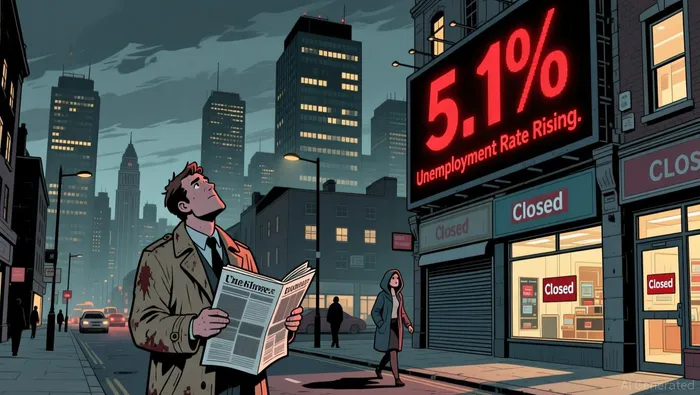
According to a report by the Office for National Statistics (ONS), the UK unemployment rate rose to 5.1% in the three months to October 2025, marking a four-year high and the highest level since early 2016 outside the pandemic period. This increase was driven by a sharp rise in youth unemployment, with the number of jobless individuals aged 18–24 surging by 85,000 since the previous quarter. Meanwhile, payroll data reveals a significant contraction: payrolled employees fell by 149,000 (0.5%) between October 2024 and October 2025, with an additional 38,000 drop in November 2025, the largest decline in five years.
 Wage growth, a critical inflationary input, has also softened. Average weekly earnings excluding bonuses grew by 4.6% year-on-year in August–October 2025, down from 4.7% in the prior period. However, real wage growth-adjusted for inflation-remains anemic at 0.5%, underscoring the squeeze on household budgets. Notably, public-sector wage growth outpaced private-sector gains (7.6% vs. 3.9%), reflecting uneven labor market pressures.
Vacancies, a barometer of hiring demand, have stagnated. The ONS reported 729,000 job openings in September–November 2025, a marginal decline of 0.2% from the previous quarter. This flatline suggests businesses are hesitant to expand headcount, likely due to weak consumer demand and lingering inflationary uncertainties.
BOE Policy Outlook: Rate Cuts on the Horizon, but with Caution
The BOE's Monetary Policy Committee (MPC) faces a delicate balancing act. While inflation has eased to 3.6% in October 2025 from a peak of 4.7% earlier in the year, the central bank remains wary of a resurgence. A Reuters poll indicates the BOE will cut the Bank Rate to 3.75% on December 18, 2025, followed by a further reduction to 3.50% by March 2026. Beyond that, however, projections diverge, with some analysts speculating cuts could approach 3% by mid-2026 if economic conditions improve.
The MPC's decision hinges on two key factors: the pace of inflation normalization and the labor market's resilience. A report by Capital Economics notes that the balance of risks now favors a rate cut, as "the labor market's weakening trajectory has reduced the likelihood of a wage-price spiral." Yet, the committee is expected to vote closely on the December cut, potentially splitting 5–4 in favor of easing. This division reflects internal caution, as policymakers weigh the risk of premature easing against the need to support growth.
Investment Implications: Navigating the Rate-Cut Cycle
For investors, the prospect of BOE rate cuts in 2026 presents both opportunities and risks. A dovish pivot would typically boost equities, particularly sectors sensitive to lower borrowing costs, such as consumer discretionary and real estate. However, the UK's labor market weakness-especially among younger workers-could dampen consumer spending, tempering the upside.
Fixed-income markets are likely to benefit more directly. With the BOE signaling a path toward lower rates, UK government bond yields could decline, offering a safe-haven appeal amid global uncertainty. Yet, the magnitude of this move depends on the pace of rate cuts and inflation's stickiness. If inflation lingers above the 2% target, the BOE may hesitate, capping bond rallies.
Sterling's trajectory adds another layer of complexity. A rate-cut cycle typically weakens the currency, which could benefit UK exporters but hurt import-dependent sectors. Investors should also monitor the differential between UK and US monetary policies, as the Federal Reserve's stance will influence capital flows and currency volatility.
Conclusion: A Delicate Tightrope for the BOE
The UK labor market's deterioration has positioned the BOE for a series of rate cuts in 2026, but the central bank's approach will remain cautious. While the December 2025 cut is all but certain, subsequent moves will depend on whether inflation continues to trend downward and whether the labor market stabilizes. For investors, the key takeaway is to prepare for a gradual easing cycle, with a focus on sectors and assets that benefit from lower rates while hedging against potential inflationary surprises.
As the BOE navigates this tightrope, the interplay between labor market data and policy decisions will remain a critical barometer for markets. The coming months will test the central bank's resolve-and investors' adaptability.







Comentarios
Aún no hay comentarios