
Is the UK Inflation Slowdown a Green Light for a BoE Rate Cut in December?
BoE's Policy Signals: A Tipping Point?
The BoE's internal debate has shifted from whether to cut rates to when. Recent MPC minutes reveal a 5–4 split, with four members advocating for an immediate 25-basis-point reduction, signaling significant dissent within the committee. This divide underscores a growing consensus that current rates remain overly restrictive, especially as inflation cools, wage growth moderates, and labor market slack emerges. The UK's economic backdrop-characterized by weak Q3 growth and subdued consumption-further strengthens the case for easing.
Crucially, the BoE's November minutes highlight a "balance of risks" favoring a December cut, with policymakers acknowledging that delayed action could undermine long-term price stability. For savers and borrowers alike, the implications are stark: lower rates would erode deposit returns but ease borrowing costs for households and businesses, particularly those with variable-rate mortgages.
Forex Market Positioning: GBP/USD Under Pressure
The GBP/USD pair has already priced in much of this uncertainty, weakening to 1.3150 in late November as rate-cut expectations intensified. Traders now assign an 80% probability to a 25-basis-point cut in December, according to market positioning data. This expectation is compounded by UK fiscal policy headwinds, including the government's decision to abandon an income tax increase, which has heightened concerns about fiscal sustainability.
Meanwhile, major brokerages like Morgan Stanley and UBS have upgraded their GBP/USD forecasts to 1.36 by year-end, citing diverging central bank policies. While the U.S. Federal Reserve (Fed) remains cautious, the BoE's anticipated pivot creates a stark yield differential, pressuring the pound. J.P. Morgan Global Research notes that GBP/USD volatility will hinge on BoE-Fed policy divergence, with even minor communication shifts triggering sharp currency movements.
Policy Divergence and Hedging Strategies
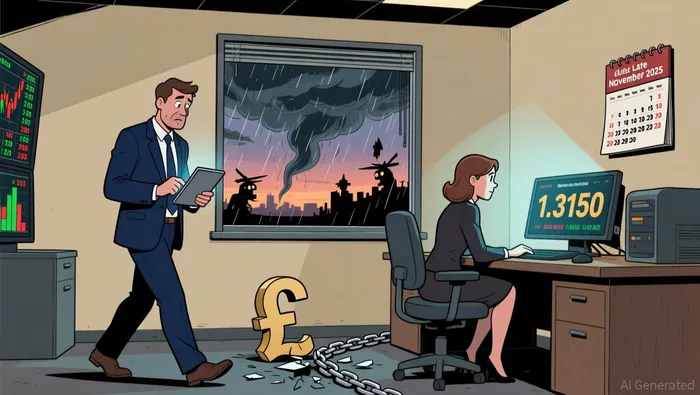 The BoE's potential rate cut contrasts with the Fed's hawkish stance, creating a unique monetary environment. UK short-duration gilts have already seen yields decline, reflecting market anticipation of easing. For forex traders, this divergence necessitates dynamic hedging strategies. Carry trades involving GBP may face headwinds as the pound's yield advantage narrows against the dollar and euro. Conversely, hedging costs for UK exporters could rise, given the pound's vulnerability to further depreciation.
Leveraged fund flows also play a role. While direct CFTC positioning data for GBP/USD in December 2025 remains limited, broader trends suggest increased short-term GBP exposure as investors bet on a rate cut. Additionally, the BoE's policy shift could amplify demand for dollar-denominated assets, particularly in a scenario where the Fed delays its own easing cycle.
Conclusion: A December Cut as a Strategic Inflection Point
The UK's inflation slowdown has provided the BoE with a compelling case to cut rates in December 2025. With inflation at 3.6% and economic slack evident, the MPC's internal debate has tilted decisively toward easing. For forex markets, the December meeting represents a strategic inflection point. GBP/USD is likely to remain under pressure, with positioning data and broker forecasts pointing to further depreciation. Traders must remain agile, adjusting hedging strategies to account for BoE-Fed divergence and the pound's heightened sensitivity to fiscal and monetary signals.
As the BoE prepares to meet on December 18, the focus will shift from speculation to execution. A rate cut, while widely anticipated, could still surprise in magnitude or timing, underscoring the need for disciplined risk management in a volatile cross.







Comentarios
Aún no hay comentarios