
UK Industrial Decline: Navigating Short-Term Pain for Long-Term Gain
The UK's industrial sector faces a critical juncture. A 0.9% drop in May's production output—driven largely by manufacturing's 1.0% decline—has underscored vulnerabilities in key sectors. Yet beneath the headline numbers lies a mosaic of opportunities for investors willing to parse sector-specific trends and geopolitical realities. This article explores how tariffs, trade shifts, and central bank policy create a landscape where short-term risks collide with long-term buying opportunities.
The Manufacturing Dilemma: Tariffs, Trade, and Technical Debt
The manufacturing slump is not uniform. While pharmaceuticals and transport equipment faltered, machinery and equipment surged by 3.4% in May. This divergence reveals a sector in transition.
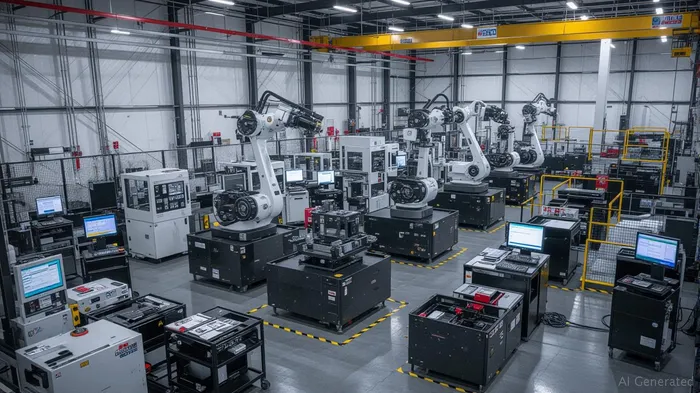
The transport equipment sector's 1.3% decline—attributed to U.S. tariffs and model changeovers—highlights exposure to global trade wars. Conversely, machinery and equipment benefited from demand for automation and infrastructure projects. Investors should favor companies with diversified supply chains or exposure to domestic infrastructure spending.
Construction: A Mixed Picture of Fragility and Resilience
Construction output fell 0.6% in May, but three-month growth of 1.2%—driven by infrastructure projects—suggests underlying momentum. The sector's weakness was concentrated in repair and maintenance (R&M), which dropped 2.1%. However, infrastructure new work surged 5.3%, pointing to government spending on roads and railways as a stabilizing force.
Investors should prioritize construction firms with exposure to public-sector contracts. For example, Kingfisher (KGF), the DIY retail giant, could benefit from pent-up demand as households delay non-essential repairs but invest in home improvements.
The Tariff Wildcard: A Catalyst for Sectoral Restructuring
U.S. tariffs on UK automotive exports—a 3.7% hit to manufacturing in May—have forced companies like Rolls-Royce (RR) and Jaguar Land Rover to rethink production. This pain could accelerate long-term gains as firms shift toward tariff-avoidant markets or higher-value niches.
The Bank of England's Role: A Monetary Tailwind for Recovery
The Bank of England's decision to hold rates at 4.25% in June, despite inflation easing to 3.4%, signals caution. Yet the 6–3 vote and dissenters' arguments highlight a shift toward gradual easing. A 25-basis-point cut by year-end—as projected by analysts—is now plausible.
Lower borrowing costs will directly benefit capital-intensive sectors like construction and machinery. For investors, this creates a “sweet spot”: undervalued equities paired with improving financing conditions.
Investment Strategy: Where to Look Now
- Pharmaceuticals: A Value Play in a Volatile Sector
- Why now? The 4.2% drop in pharmaceuticals reversed April's surge, creating a correction. Companies like GlaxoSmithKline (GSK) and AstraZeneca (AZN), with robust pipelines and global diversification, offer entry points.
Risk: Regulatory delays and pricing pressures remain.
Machinery & Infrastructure: Betting on the Build Back Better UK
- Why now? The 3.0% three-month growth in transport equipment and infrastructure spending suggests demand for industrial machinery will rebound.
Pick: Caterpillar (CAT), a global leader in construction equipment, or UK-focused Costain Group (CTS) for infrastructure plays.
Construction: Focus on Public Contracts
- Why now? The 5.3% jump in infrastructure projects aligns with government spending pledges.
- Pick: BAM Construction (part of Royal BAM Group), which has a strong track record in public-sector projects.
The Bottom Line: Volatility Now, Value Later
The May decline is a symptom of deeper structural shifts—geopolitical trade wars, labor market fragility, and sectoral imbalances. But for investors with a 2–3 year horizon, the current downturn is a buying opportunity. Pairing exposure to machinery, pharmaceuticals, and infrastructure with a watchful eye on BoE policy could yield asymmetric returns.
Act now, but act selectively. The UK industrial sector's recovery will be uneven, but those who align their portfolios with resilient subsectors and policy tailwinds will be rewarded.





Comentarios
Aún no hay comentarios