
UK Growth vs. Inflation Dilemma in 2025–26: Strategic Asset Allocation Amid Policy Crosscurrents
The UK stands at a crossroads in 2025. According to the IMF's October 2025 World Economic Outlook (WEO), the country is projected to grow by 1.3% this year, outpacing all G7 peers except the U.S. and defying expectations of stagnation[1]. Yet this growth comes at a cost: the UK is also forecast to endure the highest inflation rate in the G7, with 3.4% in 2025 and 2.5% in 2026, driven by surging energy and utility bills[2]. For income-focused investors, this creates a paradox: how to capitalize on growth while hedging against inflationary pressures that could erode returns.
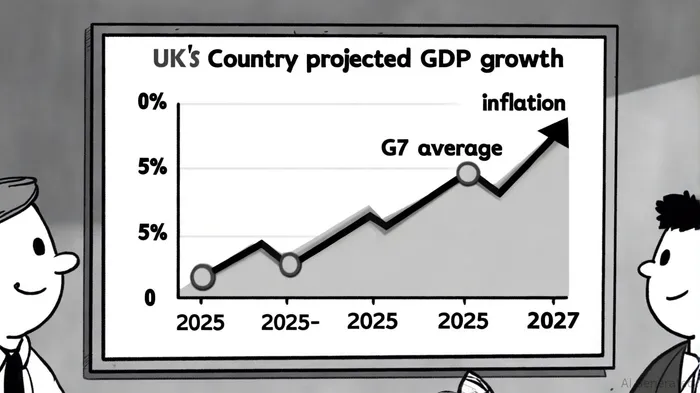
The IMF's Divergent Outlook: Growth vs. Inflation
The IMF's revised growth forecast reflects the UK's strong first-half performance in 2025, fueled by resilient domestic demand and a rebound in manufacturing[3]. However, per capita growth remains weak, and the report underscores risks from protectionist trade policies, tighter immigration controls, and potential overvaluation in the AI sector[4]. Meanwhile, inflation is expected to ease toward the Bank of England's 2% target by 2027, but upside risks persist due to sticky energy costs and wage pressures[5].
This divergence between growth and inflation creates a unique opportunity for contrarian investors. While the UK's economy is expanding, its inflationary environment demands tactical asset allocation. The key lies in balancing income-generating assets with inflation-linked protections.
Inflation-Linked Bonds: A Yield-Driven Contrarian Play
UK inflation-linked bonds, or Real Return Bonds (RRBs), have long been a staple for income investors seeking inflation protection. As of October 2025, the yield on the UK's 10-year inflation-linked gilt stands at 4.62%, reflecting both fiscal uncertainty and the Retail Price Index (RPI)-linked adjustments to principal and coupons[6]. Goldman Sachs Research predicts these yields could decline to 4% by year-end as the Bank of England begins rate cuts in response to cooling inflation[7].
This presents a compelling case for income-focused investors. By purchasing inflation-linked gilts at current yields, investors lock in above-target returns while benefiting from potential capital gains as yields fall. For example, a 30-year inflation-linked gilt with a 4.62% yield could see its price rise if the BoE cuts rates to 4% by 2025, assuming inflation remains within the 3.4%–2.5% range[8]. This dual-income and capital-appreciation dynamic makes RRBs a rare asset class in a high-growth, high-inflation environment.
Diversified Equities: Reassessing the Inflation Hedge
Historically, equities have struggled as inflation hedges, with rising rates squeezing corporate profits and increasing borrowing costs. However, recent global trends suggest a shift. In 2025, markets like Turkey and Iran have defied conventional wisdom, with equities outperforming despite double-digit inflation[9]. Similarly, the U.S. S&P 500 has outpaced inflation over the past five years, driven by structural liquidity and market concentration[10].
For the UK, diversified equities-particularly in sectors like basic materials and energy-could offer similar asymmetric payoffs. While these sectors have lagged behind inflation breakeven rates in 2025, their long-term potential as inflation hedges remains intact. As the BoE begins rate cuts, equities with strong earnings growth and low leverage could outperform, especially if global inflation undershoots expectations due to weakening labor markets[11].
Strategic Allocation: Balancing Income and Protection
For income-focused investors, the UK's 2025–26 outlook demands a nuanced approach. A portfolio combining inflation-linked bonds and diversified equities could achieve both yield preservation and growth. Here's how:
- Inflation-Linked Bonds (60% allocation): Prioritize long-dated RRBs with RPI-linked adjustments. These instruments offer a guaranteed real yield while benefiting from potential capital gains as the BoE cuts rates.
- Diversified Equities (40% allocation): Focus on quality UK stocks in energy, materials, and technology. These sectors are well-positioned to benefit from structural trends like AI adoption and energy transition, while providing downside protection against inflation.
This allocation leverages the UK's growth momentum while hedging against inflationary headwinds. It also capitalizes on the BoE's expected rate cuts, which could boost equity valuations and bond prices simultaneously.
Conclusion: Navigating the Crosscurrents
The UK's 2025–26 outlook is a study in contrasts: growth outpaces its peers, yet inflation lingers stubbornly. For contrarian investors, this tension is an opportunity. By combining inflation-linked bonds with diversified equities, income-focused portfolios can navigate the crosscurrents of policy, inflation, and growth. As the IMF warns of upside inflation risks and the BoE prepares to cut rates, the time to act is now-before the market catches up to the UK's divergent trajectory.







Comentarios
Aún no hay comentarios