
UK Grocery Sector Resilience Amid 2025 Inflation and Cyberattacks
The UK grocery sector in 2025 is navigating a high-pressure environment marked by persistent inflation, evolving consumer preferences, and escalating cyber threats. Despite these challenges, the sector demonstrates resilience through strategic adaptations, including a shift toward localized retail formats, digital innovation, and enhanced supply chain efficiency. For investors, understanding how these dynamics shape profitability and operational stability is critical to assessing long-term opportunities.
Inflationary Pressures and Consumer Behavior Shifts
Food inflation, which peaked at 19.1% in March 2023, has moderated to 4.4% by May 2025, yet remains above the long-term average of 2.7%. This moderation reflects improved global supply chains and lower energy prices but masks ongoing domestic challenges, such as post-Brexit trade frictions, labor cost increases, and weather-related disruptions in key supplier regions like Spain and Morocco according to analysis. Consumers, meanwhile, are adapting to higher prices by prioritizing cost-conscious choices. Own-label products, for instance, grew at 4.2% in the month to mid-July 2025, outpacing branded goods. This trend underscores a broader shift toward value-driven shopping, which has become a lifeline for supermarkets seeking to maintain margins.
Strategic Adaptations: Localized Retail and Digital Expansion
UK supermarkets are redefining their physical and digital footprints to align with changing consumer habits. The rise of hybrid work models and urbanization has fueled demand for smaller-format stores in residential areas, with convenience outlets gaining traction as one-stop solutions for daily needs. This shift contrasts with the decline of traditional hypermarkets, which struggle to compete with the agility of localized stores.
Simultaneously, the online grocery channel is accelerating its growth. While the exact penetration rate remains unclear due to a likely typographical error in source data (reporting "00%"), the trajectory is unmistakable: digital platforms are expanding rapidly, driven by improved logistics, rapid delivery services, and consumer familiarity with e-commerce according to Savills research. However, challenges persist, particularly in regions like the North East, where in-store shopping remains dominant, and among older demographics, who face barriers to digital adoption.
To bridge these gaps, retailers are integrating predictive ordering, real-time data analytics, and AI-driven inventory management. These tools not only optimize stock levels but also enhance customer experiences by reducing out-of-stock scenarios and streamlining operations as reported by BBC News. For instance, real-time data enables store teams to respond swiftly to demand fluctuations, a critical advantage in a volatile inflationary environment. 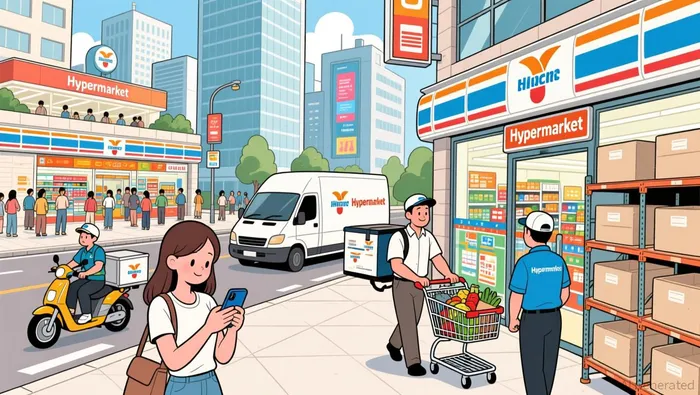
Cybersecurity: A Looming Threat to Profitability
While strategic adaptations bolster resilience, cyberattacks pose a significant risk to sector stability. The Co-op's experience in April 2025 exemplifies this vulnerability. A malicious cyberattack attributed to the Scattered Spider hacking group disrupted operations, leading to paper-based systems, empty shelves, and payment failures according to The Guardian. The financial toll was severe: £206 million in lost revenue and £80 million in operating profit for the first half of 2025 as detailed by BBC. The breach also compromised the personal data of 6.5 million members, though financial information remained secure as reported.
Co-op's limited cyber insurance coverage exacerbates the impact, as it cannot recover backend losses through insurance according to The Guardian. This case highlights a broader trend: as cyberattacks on major UK retailers (including Marks & Spencer and Harrods) increase, the sector must prioritize robust cybersecurity frameworks to mitigate reputational and financial damage according to Infosecurity Magazine. For investors, underestimating cyber risks could lead to unforeseen volatility in grocery sector valuations.
Profit Recovery and Future Outlook
Despite these headwinds, the UK grocery sector is showing signs of profit recovery. The combination of cost-conscious consumer behavior, localized retail formats, and digital innovation is enabling supermarkets to stabilize margins. For example, own-label growth and operational efficiencies are offsetting some inflationary pressures, while convenience stores cater to time-constrained shoppers.
However, the path to sustained profitability remains fraught. Cybersecurity investments, while necessary, will add to operational costs. Additionally, regional disparities in digital adoption and delivery infrastructure could slow the sector's overall growth. Investors should monitor how major players like Tesco and Sainsbury's scale their digital and localized strategies, as well as their preparedness for cyber threats.
Conclusion
The UK grocery sector's resilience in 2025 is a testament to its adaptability in the face of multifaceted challenges. While inflation and cyberattacks have tested the industry's mettle, strategic innovations in retail formats, digital tools, and supply chain management are paving the way for recovery. For investors, the key lies in identifying companies that balance cost efficiency with robust cybersecurity and customer-centric innovation. Those that succeed in this balancing act will likely emerge as leaders in a transformed retail landscape.







Comentarios
Aún no hay comentarios