
UK Gilts Rally on Fiscal Push, But Yields Seen Rising to 6% as Debt Risks Loom
Franklin Templeton predicts UK 30-year gilt yields will rise to 6% in the coming year, driven by challenges in funding government spending, according to David Zahn, head of European fixed income at the firm. The UK's fiscal situation remains precarious, with Chancellor Rachel Reeves implementing measures in the recent budget that include long-term tax increases and structural reforms. The market has generally responded favorably, but analysts warn that political and economic risks could delay meaningful revenue gains.
The UK's new budget emphasizes fiscal restraint, with frozen tax thresholds and a focus on structural reforms to curb inflation and borrowing. 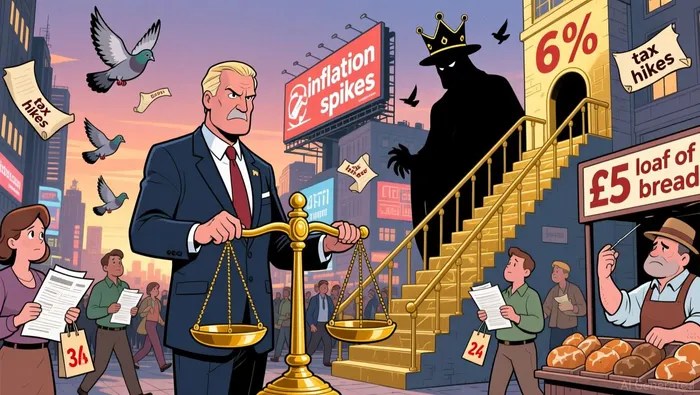 The Office for Budget Responsibility (OBR) has lowered growth forecasts for the UK, projecting 1.5% growth in 2025 and 1.4–1.5% through 2030. The government also aims to achieve a budget surplus by 2029, making the UK the G7 leader in fiscal consolidation.
UOB Group's analysts highlight that the UK's weak growth and high inflation have created a cautious outlook for the Bank of England (BOE). The bank is expected to cut interest rates by 25 basis points on 18 December as part of a gradual easing cycle through 2026. The fiscal tightening measures, including stealth tax changes and wealth taxes, will likely curb demand and support disinflation.
How Markets Reacted
UK car production dropped 23.8% in October 2025, according to the Society of Motor Manufacturers and Traders (SMMT). The decline followed a temporary halt at a major automotive plant due to a cyber incident. UK factories produced 59,010 cars in October, down from 77,484 the previous year. This data came shortly after the budget announcement, which included additional funding for the automotive sector.
The budget introduced measures such as an additional £1.5bn for automotive transformation projects and a postponement of certain car ownership scheme regulations until the next parliament according to data. The Electric Car Grant also received an extra £1.3bn, with adjustments to vehicle excise duty aimed at reducing taxes on electric vehicles. These steps aim to support the sector amid a challenging production environment.
Risks to the Outlook
Franklin Templeton's Zahn warns that the UK government may struggle to raise as much revenue as anticipated from the tax measures announced in the budget. The tax increases are set to take effect close to the next general election in 2029, when political considerations could delay implementation. This uncertainty complicates the government's ability to fund spending and manage borrowing costs.
UK borrowing is expected to fall from £138.3bn in 2025–26 to £67.2bn by 2030–31, according to OBR forecasts. However, the path to fiscal consolidation is not without risks. Zahn notes that once bond yields rise sufficiently, the government may be forced to address the fiscal situation rather than delay action. This could lead to a "budget reckoning" if markets lose confidence in the government's ability to manage debt.
The UK has some of the highest borrowing costs among developed nations, with 30-year gilt yields 180 basis points above the German equivalent and 80 basis points above the French rate. Despite a reduction in the sale of long-term bonds by the Debt Management Office, uncertainty around the budget and inflation outlook continues to affect market sentiment.
What This Means for Investors
The UK bond market has seen one of its best runs in two years, with an index tracking gilts up over 4% so far this year. Global investors are increasingly drawn to UK bonds, given the market's potential for higher yields. Zahn, however, remains cautious, having sold all his gilt positions in March. He predicts a continued rise in yields as the government faces the challenges of funding its fiscal policies.
The recent budget has introduced structural reforms aimed at supporting long-term economic stability. These include stealth tax measures and reforms to address inflationary pressures. While these steps may support a cautious easing cycle for the BOE, their effectiveness will depend on political will and market confidence.
The UK's automotive sector, despite a difficult October, may see a recovery in 2026 with the introduction of new electric vehicle models. The government's industrial strategy and additional funding are seen as positive developments for the sector according to recent data. However, production challenges remain, with commercial vehicle output down 74.9% for the seventh consecutive month.







Comentarios
Aún no hay comentarios