
UK Financial Policy Shifts and Gold-Backed Assets: Strategic Reallocation Opportunities Amid Regulatory Repositioning
The UK's 2025 regulatory reforms under the Financial Conduct Authority (FCA) are reshaping the landscape for gold-backed assets, creating both challenges and opportunities for investors. As the FCA shifts its focus toward reducing regulatory burdens, enhancing market resilience, and fostering innovation, gold-linked instruments—ranging from ETFs to tokenized gold—are emerging as compelling candidates for strategic reallocation. This analysis unpacks the implications of these policy shifts and identifies actionable pathways for capitalizing on the evolving dynamics.
Regulatory Repositioning: A New Framework for Commodity Derivatives
The FCA's 2025 reforms to commodity derivatives markets, outlined in Policy Statement PS25/1, mark a pivotal shift in how gold-backed assets are regulated. By transitioning responsibility for setting position limits from regulators to trading venues, the FCA aims to enhance market resilience while reducing unnecessary oversight[1]. This change, effective July 2026, introduces a more flexible framework for managing risks in gold futures and options, particularly for institutional players. Additionally, the FCA's decision to retain the Ancillary Activities Exemption (AAE) under quantitative tests until 2027 provides firms with regulatory certainty, avoiding the ambiguity of proposed qualitative criteria[2].
These reforms align with the UK's broader Wholesale Markets Review, which seeks to address lessons from past disruptions, such as the LME nickel market suspension[3]. By prioritizing proportionality and innovation, the FCA is creating a regulatory environment where gold-backed derivatives can thrive without stifling market growth.
Market Trends: Gold's Resurgence and Institutional Demand
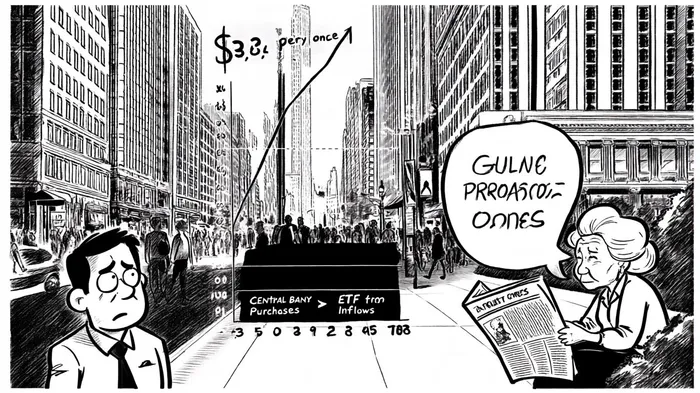
Gold prices have surged to near-record highs, reaching $3,400 per troy ounce in 2025, driven by central bank demand and macroeconomic uncertainty[4]. According to the World Gold Council, central banks added over 1,000 metric tons of gold to their reserves in 2024, with countries like China and emerging markets accelerating purchases to diversify reserves[5]. This trend is not merely a short-term spike but a structural reevaluation of gold's role in national portfolios.
In parallel, gold-backed ETFs have attracted $38 billion in net inflows in the first half of 2025, with the U.S. and Asia leading the charge[6]. The rise of tokenized gold—digital tokens representing physical gold—has further amplified accessibility, with platforms like PAX GoldPAXG-- (PAXG) and TetherUSDT-- Gold (XAUT) expanding reserves to reinforce 1:1 backing[7]. China's recent pilot program allowing insurance firms to invest directly in gold underscores the asset's growing appeal in institutional portfolios[8].
Gold-Linked Instruments: Regulatory Treatment and Opportunities
The FCA's 2025 reforms are streamlining the regulatory treatment of gold-linked instruments, particularly exchange-traded products (ETPs). For instance, the U.S. SEC's approval of generic listing standards for gold ETPs has reduced the time and cost of bringing new products to market[9]. This development is mirrored in the UK, where the FCA's emphasis on simplifying transparency rules and reducing compliance costs is likely to boost innovation in gold-backed ETFs and futures[10].
Tokenized gold, however, remains in a regulatory gray area. While the FCA is working to clarify its oversight of cryptoassets, challenges such as custodial risks and valuation complexities persist[11]. Nevertheless, the UK's Digital Securities Sandbox and initiatives like Baillie Gifford's tokenized OEIC suggest a regulatory environment increasingly open to experimentation[12].
Strategic Reallocation: Where to Allocate Capital
The confluence of regulatory easing and robust demand creates a unique window for reallocating capital into gold-linked instruments:
- Gold ETFs and Futures: With central banks and institutional investors driving demand, gold ETFs offer liquid, low-cost exposure. The FCA's streamlined rules for ETPs make this an attractive option for both retail and institutional investors[13].
- Tokenized Gold: For tech-savvy investors, tokenized gold provides 24/7 trading and fractional ownership. Platforms like XAUT and PAXGPAXG-- are expanding reserves, enhancing credibility[14].
- Physical Gold as Collateral: The Basel Framework's reclassification of gold as a Tier 1 asset (effective July 2025) means banks can now count allocated gold toward core capital reserves[15]. This could shift demand from synthetic instruments to physical gold, favoring vault-backed tokens and ETFs.
Conclusion: A Golden Opportunity Amid Regulatory Clarity
The UK's 2025 regulatory repositioning is not merely a bureaucratic update—it is a strategic recalibration that positions gold-backed assets as a cornerstone of diversified portfolios. By reducing compliance burdens, fostering innovation, and aligning with global standards, the FCA is creating an environment where gold's traditional role as a safe-haven asset is being amplified by modern financial tools. Investors who act swiftly to reallocate capital into gold-linked instruments—particularly ETFs, tokenized gold, and physical gold-backed collateral—stand to benefit from both macroeconomic tailwinds and regulatory tailwinds.






Comentarios
Aún no hay comentarios