
The UK-EU Reset: A £9 Billion Gamble on Defense, Trade, and Geopolitical Realignment
The UK’s recent deal with the European Union, framed as a post-Brexit “reset” by Prime Minister Keir Starmer, has ignited a fierce debate over its economic and strategic implications. While critics decry concessions on fishing rights and youth mobility as a betrayal of Brexit principles, the government’s bold gamble—projected to deliver a £9 billion economic boost by 2040—is unlocking sector-specific opportunities for investors. This article dissects the deal’s three core pillars—defense collaboration, agricultural reintegration, and infrastructure modernization—and argues that the short-term political turbulence masks a generational shift in UK-EU economic integration. For investors, this is a moment to act decisively.
Defense Contractors: A £150 Billion Fund Opens New Frontiers
The deal’s most consequential move is its security and defense partnership, which grants UK firms access to the EU’s proposed €150 billion “Safe” security fund. For companies like BAE Systems (LSE: BA) and Leonardo (BIT: MLD), this is a game-changer.
The fund’s focus on advanced defense systems—from drones to cyber warfare—aligns with BAE’s strengths in air, land, and maritime defense. Meanwhile, Leonardo’s cross-border partnerships with European firms, now streamlined by the deal’s regulatory harmonization, could supercharge its order backlog.
The geopolitical calculus here is clear: By aligning with the EU on defense, the UK secures a critical revenue stream while hedging against global instability. As NATO’s 2024 report notes, European defense spending is projected to grow at 3.2% annually through 2030—a tailwind for contractors positioned to capitalize on pooled funding.
Agricultural Exporters: Breaking Through the EU’s Red Tape
The removal of sanitary and phytosanitary (SPS) barriers under the deal is a golden opportunity for UK food producers. Companies like Cranswick (LSE: CWK) and Noble Foods (LSE: NOBF) now see a reinvigorated EU market for their burgers, sausages, and processed foods—categories that lost 34% of their EU export value post-Brexit.
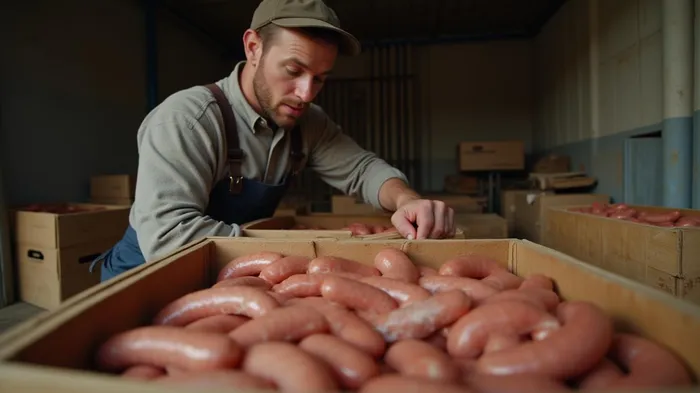
The £3.2 billion annual export boost projected by Frontier Economics for agricultural goods alone underscores the sector’s upside. For investors, this isn’t just about meat producers. Wilmar International (SGX: W16), a global agribusiness, and Arkwright (LSE: AWR), a packaging solutions provider, could also benefit as supply chains to Europe normalize.
Critics warn of lingering EU regulations, but the deal’s SPS agreement eliminates the need for routine inspections—a 15% cost reduction for exporters. As Alliance News reported, this efficiency gain is central to the £9 billion total economic uplift cited by the government.
Infrastructure Firms: Building the Energy Grid of the Future
The reset’s infrastructure angle is often overlooked, but it’s equally transformative. Energy interconnectors—such as those operated by National Grid (LSE: NG) and Eversholt Rail (LSE: ESH)—will benefit from EU-UK alignment on emissions trading and cross-border energy projects.
The EU’s goal of achieving 50% renewable energy by 2030 creates demand for UK expertise in offshore wind and grid management. SSE Renewables (LSE: SSE) and RWE (ETR: RWE), already active in UK-EU energy corridors, stand to profit from expanded partnerships.
Meanwhile, the deal’s steel industry protections—saving UK firms £25 million annually from EU tariffs—favor infrastructure giants like BAM Construction (ASX: BAM) and ACS Grupo (BME: ACS), which rely on low-cost materials for projects.
Political Risks vs. Long-Term Gains: Why Now Is the Time to Invest
Skeptics point to fishing rights as a surrender of sovereignty and youth mobility as a backdoor to migration—valid concerns. Yet the data tells a different story:
- NIESR analysis shows failure to finalize the deal could slash UK exports by 2.7% by 2027, costing £30 billion in lost trade.
- The OBR’s 4% long-term productivity loss due to post-Brexit fragmentation is a stark reminder of what’s at stake.
The £9 billion by 2040 projection is conservative when considering compounding gains from reduced regulatory friction. As Lord Jim O’Neill noted, the deal’s true value lies in reversing 15% of Brexit’s trade damage—a baseline few anticipated.
Investment Recommendations: Sector-Specific Plays for Immediate Exposure
- Defense & Security ETFs:
- SPDR S&P Aerospace & Defense ETF (XAR): Tracks global defense contractors, including BAE and Leonardo.
iShares MSCI Europe Infrastructure ETF (EUIF): Captures cross-border energy and telecom plays.
Agricultural Exposures:
- Teucrium Wheat Fund (NW): A commodity proxy for grain exporters.
Cranswick PLC (LSE: CWK): Direct beneficiary of SPS agreement reintegration.
Infrastructure Plays:
- National Grid (LSE: NG): Leader in UK-EU energy interconnectors.
- RWE (ETR: RWE): Expanding offshore wind partnerships in EU markets.
Conclusion: The Reset Isn’t Just a Deal—It’s a New Era
The UK-EU reset is a strategic pivot from isolation to interdependence. While political fireworks over fishing and migration dominate headlines, the economic calculus is unambiguous: £9 billion in growth by 2040 is a floor, not a ceiling. For investors, this is a call to anchor portfolios in defense contractors, agricultural exporters, and infrastructure firms—sectors poised to dominate the next decade of UK-EU integration. The risk isn’t in the deal’s details, but in missing the opportunity it creates.
Act now. The reset starts today.







Comentarios
Aún no hay comentarios