
UK Economic Deterioration and the Looming BoE Rate Cut: Strategic Opportunities in GBP-Carry Trades and Diversified FX Portfolios
The UK economy is navigating a complex landscape of weakening labor markets, persistent inflation, and an uncertain path toward monetary easing. With the Bank of England (BoE) poised to reduce interest rates in 2026, investors must recalibrate their strategies to account for heightened currency volatility and shifting macroeconomic dynamics. This analysis explores the implications of the BoE's policy trajectory, evaluates GBP positioning in forex markets, and outlines actionable frameworks for mitigating risk while capitalizing on emerging opportunities.
A Fragile Economic Outlook and the BoE's Policy Dilemma
The UK's Q3 2025 GDP growth has been tempered by a deteriorating labor market, with the unemployment rate climbing to 5.0% amid rising National Insurance Contributions and minimum wage adjustments. Projections indicate further upward pressure on unemployment, compounding concerns about subdued consumer demand and corporate profitability. Meanwhile, inflation remains stubbornly above the BoE's 2% target, with CPI expected to hover near 3.4% before edging higher to 3.7% in September 2025.
In response, the BoE has signaled a gradual reduction in interest rates, with forecasts pointing to a cut from 4.25% to 3.00% by 2026. However, the central bank's hawkish 5-4 voting split in favor of the latest 25-basis-point reduction underscores its cautious approach to unwinding monetary tightening. This measured stance reflects the BoE's balancing act between supporting growth and managing inflation risks, particularly as global trade uncertainties and domestic fiscal constraints persist.
GBP Positioning: Volatility, Hedging, and Strategic Exposure
The BoE's rate cuts have already triggered a two-year low in UK yields, creating a challenging environment for GBP carry trades. 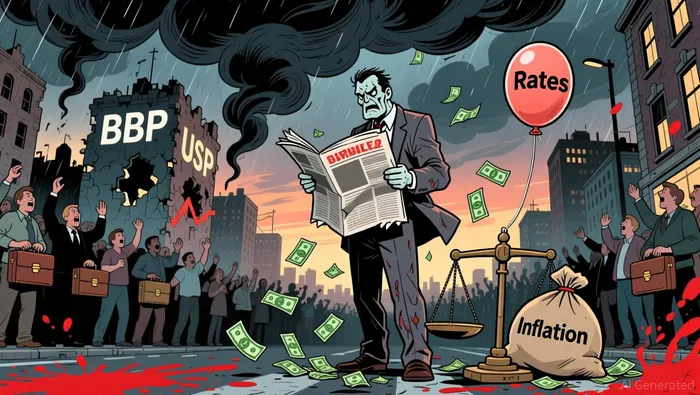 Historical data reveals a stark pattern: GBP carry trades have delivered an annualized return of -54.45% during the 10 days surrounding BoE rate cut events between 2020 and 2025. Volatility is exacerbated by the UK's stagflationary pressures, with nearly half of surveyed UK firms reporting losses linked to GBP fluctuations in 2025.
To mitigate these risks, UK corporates have significantly increased hedging activity, with 78% now employing hedging strategies to insulate against exchange rate swings. Extending hedging periods and diversifying across instruments-such as interest rate swaps and options-have emerged as best practices. For institutional investors, J.P. Morgan's approach of extending the weighted average maturity (WAM) of GBP positions and diversifying across sectors offers a blueprint for managing exposure in a low-yield, high-volatility environment.
Navigating GBP-Carry Trade Risks: Lessons from History
The GBP's historical underperformance during BoE rate cuts highlights the need for proactive risk management. As noted by Seasonax, shorting GBP/USD against stronger currencies like the euro or yen during BoE surprises has proven effective in offsetting losses. For example, a 2025 analysis by Naga underscores that GBP's weakness is amplified when the BoE deviates from market expectations, particularly in a context of slowing GDP growth and inflation persistence.
Investors should also consider dynamic hedging strategies, such as using forward contracts to lock in exchange rates or options to cap downside risk. Given the BoE's forward-looking policy framework, which prioritizes medium-term disinflation over short-term growth, carry traders must remain agile in adjusting their positions.
Diversified FX Portfolios: Balancing Opportunity and Caution
A diversified FX portfolio remains a cornerstone of risk mitigation in the current climate. Capital Economics recommends a "longer duration bias" in GBP investments, leveraging the currency's potential to outperform as inflation trends downward. However, this strategy must be tempered by diversification across geographies and asset classes. For instance, pairing GBP longs with shorts in high-beta currencies like the Australian dollar or New Zealand dollar can hedge against broad-based risk-off scenarios.
Moreover, sectoral diversification within GBP-denominated assets can buffer against sector-specific shocks. For example, UK financials and exporters may benefit from a weaker GBP, while import-dependent industries face headwinds. A balanced approach that weights these dynamics is critical for preserving portfolio resilience.
Conclusion: Strategic Agility in a Shifting Landscape
The UK's economic trajectory-marked by labor market fragility, inflationary inertia, and BoE rate cuts-demands a nuanced approach to currency positioning. While GBP carry trades carry inherent risks, strategic hedging, diversified FX portfolios, and proactive monitoring of BoE policy signals can unlock opportunities. As the BoE navigates its delicate path toward normalization, investors must remain attuned to evolving macroeconomic signals and adjust their frameworks accordingly.







Comentarios
Aún no hay comentarios