
UK Automotive Industry Crisis and Investment Implications: Navigating Production Declines and EV Transition Risks
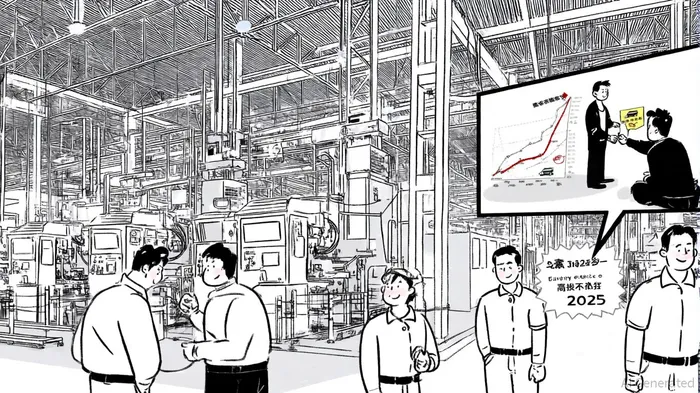
The UK automotive industry is at a crossroads. After decades of decline in manufacturing's share of GDP, the sector now faces a perfect storm of external shocks and internal inertia. Recent data from the Society of Motor Manufacturers and Traders (SMMT) reveals a stark reality: UK automotive production fell to 779,584 units in 2024, a significant drop from historical averages, driven by global semiconductor shortages and the lingering aftershocks of Brexit[3]. Meanwhile, the transition to electric vehicles (EVs)—a critical pivot for long-term competitiveness—is proceeding at a glacial pace, hampered by infrastructure gaps, workforce retraining bottlenecks, and policy delays[1]. For investors, this crisis presents both risks and opportunities, demanding a strategic reassessment of sector exposure.
Production Declines: A Perfect Storm of External Shocks
The UK's automotive sector has long been vulnerable to global supply chain disruptions. In 2023–2024, this vulnerability crystallized. According to SMMT, the industry produced 779,584 cars in 2024, with commercial vehicle output at 125,649 units[3]. While these figures represent a baseline, they mask deeper structural issues. The global semiconductor shortage, which began in 2020, has persisted, forcing manufacturers to idle production lines or reduce output. Compounding this, Brexit-related trade barriers have increased costs and delayed just-in-time logistics, eroding the UK's competitive edge[1].
The human cost of these disruptions is evident. In July 2025, new car registrations fell by 4.99% year-over-year to 140,154 units, signaling waning consumer confidence[2]. This decline is not merely cyclical—it reflects a sector struggling to adapt to a post-pandemic, post-Brexit reality.
EV Transition: A Race Against Time
The UK's pledge to phase out internal combustion engine (ICE) vehicles by 2030 has created urgency, but progress remains uneven. While battery electric vehicle (BEV) registrations surged by 9.1% in July 2025 compared to July 2024, capturing 21.3% of the market[2], this growth is outpaced by the challenges of scaling infrastructure and retraining the workforce.
Infrastructure gaps are particularly acute. The UK's public charging network remains insufficient to support mass EV adoption, with rural areas and older urban centers lagging behind. Workforce retraining is equally problematic: transitioning from ICE to EV manufacturing requires reskilling thousands of workers, a process that has been slowed by fragmented training programs and a lack of government coordination[1]. Policy delays, meanwhile, have left automakers in limbo. For example, the government's EV infrastructure investment plan, announced in 2023, has yet to materialize in full, creating uncertainty for both manufacturers and investors[1].
Investment Implications: Sector Rotation and Strategic Opportunities
For investors, the UK automotive crisis underscores the need for strategic sector rotation. Traditional automakers and suppliers, already strained by declining production, face existential risks if they fail to adapt. However, the EV transition also opens doors for innovation-focused players.
- EV Infrastructure Providers: Companies involved in charging network deployment, battery recycling, and grid management are prime candidates for growth. The UK's 31.0% year-to-date increase in BEV registrations[2] highlights pent-up demand, which infrastructure firms can capitalize on.
- Workforce Reskilling Platforms: As the sector pivots, edtech firms and vocational training providers could benefit from government and corporate partnerships aimed at upskilling workers.
- Alternative Sectors: Investors wary of the automotive sector's volatility might consider reallocating to adjacent industries, such as renewable energy or advanced manufacturing, which align with the UK's broader decarbonization goals.
Conversely, overexposure to legacy automakers and ICE-dependent suppliers carries significant downside risk. The SMMT's data on declining production and the government's delayed EV policies suggest that patience is wearing thin among stakeholders[3].
Conclusion
The UK automotive industry's struggles are emblematic of a sector grappling with rapid technological and geopolitical change. While production declines and EV transition risks pose immediate challenges, they also create opportunities for investors willing to navigate the turbulence. By prioritizing infrastructure, reskilling, and alternative sectors, investors can position themselves to thrive in a post-automotive world.







Comentarios
Aún no hay comentarios