
UiPath's Insider Sales: A Signal of Caution or a Missed Opportunity?
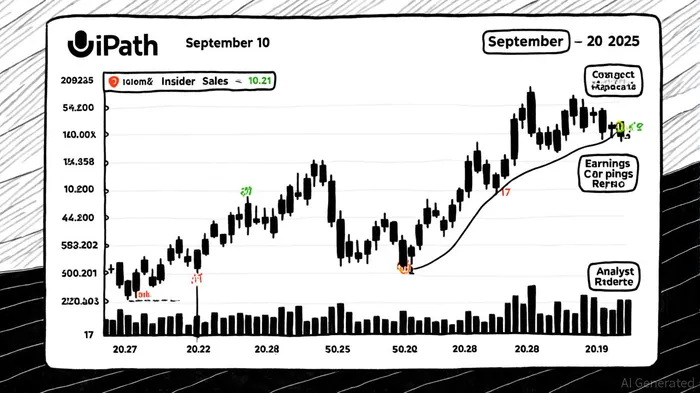
UiPath's recent have sparked a firestorm of debate among investors. On September 17, 2025, . This transaction, part of a Rule 10b5-1 trading plan, raises critical questions: Is this a sign of waning confidence in the stock, or a strategic move to diversify personal holdings? Let's dissect the data, market reaction, and broader implications.
The Sale in Context: Structured or Spontaneous?
Dines' September 17 sale followed a pattern of pre-planned transactions. For instance, , . These structured plans, designed to comply with SEC rules, suggest a disciplined approach to liquidity rather than a knee-jerk reaction to market conditions. However, .
The stock's immediate response was mixed. On September 17, , . While this outperformed the broader market's volatility, , signaling heightened investor scrutiny[5]. The following day, , reflecting lingering uncertainty[6].
Earnings Optimism vs. Insider Skepticism
. , . Yet, despite these positives, the stock remains under a “Hold” consensus rating, . Analysts like Wall Street Zen upgraded to “Strong-Buy,” while BMO Capital cut their price target to $12.50, citing macroeconomic risks[10].
This duality—strong fundamentals vs. cautious sentiment—highlights a key tension. Insiders may be selling for personal reasons (e.g., diversification, tax efficiency), but retail investors often interpret such moves as a lack of confidence. The challenge lies in distinguishing between these motivations.
Broader Market Implications
UiPath's insider activity isn't an isolated event. Over the past six months, other executives, including COO Ashim Gupta and CFO Brad Brubaker, have offloaded millions in shares[11]. Institutional investors have also shown mixed signals: 241 firms added PATHPATH-- to portfolios, while 285 reduced holdings[12]. This divergence underscores the stock's polarizing nature.
From a volatility perspective, , driven by both insider sales and broader market jitters. However, . The real question is whether the market is overreacting to structured sales or underestimating the company's long-term potential.
What's Next for PATH?
Investors should focus on three factors:
1. Continuity of Insider Sales: If Dines and other executives continue selling, it could erode trust. But if they pause or buy back shares, it may signal renewed confidence.
2. Earnings Momentum: UiPath's ability to sustain revenue growth while improving profitability (its EBIT remains negative) will be critical.
3. Analyst Revisions: A shift in ratings from “Hold” to “Buy” could catalyze a breakout, but a downgrade would likely deepen the selloff.
For now, PATH remains a high-risk, high-reward play. The insider sales are a red flag, but they shouldn't overshadow the company's operational strengths. As always, the key is to balance skepticism with a nuanced understanding of the underlying business.





Comentarios
Aún no hay comentarios