
Uganda's Coffee Surge: A Golden Harvest for Global Investors
The coffee fields of Uganda are brewing a revolution. In February 2025, the country’s coffee exports surged by 69% in value, generating $167 million—a figure that now stands as the linchpin of Uganda’s export-driven economic rebirth. This boomBOOM--, fueled by global supply shortages and strategic policy shifts, is unlocking opportunities for investors willing to bet on Africa’s next agricultural powerhouse.
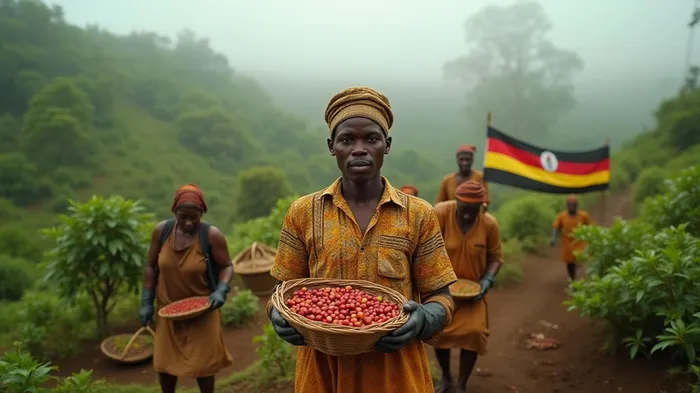
The Coffee Surge: A Perfect Storm of Supply and Strategy
Uganda’s coffee exports have become a poster child for emerging markets’ commodity resilience. The 70.71% year-on-year revenue jump (rounded to 69%) in February 2025 was driven by a 153% spike in global coffee prices, which hit $5.03/kg—a historic high due to devastating weather in Brazil (the world’s top Arabica producer) and Vietnam (the top Robusta exporter). This price surge, paired with a 7% increase in export volumes, has transformed coffee into Uganda’s top earner, accounting for nearly 20% of total export revenue in early 2025.
The math is clear: Uganda’s coffee is riding a wave of scarcity. With European buyers (72% of exports) snapping up premium beans like Mt. Elgon A+ Arabica at $7.55/kg, the country is now a go-to supplier for specialty markets.
A Shrinking Trade Deficit and New Economic Momentum
The coffee boom has delivered an unexpected dividend: Uganda’s trade deficit plummeted by 83%, from $271 million in February 2024 to $44 million in February 2025. This shift isn’t just about coffee—it’s a harbinger of a broader transformation.
The government is capitalizing on this momentum. By 2030, it aims to double coffee exports to 20 million 60kg bags annually and slash imports by leveraging its nascent oil production (expected to begin flowing by 2030) and a $5 billion manufacturing stimulus plan focused on agro-processing.
Strategic Plays: Where to Invest
Coffee Supply Chains: Back players like Ugacof (U) Ltd (12.35% of 2024/25 exports) or Olam Uganda Ltd (7.67% share), which are scaling logistics and certification to meet EU standards.
Agro-Processors: Invest in firms building wet mills for washed Robusta or organic certification facilities—critical to accessing premium markets.
Trade Infrastructure: Fund rail and port upgrades (e.g., the $2 billion Kampala–Mombasa railway) to reduce export costs and open access to East African markets.
Risks: Navigating the Storm
The path isn’t without hurdles. The EU’s December 2025 deforestation regulation deadline requires Uganda to prove its coffee is sourced sustainably—a challenge for smallholders. Yet the government’s $200 million climate-smart agriculture program and partnerships with Fair Trade International suggest proactive mitigation.
Longer-term, overreliance on commodity prices remains a risk. However, Uganda’s manufacturing pivot—from raw beans to coffee extracts or instant blends—could turn this into an advantage.
The Bottom Line: Harvest Now, Reap Later
Uganda’s coffee boom is no flash in the pan. With global prices projected to stay elevated due to climate volatility, and the country’s $3 billion annual export target by 2030, this is a rare opportunity to invest in a sector with pricing power, diversification benefits, and a government committed to growth.
For investors, the question isn’t whether Uganda’s coffee story will pay off—it’s whether you’ll be there to reap the harvest.
Act now before the market catches on.







Comentarios
Aún no hay comentarios