
UAE Developer Arada's Strategic Acquisition of Regal: A Geopolitical and Sustainable Investment Play
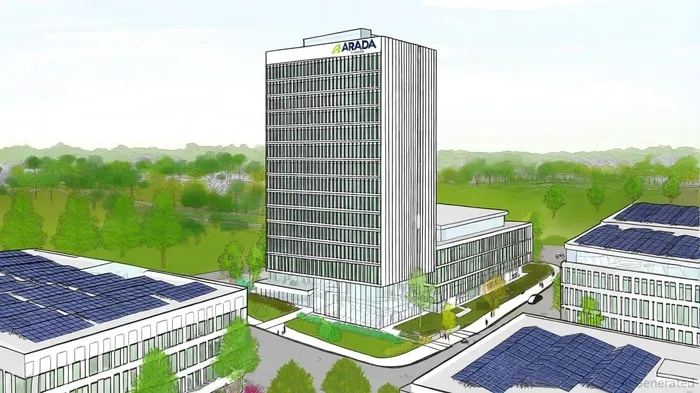
In a bold move to cement its position in global real estate markets, UAE-based developer Arada has acquired a 75% stake in British developer Regal for AED 2.5 billion, rebranding it as Arada London. This acquisition, following Arada's 2024 entry into Australia, underscores a strategic pivot toward geopolitical diversification and resilience in a post-energy transition world. By integrating Regal's 10,000-unit pipeline across 11 projects—aimed at tripling its portfolio in three years—Arada is not only expanding its footprint in stable, high-growth markets but also aligning with the UAE's broader economic and environmental ambitions [1].
Geopolitical Diversification: Mitigating Risk Through Global Presence
The UAE's Vision 2021 and subsequent diversification strategies have long emphasized reducing reliance on hydrocarbon revenues. Arada's acquisition of Regal reflects this ethos, positioning the UAE in the UK's mature real estate market—a hub for international capital and a gateway to Europe post-Brexit. According to a report by Reuters, this move allows Arada to leverage London's status as a global financial center while mitigating regional risks tied to Gulf-centric markets [1].
The UK's regulatory stability and demand for luxury residential properties further enhance the investment's resilience. By diversifying its geographic exposure, Arada insulates itself from geopolitical shocks, such as regional conflicts or trade disruptions, which have historically impacted Gulf-based developers. This strategy mirrors the UAE's broader economic playbook, where investments in non-oil sectors like real estate, tourism, and technology are critical to long-term stability [2].
Real Estate Resilience in a Post-Energy Transition Era
The UAE's real estate sector has demonstrated remarkable resilience in 2025, even amid global uncertainties. A CBRE report highlights that Dubai's Executive Council Resolution No. 11 of 2025, allowing free zone companies to operate in mainland locations, has spurred foreign investment, contributing to AED 3.0 trillion in total trade in 2025 [3]. Arada's acquisition of Regal aligns with this trend, as the UK's real estate market offers a stable outlet for UAE capital seeking returns in a low-interest-rate environment.
Moreover, the UAE's push for sustainability—central to its Net Zero 2050 Strategy—has reshaped real estate demand. Developers like Arada are now prioritizing energy-efficient designs, including solar panels, smart HVAC systems, and recycled materials, to meet stringent green building regulations such as Dubai's Green Building Regulations and Abu Dhabi's Estidama [4]. Regal's pipeline, when rebranded under Arada London, is expected to adopt these standards, appealing to a growing demographic of environmentally conscious buyers, particularly millennials and Gen Z [4].
Strategic Synergies: UAE's Vision and Global Energy Shifts
The UAE's real estate strategies are increasingly intertwined with its energy transition goals. By 2030, the UAE aims to triple its renewable energy share, with solar and green hydrogen projects playing a pivotal role [5]. Arada's acquisition of Regal not only diversifies its asset base but also positions it to capitalize on the UK's own green energy initiatives, such as carbon-neutral building mandates. This dual alignment—geopolitical and environmental—ensures that Arada's investments remain future-proof in a world where climate resilience is a key asset.
Conclusion: A Model for Future-Proof Investment
Arada's acquisition of Regal exemplifies a forward-thinking approach to real estate investment. By diversifying geographically, embracing sustainability, and aligning with the UAE's economic vision, the move addresses both immediate market demands and long-term global shifts. As the energy transition accelerates and geopolitical uncertainties persist, such strategic acquisitions will likely define the next era of resilient, innovation-driven real estate growth.







Comentarios
Aún no hay comentarios