
Twin Disc's Margin Expansion Potential: Leveraging Structural Market Shifts and Operational Discipline
Twin Disc Inc. (TWIN) has navigated a complex financial landscape in recent years, marked by volatile operating margins and a net loss in fiscal 2025 despite robust sales growth. However, emerging trends in key end-markets-particularly defense and hybrid propulsion-combined with disciplined operational execution, suggest a compelling case for margin expansion. This analysis explores how structural shifts in Twin Disc's core markets and strategic operational improvements position the company for a turnaround.
Structural End-Market Improvements: Defense and Hybrid Propulsion as Growth Catalysts
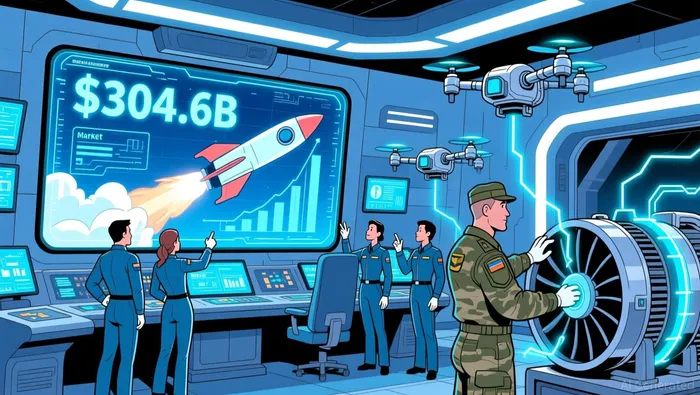
Twin Disc's defense segment is a standout driver of growth. According to a report by Seeking Alpha, the company outlined a 50% annual growth rate in its defense business through 2027, fueled by a record backlog and strong fiscal 2026 performance. This aligns with broader industry dynamics: the global aerospace and defense propulsion systems market is projected to grow at a 6.7% CAGR from 2025 to 2026, reaching $304.6 billion, driven by modernization efforts and electrification trends.
The hybrid propulsion market, another critical area for Twin DiscTWIN--, is also expanding rapidly. The electric ship market, for instance, is expected to grow at a 21.0% CAGR from 2025 to 2032, spurred by regulatory pressures for sustainability and advancements in energy storage. Twin Disc's focus on hybrid propulsion systems positions it to capitalize on these trends, particularly in defense and commercial maritime sectors where efficiency and compliance are paramount.
Operational Discipline: Margin Expansion Through Strategic Execution
Twin Disc's recent operational initiatives have directly contributed to margin improvement. In Q1 2026, the company reported a 220 basis point expansion in gross margin to 28.7%, driven by higher sales volumes and cost management efforts. These gains were supported by the integration of recent acquisitions, such as Kobelt, which added operational flexibility and synergy benefits.
The company also optimized production by leveraging its global footprint, assembling and testing products in the most efficient locations to reduce costs. Currency-related challenges were mitigated through reduced translation losses, which helped narrow the net loss to $0.5 million in Q1 2026 compared to $2.8 million in the prior year. Additionally, Twin Disc's EBITDA surged by 172.3% year-over-year to $4.7 million in Q1 2026, underscoring the effectiveness of these strategies.
Financial Trends and Outlook: A Path to Sustainable Margins
Historically, Twin Disc's operating margins have been volatile, dipping as low as -16.59% in December 2020 before stabilizing to 3.45% by September 2025. However, recent quarters show promising signs of stabilization. For example, Q4 2025 gross margins reached 31.0%, a 130 basis point improvement year-over-year, supported by favorable product mix and one-time cost adjustments. While underlying margins (excluding adjustments) were lower, the trajectory suggests progress.
Looking ahead, Twin Disc's focus on high-growth markets and operational rigor could drive further margin normalization. The defense segment's outsized growth and hybrid propulsion's long-term tailwinds provide a structural foundation, while cost discipline and acquisition integration offer near-term catalysts.
Conclusion: A Cautious Bull Case
Twin Disc's margin expansion potential hinges on its ability to sustain operational improvements while scaling in high-growth markets. While challenges such as macroeconomic headwinds and integration risks remain, the company's strategic alignment with electrification trends and disciplined execution present a compelling case for investors. If Twin Disc can maintain its current trajectory, it may emerge as a beneficiary of both structural industry shifts and operational excellence.





Comentarios
Aún no hay comentarios