
TVS Motor's iQube 3.1 kWh: Paving the Way to EV Dominance in India
The electric vehicle (EV) revolution in India is no longer a distant promise—it's a roaring reality. At the heart of this transformation stands TVS Motor Company, whose latest offering, the TVS iQube 3.1 kWh, is poised to cement its leadership in the segment. This mid-range variant strategically bridges pricing and performance gaps, positioning TVS as a formidable player in a market ripe for disruption.
Strategic Portfolio Expansion: The Power of Choice
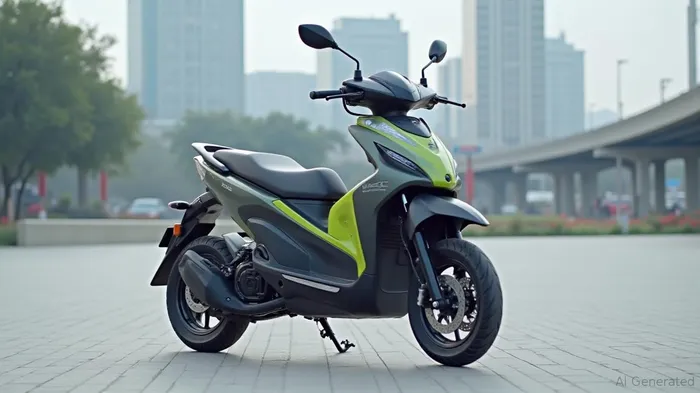
TVS's iQube lineup, now spanning six variants with battery capacities from 2.2 kWh to 4.0 kWh, exemplifies a portfolio-first strategy. The 3.1 kWh model, priced at ₹1,05,000–1,09,996 (ex-showroom), sits squarely between the budget-friendly 2.2 kWh (₹94,434) and the premium 3.5 kWh (₹1,26,000). This mid-tier positioning targets families and daily commuters seeking a balance of affordability and range (121–123 km IDC-certified), without the premium cost of larger batteries.
The variant's 5-inch TFT display, OTA updates, and reverse park assist elevate its tech quotient, while its telematics features (live tracking, anti-theft alerts) differentiate it from rivals. By offering six distinct options, TVS caters to a broad audience, from price-sensitive buyers to those prioritizing range and connectivity. This “Power of Choice” is a masterstroke in a market where 80% of EV sales are concentrated in the ₹90,000–₹1.5 lakh bracket.
Market Leadership and Competitive Edge
TVS's strategic moves have paid off. As of June 2025, it holds a 25.4% market share in electric two-wheelers, surpassing Ola Electric (19.6%) and Ather Energy (14.4%). While Ola battles declining sales (down 42% YoY) and Ather struggles with limited retail reach, TVS's 1900+ touchpoints and established manufacturing scale give it a decisive edge.
The iQube 3.1 kWh's launch amplifies this lead. With a ₹12,000 premium over the base model but ₹21,000 cheaper than the 3.5 kWh variant, it captures demand from customers unwilling to pay top dollar for marginal range improvements. This “sweet spot” pricing, combined with TVS's 121 km range (best-in-class for its price tier), ensures it outsells competitors in the same segment.
Government Incentives and Urbanization: Tailwinds Ahead
India's EV adoption is being turbocharged by policy support and demographic shifts. While the delayed FAME III scheme remains a wildcard, the PM E-DRIVE Scheme (₹10,900 crore outlay) and state-level policies like Maharashtra's EV subsidies are driving adoption. These initiatives, coupled with expanding charging infrastructure (target: 88,500 charging sites by 2026), reduce consumer hesitation.
Urbanization—India's cities are expected to house 50% of its population by 2030—fuels demand for compact, affordable EVs like the iQube. TVS's telematics and connectivity features also align with rising smartphone penetration, making its scooters a natural fit for digitally native urban buyers.
Investment Considerations: Why TVS is a Buy
- Scalability: TVS's vertically integrated manufacturing (battery cell production in partnership with LiFE) and economies of scale allow it to undercut rivals on cost while maintaining margins.
- Distribution Network: Its 1900+ touchpoints (vs. Ola's 500+) ensure nationwide reach, critical in a fragmented market.
- Tech Leadership: Features like regenerative braking and app-based navigation set it apart, enhancing brand loyalty.
- Growth Catalysts:
- Government subsidies: PM E-DRIVE's ₹10,000 EV incentive reduces the post-subsidy price gap with petrol scooters.
- Battery cost declines: Lithium prices have fallen 70% since 2022, improving profitability.
- Rural penetration: TVS's focus on tier-2 cities (where 60% of EVs are sold) ensures sustained growth.
Risks to Consider
- FAME III uncertainty: If delayed further, it could stall demand for higher-end variants.
- Battery supply chain: China's dominance in lithium could pose risks if geopolitical tensions escalate.
- Competition: Ather's Rizta scooter and Hero's Vida V2 threaten market share if pricing wars erupt.
Conclusion: A Steady Hand on the EV Wheel
TVS Motor's iQube 3.1 kWh is more than a product—it's a strategic pivot that solidifies its leadership in India's EV boom. With a diversified portfolio, superior distribution, and tech-driven differentiation, TVS is well-positioned to capitalize on a market projected to hit 10 million EV two-wheelers by 2030.
For investors seeking exposure to India's green mobility transition, TVS Motor (TVSMOTOR.NS) offers a compelling mix of safety, scalability, and sector dominance. While risks exist, the tailwinds of urbanization, policy support, and cost efficiencies make this a buy for long-term portfolios.
In the race to electrify India, TVS isn't just keeping pace—it's setting the pace.







Comentarios
Aún no hay comentarios