
Turkish Hazelnut Market: Navigating Short-Term Volatility for Long-Term Gains
The Turkish hazelnut market is a microcosm of modern commodity investing—marked by structural supply-demand dynamics, geopolitical risks, and policy-driven volatility. For strategic investors, the current environment presents a rare opportunity to capitalize on long-term scarcity while hedging against near-term turbulence. At the heart of this dynamic is the Turkish Grain Board (TMO), whose interventions have transformed a crisis into a catalyst for market stability.
The TMO's Price Floor: A Lifeline for Farmers, a Floor for Prices
Since August 2024, the TMOTMO-- has implemented a price floor of TRY 145/kg for in-shell hazelnuts, a critical support mechanism amid frost-driven supply shocks and speculative hoarding. This price floor, which rose to TRY 145/kg in early 2025, has set a baseline for transactions, preventing a collapse in farm-gate prices despite dwindling stocks. The TMO's sales of 2024 crop reserves—though limited—have temporarily eased liquidity constraints, creating a price anchor for exporters and processors.
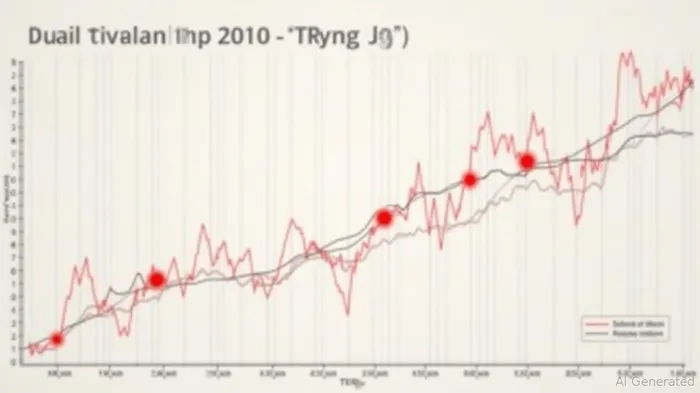
However, the TMO's actions are only part of the story. Farmers, anticipating further price spikes, are withholding stocks, particularly of high-quality kernels (e.g., 13–15mm), driving farm-gate prices to TRY 215/kg—a 48% premium over the TMO floor. This creates a segmented market:
- Premium kernels remain scarce and expensive.
- Lower-quality nuts face oversupply due to poor yields and processing inefficiencies.
Bullish Fundamentals: Scarcity, Costs, and Geopolitical Constraints
The Turkish hazelnut market is underpinned by three irreversible trends:
1. Quality Shortages Are Structural
The 2025 crop suffered a 30% yield reduction due to frost, with regions like Sakarya experiencing up to 90% bud kill. Even the most optimistic estimates (e.g., the International Nut & Dried Fruit Council's 610,000 MT forecast) imply a 15% deficit compared to pre-frost projections. High-quality kernels—critical for premium products like Ferrero's Nutella—are in such short supply that farmers are demanding TRY 250/kg, further squeezing processors.
2. Production Costs Are Skyrocketing
Farmers face soaring input costs:
- Fertilizer prices have risen by 40% since 2023 due to global shortages.
- Labor costs in hazelnut-producing regions have increased by 25% as rural workers seek better wages.
- Turkey's 48% interest rates (among the world's highest) penalize farmers who borrow for replanting frost-damaged orchards.
These costs are baked into prices, creating a floor for farmgate rates that even the TMO's interventions cannot suppress.
3. Global Alternatives Are Limited
Georgia, Turkey's main competitor, produces only 15% of global hazelnuts, and its output is unlikely to offset Turkey's losses. Meanwhile, the 10% U.S. tariff on Turkish hazelnuts has made American buyers reliant on Turkish suppliers, despite higher costs. This tightens global supply further.
The Short-Term Risk: Farmer Stockpiling and Speculative Dips
While the long-term outlook is bullish, the market remains fragile. Farmers and exporters are hoarding stocks, drip-feeding supply to maximize prices. This creates volatility:
- Temporary dips (e.g., a 10% price drop in April 2025 after TMO sales) could spook investors.
- Currency fluctuations pose a double-edged sword: a weaker lira boosts export revenues but increases input costs for foreign buyers.
Strategic Recommendations: Position for Scarcity, Hedge the Lira
Investors should:
1. Focus on High-Quality Kernel Assets
- Target companies with exclusive access to premium kernels, such as Turkish processors with long-term contracts with farmers.
- Consider ETFs like the iShares MSCI Turkey ETF (TUR), though diversify with direct commodity exposure.
- Hedge Currency Risk
- Use currency forwards to lock in USD/TRY rates, mitigating lira volatility.
Invest in Turkish companies with dollar-denominated revenue streams (e.g., exporters like Yıldız Holding).
Leverage Supply Chain Gaps
- Partner with logistics firms to secure scarce storage capacity—critical as TMO reserves dwindle to <20,000 MT.
Conclusion: A Commodity with Legs
The Turkish hazelnut market is a textbook case of scarcity-driven value. While short-term dips may test nerves, the TMO's price floor, frost-driven shortages, and rising costs ensure that prices will trend upward over the next 12–18 months. Investors who act now—by securing positions in high-quality assets and hedging currency risks—can capitalize on a structural bull market.
The time to position is now. The hazelnut kernel is cracking—open it wisely.







Comentarios
Aún no hay comentarios