
Turkey-Russia Energy Ties: Strategic Leverage for Emerging Market Investors Amid Geopolitical Crosscurrents
The intertwined energy relationship between Turkey and Russia, epitomized by the Akkuyu Nuclear Plant and Gazprom's payment mechanisms, presents a unique investment paradox: high geopolitical risk paired with compelling opportunities in one of the world's fastest-growing emerging markets. For investors willing to navigate the complexities of sanctions, diplomacy, and energy geopolitics, these projects offer a rare chance to capitalize on Turkey's transformation into a regional energy hub.
The Akkuyu Nuclear Plant: A $25 Billion Gamble with Strategic Rewards
 .
.
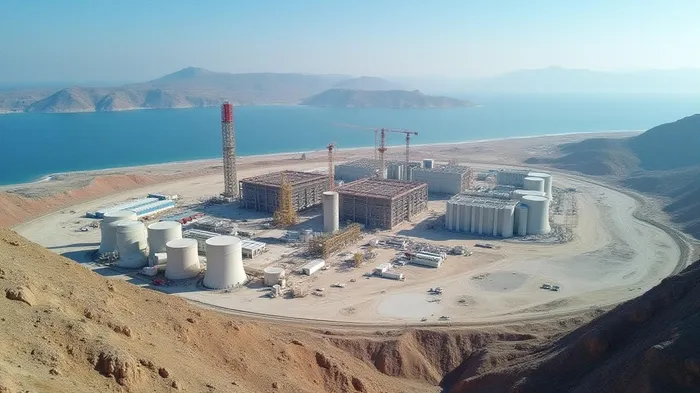
The Akkuyu project, a joint venture between Russia's Rosatom and Turkey, is not merely a power plant—it is a geopolitical linchpin. Slated to begin operations by late 2025, it aims to supply 10% of Turkey's electricity, reducing reliance on Russian gas imports. However, its delays and financial terms underscore both risks and opportunities:
- High Electricity Costs: Turkey agreed to buy power at 12.35 cents/kWh, nearly double global averages. While critics call this “economically burdensome,” it locks in long-term energy security.
- Strategic Control: Rosatom holds 99% of shares, but Turkey retains a legal right to acquire 49% if national security is at risk—a clause investors should monitor as geopolitical tensions evolve.
- Domestic Growth: The plant has employed over 30,000 workers and spurred local supplier contracts (25–30% Turkish firms). As Turkey aims for 20 GW of nuclear capacity by 2050, Akkuyu's success could catalyze a domestic nuclear industry.
.
Investors should analyze Rosatom's financial resilience amid sanctions and supply chain disruptions. While delays pose short-term volatility, the project's completion could unlock downstream opportunities in nuclear waste management, turbine manufacturing, and grid infrastructure.
Gazprom Payment Mechanisms: Bypassing Sanctions, Fueling Investment
Turkey's reliance on Russian gas—40–45% of imports—has driven innovation in payment systems. By routing transactions through Austria's Raiffeisen Banking Group, Ankara circumvents U.S. sanctions on Gazprombank. This mechanism, approved by Washington, exemplifies Turkey's skill in balancing Western ties and Russian energy needs.
Key takeaways for investors:
- Stable Gas Supply: Despite sanctions, Turkey secured $8 billion in annual gas imports in 2024. The TurkStream pipeline's 31.5 billion cubic meter capacity and Blue Stream's 16 billion cubic meter capacity ensure liquidity.
- Diversification Momentum: Turkey is exploring LNG from the U.S. and Qatar, plus Caspian gas via Turkmenistan. Investors in Turkey's energy infrastructure (e.g., LNG terminals, pipelines) could benefit as Ankara reduces reliance on any single supplier.
- Geopolitical Leverage: Raiffeisen's role highlights Turkey's ability to mediate between East and West—a strategic advantage for firms supplying payment solutions or energy logistics.
.
Why Invest Now?
Turkey's energy sector offers three compelling angles:
1. Infrastructure Growth: The Akkuyu plant and TurkStream pipeline are physical assets with decades-long operational lifespans.
2. Sanctions Arbitrage: Payment mechanisms like Raiffeisen's demonstrate Turkey's adaptability, creating niches for financial services and legal compliance firms.
3. Regional Hub Potential: With its location between Europe, Asia, and the Middle East, Turkey is positioning itself as a transit and storage center—a boon for investors in energy storage tech and logistics.
Risks and Mitigation
- Sanctions Volatility: U.S. and EU scrutiny over “Turkish Blend” gas re-exports could disrupt cash flows. Monitor compliance audits and political statements.
- Geopolitical Tensions: The 2015 downing of a Russian jet reminds investors that diplomatic flare-ups can destabilize assets. Diversify portfolios with Turkish energy stocks (e.g., Botas, TPAO) and Russian partners with Turkey exposure (e.g., Rosneft).
- High Costs: Akkuyu's electricity prices may strain budgets. However, Turkey's growing economy (projected 5% GDP growth in 2025) supports demand.
Conclusion: A Strategic Play for the Bold
Turkey's energy ties with Russia are a high-stakes game of risk and reward. The Akkuyu plant and Gazprom payment mechanisms are not just about energy—they are about Turkey's ambition to become a global energy broker. For investors, this means:
- Allocate to infrastructure: Firms involved in nuclear construction (e.g., Siemens Energy's Chinese alternatives) or gas pipeline maintenance.
- Leverage payment innovation: Financial institutions enabling sanctioned-bypass transactions.
- Monitor geopolitical shifts: Use tools like the U.S.-Turkey sanctions tracker to gauge regulatory changes.
In an era of energy nationalism and fragmented global markets, Turkey's dual alignment with Russia and the West offers a rare investment sweet spot. The next 12–18 months will test whether these projects can transcend geopolitical noise—and deliver returns for those willing to bet on Turkey's energy future.
.
The clock is ticking. For emerging market investors, the time to engage is now.







Comentarios
Aún no hay comentarios