
Turkey's Kurdish Peace Talks: A Catalyst for Energy and Infrastructure Investment in 2025?
Historical Precedents: Peace and Economic Integration
Historically, periods of relative calm in Turkey's Kurdish conflict have correlated with surges in foreign investment, particularly in energy and infrastructure. During earlier peace efforts, Turkish firms became dominant players in the Kurdistan Regional Government (KRG) of Iraq, with over 1,500 companies operating in sectors like oil extraction and pipeline construction by 2013. The KRG's reliance on Turkish expertise for infrastructure development-including two international airports and critical energy pipelines-underscored the mutual economic benefits of stability. This pattern suggests that the 2025 peace process, if sustained, could replicate such dynamics.
Energy Sector Opportunities
Turkey's energy security has long been a strategic priority, with over 90% of its oil and gas imports historically sourced from volatile regions like Russia and Iran. The KRG's oil exports to Turkey, facilitated by pipelines like the $4.5 billion Kirkuk-Ceyhan corridor, have already demonstrated the economic potential of Kurdish-Turkish cooperation. 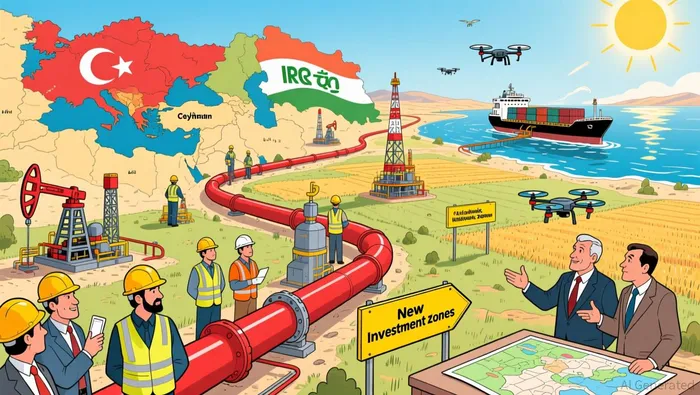 If the 2025 peace process leads to full PKK disarmament in Syria and Iraq-as Turkish officials have emphasized-it could unlock further investments in cross-border energy projects. For instance, expanded pipeline networks or joint exploration ventures in the KRG's untapped oil fields might attract both domestic and international capital.
Infrastructure and Regional Connectivity
Infrastructure development has historically followed peace-driven stability. During earlier Kurdish peace efforts, Turkey invested heavily in roads, airports, and energy grids in Kurdish-majority regions, fostering economic integration. The 2025 talks, which emphasize "regional perspectives" and "fraternity," could accelerate such projects. For example, improved security in northern Iraq-where the PKK has withdrawn its fighters-might spur Turkish firms to bid on infrastructure contracts in areas previously deemed too risky. This could include upgrades to the KRG's transportation networks or renewable energy projects in southeastern Turkey.
Foreign Investment and Geopolitical Risks
Foreign investment in Turkey has often been tied to the trajectory of Kurdish peace talks. During earlier periods of optimism, Turkish companies accounted for 30% of the KRG's total foreign investment, driven by shared economic interests. However, the 2025 process remains fragile. The PKK's symbolic disarmament in May 2025 and its withdrawal from Turkey-as reported-are promising, but unresolved tensions-such as the group's presence in Syria and Iraq-could derail progress. Additionally, the CHP's boycott of Ocalan talks highlights domestic political divisions that might delay policy coherence.
Strategic Implications for Investors
For investors, the 2025 peace process presents a dual-edged opportunity. On one hand, improved stability could reduce operational risks in Turkey's Kurdish regions, making energy and infrastructure projects more viable. On the other, geopolitical uncertainties-such as U.S. policy shifts or renewed PKK activity-remain critical risks. As Bloomberg notes, Turkey's broader regional security goals, particularly in Iraq and Syria, will likely influence the pace of investment.
Conclusion
While specific 2025 energy or infrastructure projects tied to the peace process have yet to materialize-according to recent reports-historical patterns suggest that sustained stability could catalyze significant investment flows. Investors should monitor key indicators: the PKK's full disarmament, cross-border infrastructure bids, and Turkey's alignment with regional security frameworks. For now, the 2025 talks offer a cautiously optimistic outlook, but geopolitical risks demand careful due diligence.







Comentarios
Aún no hay comentarios