
Turkey’s Ceasefire Monitoring Role: A Strategic Gambit with Economic Implications for the Black Sea Region
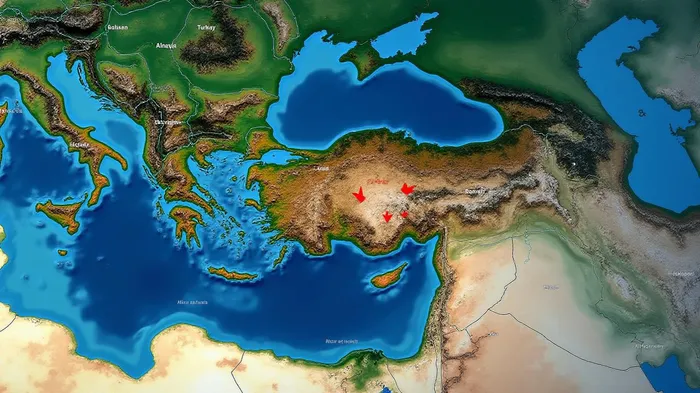
The prospect of Turkey taking on a role in monitoring a potential ceasefire in Ukraine has sent ripples through geopolitical and financial circles. While diplomatic efforts to secure a 30-day ceasefire by May 12, 2025, have stalled due to Russia’s rejection of Western-backed terms, Turkey’s readiness to observe such an agreement underscores its growing influence as a mediator in the Russia-Ukraine conflict. For investors, this development offers both opportunities and risks tied to regional stability, energy flows, and defense spending.
Turkey’s Strategic Positioning
Turkey’s offer to assume ceasefire observation duties reflects its longstanding ambition to balance diplomacy with self-interest. As Foreign Minister Hakan Fidan emphasized, Ankara’s role would focus on “international oversight” rather than peace enforcement—a stance that avoids direct military confrontation with Russia while bolstering its geopolitical clout. This aligns with Turkey’s historical efforts to mediate the conflict, including brokering the 2022 Black Sea grain deal and hosting failed peace talks in Istanbul.
The move also serves Turkey’s economic priorities. The Black Sea region is a critical corridor for energy exports, agricultural trade, and NATO logistics. A stabilized ceasefire could reduce disruptions to Turkey’s ports, which handle 80% of Ukraine’s grain exports. However, the absence of a ceasefire agreement to date highlights risks: Russia’s rejection of Western terms and its continued military advances suggest that Turkey’s role remains theoretical, contingent on a diplomatic breakthrough unlikely anytime soon.
Economic Implications: Winners and Losers
The conflict’s trajectory will determine how sectors perform.
1. Energy and Defense Sectors
Turkey’s energy and defense industries could benefit if a ceasefire reduces regional instability. Companies like TUPRAS (Turkish Petroleum Refineries), a state-owned oil giant, might see improved access to Black Sea trade routes. Meanwhile, defense contractors like ASELSAN (a leader in military electronics) and ROKETSAN (missile systems) have already profited from Ukraine’s procurement of Turkish drones and artillery.
However, if the conflict escalates further, sanctions on Russia could disrupt Turkey’s energy imports. Russia supplies 45% of Turkey’s natural gas, and Ankara’s reluctance to fully align with Western sanctions has created friction with EU partners.
2. Agriculture and Logistics
Ukraine’s grain exports, which rely heavily on Turkish ports like Istanbul and Mersin, would surge with a ceasefire. This could boost companies like YALCIN HOLDING, a logistics firm with a presence in Ukraine, but also expose them to currency volatility.
3. Geopolitical Risks
Turkey’s balancing act carries risks. A perceived tilt toward Russia could strain its NATO membership and deter Western investment. Conversely, aligning too closely with Ukraine might provoke Russian retaliation, such as reduced gas supplies or cyberattacks.
Investment Opportunities and Cautionary Notes
Investors should weigh these factors:
Near-Term Risks: The likelihood of a ceasefire by May 12, 2025, is low. Russia’s refusal to halt its military advances and Western arms deliveries to Ukraine leaves little room for compromise. This uncertainty could pressure Turkey’s equity markets, which have underperformed the MSCI Emerging Markets Index by 12% over the past year.
Long-Term Gains: If a ceasefire materializes, sectors tied to reconstruction and trade—such as construction firms like ENKA and infrastructure developers—could see demand rise.
Defense and Cybersecurity: Persistent instability favors companies with exposure to defense spending and cybersecurity, such as ASELSAN, which has grown revenue by 18% annually since 2021.
Conclusion: A Delicate Balance
Turkey’s proposed role in ceasefire observation is a high-stakes gambit. While it positions Ankara as a key regional powerbroker, the absence of a ceasefire means investors must remain cautious. Turkey’s equity markets, as reflected in the BIST 100 Index, have lagged global peers due to geopolitical and inflationary pressures.
However, sectors like defense and energy offer asymmetric upside if stability returns. Investors should prioritize firms with diversified revenue streams and avoid overexposure to sectors reliant on Russian ties. The path forward hinges on whether Turkey can navigate its delicate diplomacy to turn this strategic gambit into tangible economic gains—or whether it becomes collateral damage in a prolonged conflict.
The stakes are clear: Turkey’s economy, and the Black Sea region’s stability, hang in the balance.







Comentarios
Aún no hay comentarios